Produktbeschreibung
Transmission shaft
Produktbeschreibung
| Produktname | Transmission shaft |
| Design | Kann auf Kundenwunsch maßgeschneidert und nach Kundendesign gefertigt werden. |
| Vorteil | ZJD can provide the transmission shaft according to customers technical specifications. |
Unsere Vorteile
Anwendung
Produktpräsentation
Unternehmensprofil
ZJD befindet sich in der Wirtschaftsentwicklungszone Xihu (Westsee) im Bezirk Xihu (Westsee) in Hangzhou, Provinz Zhejiang, und profitiert von einer sehr guten Verkehrsanbindung und Lagevorteilen. ZJD besitzt eine Tochtergesellschaft in Hangzhou, Provinz Zhejiang, die hauptsächlich für die Herstellung von Triebzugzubehör für das nahegelegene Werk von CRRC zuständig ist.
Die Produktions- und Bürofläche von ZJD umfasst mehr als 12.000 Quadratmeter und ist mit über 60 CNC-Bearbeitungs- und Qualitätskontrollanlagen verschiedenster Art ausgestattet. Die Hauptprodukte von ZJD werden in den Standard-Elektrotriebzügen der Baureihen CR400, CR300 und CR200 von CHINAMFG eingesetzt und finden Anwendung in U-Bahnen, Export-Personenwagen und Elektrotriebzügen sowie anderen Produkten.
ZJD beschäftigt mehr als 60 Mitarbeiter und über 20 technische Führungskräfte. Das technische Managementteam verfügt über langjährige Berufserfahrung in der Schienenverkehrsbranche.
Zertifizierungen
ZJD hat die nationale Hightech-Unternehmenszertifizierung erhalten, 6 Produktarten haben die Hightech-Zertifizierung bestanden, und verwandte Produkte haben mehr als 20 Patente erhalten.
ZJD hat ein umfassendes Qualitätsmanagementsystem etabliert und ist nach ISO9001 zertifiziert. Weitere Zertifizierungen umfassen den internationalen Eisenbahnindustriestandard ISO/TS 22163 (IRIS), das Schweißsystem für Schienenfahrzeuge EN15085-2 sowie die Produktlieferdienstleistungszertifizierung CHINAMFG.
Häufig gestellte Fragen
1. Wer sind wir?
HangZhou ZJD Rail Equipment Co.,Ltd. wurde 2012 gegründet und ist ein professioneller Hersteller von Schienenfahrzeugausrüstung und Zubehör.
2. Sind Sie ein zuverlässiger Lieferant?
ZJD – Ausgezeichneter Hersteller mit Schwerpunkt auf der Schienenfahrzeugindustrie
Wir bieten den gesamten Prozess von der Konzeption über die Produktion und Prüfung bis hin zum Service gemäß den Kundenanforderungen an.
3. Was können Sie bei uns kaufen?
Wir haben eine Reihe von Produkten entwickelt und geliefert, darunter Luftkanalsysteme, Rohrleitungssysteme, pneumatische Steuereinheiten usw. Die Produkte werden in verschiedenen Bereichen eingesetzt, z. B. in Elektrotriebzügen, U-Bahnen, Lokomotiven, Güterwagen, Baumaschinen usw.
4. Welche Dienstleistungen können wir anbieten?
Wir bieten maßgeschneiderte Dienstleistungen für Produkte der Schwerindustrie, die auf spezielle Anforderungen zugeschnitten sind.
Wir bieten ein vielfältiges Angebot an Ersatzteilen und Handelsdienstleistungen, beispielsweise für Hafenmaschinen, die Stahlindustrie, Bergbaumaschinen usw.
Wir bieten kundenspezifische Produkte für neue Energieanlagen an.
Bereitstellung von Schlüsselprozesstechnologielösungen für Spezialbauteile im Bereich der Anlagen zur Erzeugung neuer Energien.
| Material: | Carbon Steel |
|---|---|
| Laden: | Revolution Axis |
| Steifigkeit und Flexibilität: | Flexible Welle |
| Achsenform: | Straight Shaft |
| Schaftform: | Realachse |
| Aussehen und Form: | Runden |
| Anpassung: |
Verfügbar
| Kundenspezifische Anfrage |
|---|
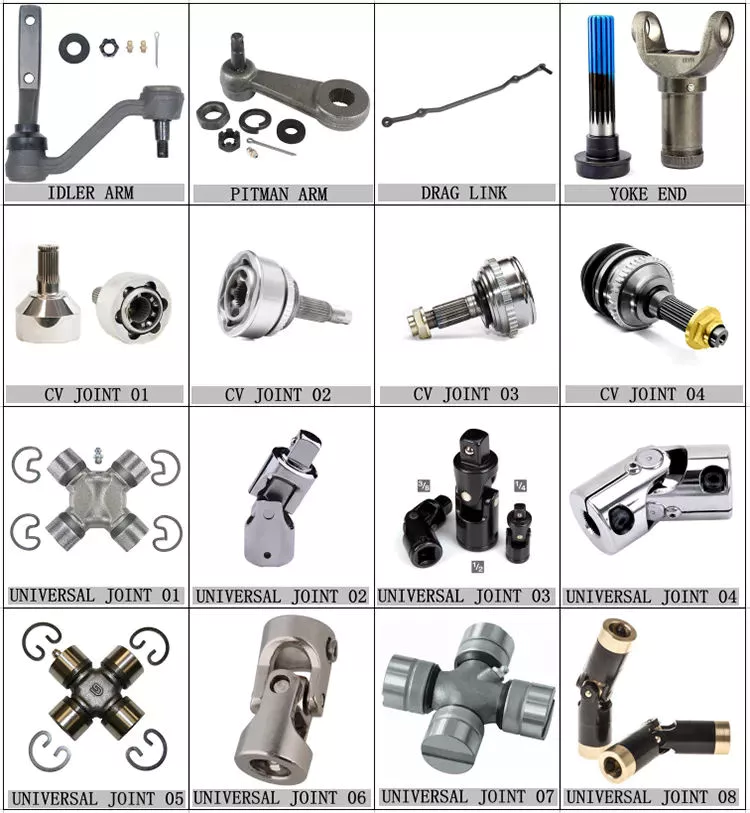
Can PTO shafts be adapted for use in both agricultural and industrial settings?
Yes, PTO (Power Take-Off) shafts can be adapted for use in both agricultural and industrial settings. While PTO shafts are commonly associated with agricultural machinery, they are versatile components that can be utilized in various applications beyond the agricultural sector. With appropriate modifications and considerations, PTO shafts can effectively transfer power in industrial settings as well. Here’s a detailed explanation of how PTO shafts can be adapted for both agricultural and industrial use:
1. Standard PTO Shaft Design: PTO shafts have a standardized design that allows for compatibility and interchangeability across different equipment and machinery. This standardization enables PTO shafts to be used in various applications, including both agricultural and industrial settings. The basic components of a PTO shaft, such as the universal joints, splined shafts, and protective guards, remain consistent, regardless of the specific application. This consistency allows for easy adaptation and integration into different machinery and equipment.
2. Shaft Length and Sizing: PTO shafts can be customized in terms of length and sizing to suit specific requirements in both agricultural and industrial settings. The length of the shaft can be adjusted to accommodate different distances between the power source and the driven machinery. This flexibility allows for optimal power transmission and ensures compatibility with various equipment setups. Similarly, the sizing of the PTO shaft, including the diameter and splined shaft specifications, can be tailored to meet the torque and power requirements of different applications, whether in agriculture or industry.
3. Power Requirements: PTO shafts are designed to transfer power from a power source to driven machinery. In agricultural settings, the power source is typically a tractor or other agricultural vehicles, while in industrial settings, it can be an engine, motor, or power unit specific to the industry. PTO shafts can be adapted to handle different power requirements by considering factors such as torque capacity, rotational speed, and the specific demands of the machinery or equipment being driven. By selecting the appropriate PTO shaft based on the power requirements, the shaft can effectively transfer power in both agricultural and industrial applications.
4. Sicherheitsaspekte: Safety is a critical aspect of PTO shaft design and usage, regardless of the application. PTO shafts incorporate safety features such as protective guards and shields to prevent accidental contact with rotating components. These safety measures are essential in agricultural and industrial settings to minimize the risk of entanglement, injury, or damage. Adapting PTO shafts for industrial use may require additional safety considerations based on the specific hazards present in industrial environments. However, the core safety principles and features of PTO shafts can be applied and adapted to ensure safe operation in both settings.
5. Specialized Attachments: PTO shafts can be equipped with specialized attachments or adapters to accommodate different driven machinery or equipment. In agricultural settings, PTO shafts commonly connect to implements such as mowers, balers, or sprayers. In industrial settings, PTO shafts may be adapted to connect to various industrial machinery, including pumps, generators, compressors, or conveyors. These specialized attachments ensure compatibility and efficient power transfer between the PTO shaft and the driven equipment, allowing for seamless integration in both agricultural and industrial applications.
6. Environmental Considerations: PTO shafts can be adapted to address specific environmental conditions in both agricultural and industrial settings. For example, in agricultural applications, PTO shafts may need to withstand exposure to dirt, dust, moisture, and varying weather conditions. Industrial settings may have their unique environmental challenges, such as exposure to chemicals, high temperatures, or abrasive materials. By selecting PTO shaft materials, protective coatings, and seals suitable for the specific environment, the shafts can be adapted to ensure reliable and durable performance in various settings.
7. Compliance with Standards: PTO shafts, whether used in agricultural or industrial settings, need to comply with relevant safety standards and regulations. Manufacturers adhere to guidelines and requirements set by organizations such as the American Society of Agricultural and Biological Engineers (ASABE) or other regional safety authorities. Compliance ensures that PTO shafts meet safety criteria and performance standards applicable to both agricultural and industrial environments. Users can rely on standardized PTO shafts that have undergone testing and certification, offering assurance regarding their reliability and safety.
By considering the factors mentioned above, PTO shafts can be adapted to effectively transfer power in both agricultural and industrial settings. The versatile nature of PTO shafts, coupled with customization options, safety considerations, specialized attachments, and compliance with standards, allows for their successful integration into a wide range of machinery and equipment across various industries.
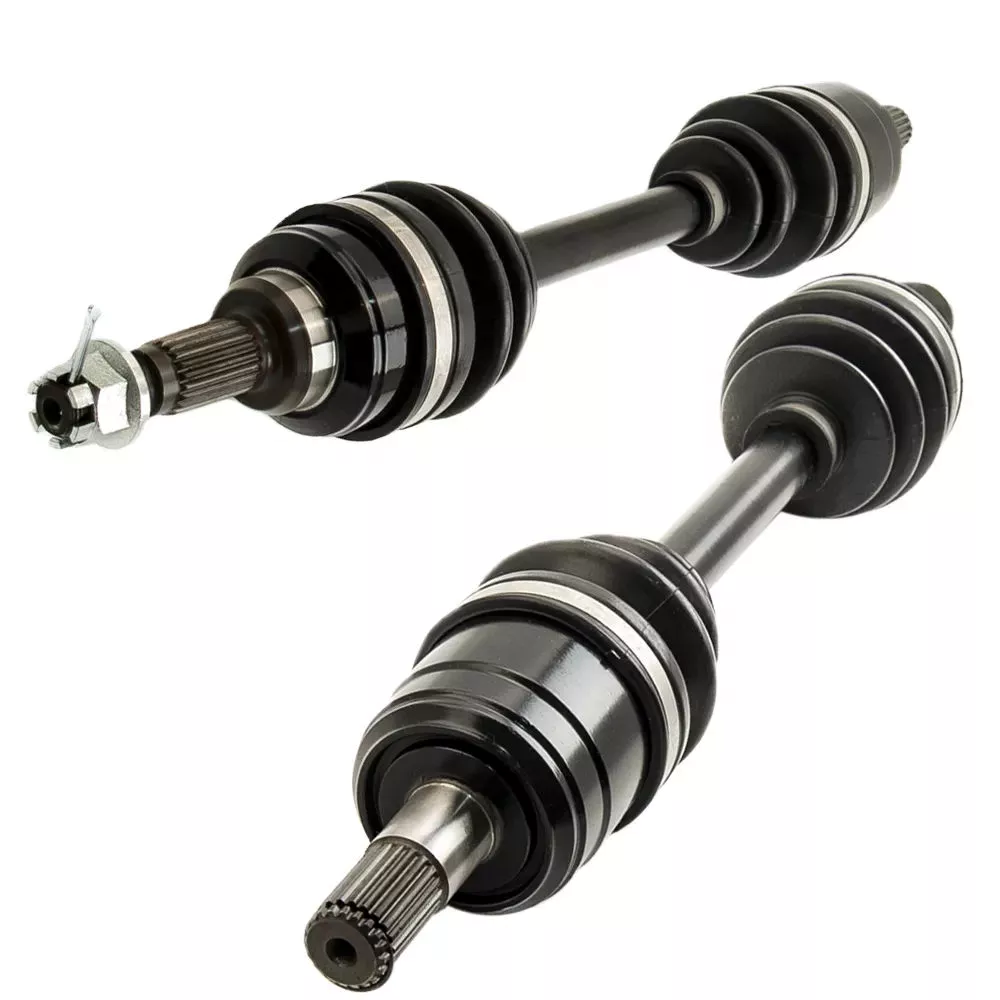
Can PTO shafts be customized for specific machinery and power requirements?
Yes, PTO (Power Take-Off) shafts can be customized to meet the specific machinery and power requirements of different applications. Manufacturers offer customization options to ensure that PTO shafts are precisely tailored to the power source, driven machinery, and the intended application. Here’s a detailed explanation of how PTO shafts can be customized:
1. Shaft Length: PTO shafts can be customized in terms of length to accommodate different equipment configurations. The length of the PTO shaft is critical to ensure proper alignment and connection between the power source and driven machinery. Manufacturers can provide PTO shafts with adjustable or fixed-length options, allowing for flexibility in meeting specific length requirements. Customizing the shaft length ensures that the PTO shaft fits the equipment properly, optimizing power transfer efficiency and reducing the risk of misalignment or excessive stress.
2. Spline Sizes: PTO shafts are available with different spline sizes to match the input and output shafts of various equipment. Spline size customization allows the PTO shaft to seamlessly connect to the power source and driven machinery. Manufacturers can offer different spline configurations, such as 1-3/8 inch, 1-3/4 inch, or metric sizes, to accommodate specific machinery requirements. Customizing the spline size ensures a proper fit and secure connection, enabling efficient power transfer without the need for additional adapters or modifications.
3. Yoke Designs: PTO shafts can be customized with different yoke designs to match the connection points on the power source and driven machinery. The yoke is the component that attaches to the shaft and connects to the equipment. Manufacturers can provide various yoke designs, such as round, triangular, or splined yokes, to ensure compatibility with specific machinery. Customizing the yoke design allows for a secure and reliable connection, aligning the PTO shaft with the equipment’s input/output shafts and optimizing power transmission efficiency.
4. Torque Ratings: PTO shafts can be customized to handle specific torque requirements based on the power demands of the application. Torque is the rotational force that the PTO shaft needs to transmit from the power source to the driven machinery. Manufacturers can design PTO shafts with different torque ratings by using appropriate materials, dimensions, and reinforcement techniques. Customizing the torque rating ensures that the PTO shaft can safely and reliably handle the required power levels without premature wear or failure.
5. Kopplungsmechanismen: PTO shafts can be customized with different coupling mechanisms to match the connection requirements of specific equipment. Coupling mechanisms are the means by which the PTO shaft connects and disconnects from the power source and driven machinery. Manufacturers can provide various coupling options, such as quick-release couplings, shear pin couplings, or mechanical lock couplings, to accommodate different machinery designs and operational needs. Customizing the coupling mechanism ensures ease of use, secure attachment, and quick disengagement when necessary.
6. Protective Features: PTO shafts can be customized with additional protective features to enhance safety and durability. These features may include guard shields, safety covers, or slip clutches. Guard shields and safety covers provide physical protection by enclosing the rotating shaft and preventing accidental contact, reducing the risk of injuries. Slip clutches offer overload protection by allowing the PTO shaft to slip or disengage when excessive torque or resistance is encountered, preventing damage to the shaft and associated equipment. Customizing the protective features ensures compliance with safety regulations and addresses specific safety requirements of the machinery or application.
7. Material Selection: PTO shafts can be customized with different materials based on the application’s demands. Manufacturers can offer a range of material options, such as steel, aluminum, or composite materials, with varying strength, weight, and corrosion resistance properties. Customizing the material selection allows for optimizing the PTO shaft’s performance, considering factors like operating conditions, environmental exposure, and weight restrictions.
By providing customization options such as shaft length, spline sizes, yoke designs, torque ratings, coupling mechanisms, protective features, and material selection, manufacturers can ensure that PTO shafts are specifically tailored to meet the machinery and power requirements of different applications. Customized PTO shafts facilitate seamless integration, efficient power transfer, and reliable operation, enhancing the overall performance and productivity of the equipment.
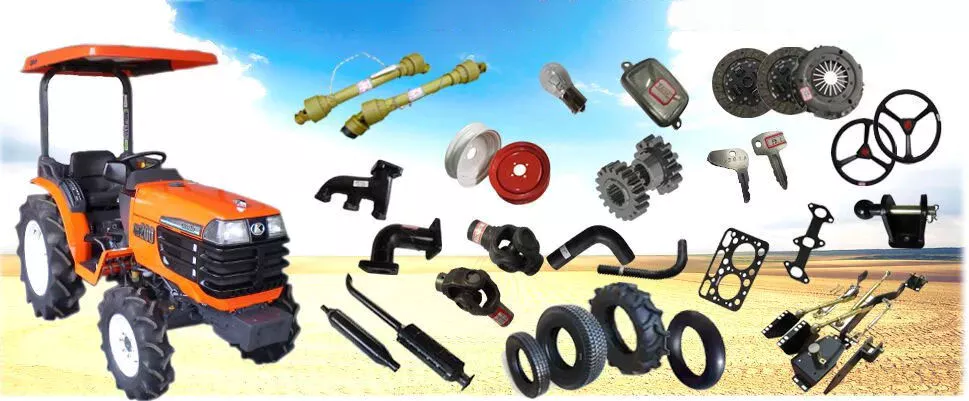
Wie bewältigen Zapfwellen Schwankungen in Drehzahl- und Drehmomentanforderungen?
Zapfwellen (PTO-Wellen) sind so konstruiert, dass sie die unterschiedlichen Drehzahl- und Drehmomentanforderungen zwischen der Antriebsquelle (z. B. Traktor oder Motor) und der angetriebenen Maschine oder dem angetriebenen Gerät erfüllen. Sie enthalten verschiedene Mechanismen und Komponenten, um eine effiziente Kraftübertragung zu gewährleisten und gleichzeitig die unterschiedlichen Drehzahl- und Drehmomentanforderungen zu berücksichtigen. Hier ist eine detaillierte Erklärung, wie Zapfwellen diese unterschiedlichen Drehzahl- und Drehmomentanforderungen erfüllen:
1. Getriebesysteme: Zapfwellen sind häufig mit Getriebesystemen ausgestattet, um die Drehzahl- und Drehmomentanforderungen zwischen Antriebsquelle und angetriebener Maschine anzupassen. Getriebe ermöglichen eine Drehzahlreduzierung oder -erhöhung und können bei Bedarf auch die Drehrichtung ändern. Durch die Verwendung unterschiedlicher Übersetzungsverhältnisse können Zapfwellen die Drehzahl und das Drehmoment an die spezifischen Anforderungen der angetriebenen Geräte anpassen. Getriebesysteme gewährleisten somit die notwendige Leistungs- und Drehzahlkompatibilität zwischen Antriebsquelle und angetriebener Maschine.
2. Scherbolzenmechanismen: Einige Nebenabtriebswellen, insbesondere in Anwendungen mit zu erwartenden plötzlichen Überlastungen oder Stoßbelastungen, verwenden Scherbolzenmechanismen. Diese Mechanismen schützen die Antriebskomponenten vor Beschädigungen, indem sie die Nebenabtriebswelle bei zu hohem Drehmoment oder plötzlichem Widerstand trennen. Scherbolzen sind so konstruiert, dass sie bei einem bestimmten Drehmoment brechen und so sicherstellen, dass sich die Nebenabtriebswelle trennt, bevor die Antriebskomponenten beschädigt werden. Durch den Einsatz von Scherbolzenmechanismen können Nebenabtriebswellen Schwankungen der Drehmomentanforderungen bewältigen und bieten eine Sicherheitsfunktion zum Schutz der Anlage.
3. Reibungskupplungen: Zapfwellen können mit Reibkupplungen ausgestattet sein, um ein sanftes Ein- und Auskuppeln der Kraftübertragung zu ermöglichen. Reibkupplungen nutzen eine Reibscheibe und eine Druckplatte zur Steuerung der Kraftübertragung. Durch Anpassen des Anpressdrucks auf die Reibscheibe kann der Bediener die Kraftübertragung stufenlos ein- oder auskuppeln. Dies ermöglicht eine präzise Steuerung der Drehmomentübertragung, wodurch Schwankungen im Drehmomentbedarf ausgeglichen und gleichzeitig Stoßbelastungen der Antriebskomponenten minimiert werden. Reibkupplungen werden häufig in Anwendungen eingesetzt, in denen ein sanftes Einkuppeln der Kraft unerlässlich ist, beispielsweise in Hydraulikpumpen, Generatoren und Industriemischern.
4. Gleichlaufgelenke (CV-Gelenke): Wenn die angetriebene Maschine einen großen Bewegungsspielraum oder eine hohe Gelenkigkeit erfordert, können Zapfwellen mit Gleichlaufgelenken (CV-Gelenken) ausgestattet sein. CV-Gelenke ermöglichen es der Zapfwelle, Fluchtungsfehler und Winkelabweichungen auszugleichen, ohne die Kraftübertragung zu beeinträchtigen. Diese Gelenke gewährleisten eine gleichmäßige und konstante Kraftübertragung, selbst wenn die angetriebene Maschine schräg zur Kraftquelle steht. CV-Gelenke werden häufig in Anwendungen wie Knickladern, Teleskopladern und selbstfahrenden Feldspritzen eingesetzt, wo die Maschinen Flexibilität und einen großen Bewegungsspielraum erfordern.
5. Teleskopische Konstruktionen: Manche Zapfwellen sind teleskopierbar und ermöglichen so eine Längenverstellung. Diese Wellen bestehen aus zwei oder mehr konzentrischen Wellen, die ineinander gleiten und dadurch je nach Bedarf aus- oder einfahren lassen. Teleskopierbare Konstruktionen gleichen unterschiedliche Abstände zwischen Antriebsquelle und angetriebener Maschine aus. Durch die Längenverstellung der Zapfwelle können Bediener eine optimale Kraftübertragung gewährleisten, ohne dass die Welle auf dem Boden schleift oder zu kurz ist, um das Gerät zu erreichen. Teleskopierbare Zapfwellen werden häufig dort eingesetzt, wo der Abstand zwischen Antriebsquelle und Anbaugerät variiert, beispielsweise bei Frontanbaugeräten, Schneefräsen und selbstladenden Anhängern.
Durch den Einsatz dieser Mechanismen und Konstruktionen können Nebenabtriebswellen Drehzahl- und Drehmomentänderungen effektiv bewältigen. Sie bieten die notwendige Flexibilität, Sicherheit und Kontrolle für eine effiziente Kraftübertragung zwischen Antriebsquelle und angetriebener Maschine. Nebenabtriebswellen spielen eine entscheidende Rolle bei der Anpassung der Leistung an die spezifischen Anforderungen verschiedener Geräte und Anwendungen.


editor by CX 2023-11-18