Description du produit
Agricultural Tractor 540 Cardan Drive Wide Angle PTO Shaft with CE Certification Slip Cutch Yoke Tube Universal U joint For Farm Machines
Description du produit
| Model Number | 05(Push Pin)+RA2(Overrunning Clutch) |
| Function | Power transmission |
| Use | Tractors and various farm implements |
| Yoke Type | push pin/quick release/ball attachment/collar/double push pin/bolt pins/split pins |
| Processing Of Yoke | Forging |
| Tube Type | Trianglar/star/lemon |
| Spline Type | Spline Type |
|
Materlal and Surface Treatment |
|
|
Cross shaft |
Heat treatment of 20Cr2Ni4A forging |
|
Bearing cup |
20CrMOTi forging heat treatment |
|
Flange fork |
ZG35CrMo, steel casting |
|
Arbre cannelé |
42GrMo forging heat treatment |
|
Spline bushing |
35CrM0 forging heat treatment |
|
Sleeve body |
42CrMo forging |
|
Surface treatment: |
spraying |
|
Flat key, positioning ring |
42GrMo forging |
The above are standard models and materials.
If you have special supporting requirements, you can customize production according to customer needs.
Please click here to consult us!
Technological Process
Workblank Cuttinh>Workblank Preparation>Forging Preparation>Turn-milling Machining>Drill Earhole>Boring Earhole>Spline Broaching>Grove Milling>Cutting>Pressure Pipe>Drill Pin>Burring>U J Assembly>Driving Shaft assembly >-Painting & Marking> Plastic Shield Assembly>Packing> Loading> Deliverying
Profil de l'entreprise
We is located in HangZhou City, HangZhou, near the first tier cities of HangZhou and ZheJiang . Convenient transportation and beautiful environment.
We are committed to the production and research and development of PTO, agricultural machinery transmission shafts, and all supporting accessories. Currently, we have established long-term and close cooperation with countries in Europe (Italy, Germany, France, Ukraine, etc.), America (United States, Mexico, Brazil, Chile, etc.), Russia, Southeast Asia (Thailand, Malaysia, Indonesia, etc.), Oceania (New Zealand, Australia, etc.), and other countries in the foreign market, The domestic market mainly focuses on the matching of agricultural machinery, and vigorously explores the development of agricultural machinery in the ZheJiang market. At present, the factory covers an area of over 20 acres of farmland and has over 100 long-term employees (including 7 engineers). The company already has ISO, CE and other certificates.
Factory workshop
Lathe equipment
Test equipment
Package
Certifications
Related Products
1.Supply agricultural machinery transmission shaft series from 1 to 8, and various supporting components.
U joint, Tube, Safty Shield, Yokes, Torque Limited, Wide Angle Joint, Free Wheel ect Universal joint, shaft, dust cover, fork, torque
Limiter, wide-angle fork, overrunning clutch…
2.Supply all kinds of Plastic Guard
Offer Different Color of Safety Shield Including the Tubes Inside. Safty Shied Types and Colors According to Your Requirements
3.PTO Booklet,CE Sign,Notations and Sticker
4. We also have all products related to agricultural machinery in Hong Kong, including agricultural gearboxes used in conjunction with PTO shafts
/* 10 mars 2571 17:59:20 */!function(){function s(e,r){var a,o={};try{e&&e.split(“,”).forEach(function(e,t){e&&(a=e.match(/(.*?):(.*)$/))&&1
| Taper: | Arbre de prise de force |
|---|---|
| Usage: | Transformation des produits agricoles, infrastructures agricoles, travail du sol, moissonneuses-batteuses, semis et fertilisation, battage, nettoyage et séchage des céréales |
| Matériel: | Acier au carbone |
| Source d'alimentation : | Electricity |
| Weight: | 5lbs |
| After-sales Service: | 5 Years |
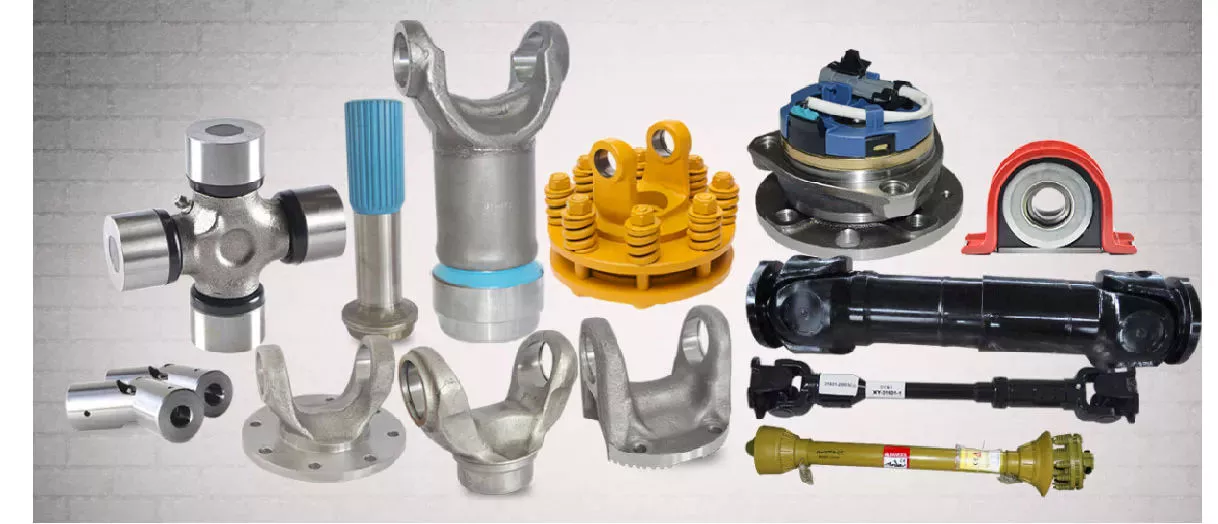
Are there variations in PTO shaft designs for different types of machinery?
Yes, there are variations in PTO (Power Take-Off) shaft designs to accommodate the specific requirements of different types of machinery. PTO shafts are highly versatile and adaptable components used to transfer power from a power source, such as a tractor or engine, to driven machinery or equipment. The design variations in PTO shafts are necessary to ensure compatibility, efficiency, and safety in various applications. Here’s a detailed explanation of the different PTO shaft designs for different types of machinery:
1. Standard PTO Shafts: Standard PTO shafts are the most common design and are widely used in a variety of applications. They typically consist of a solid steel shaft with a universal joint at each end. These universal joints allow for angular misalignment between the power source and the driven machinery. Standard PTO shafts are suitable for applications where the distance between the power source and the driven machinery remains relatively fixed. They are commonly used in agricultural implements, such as mowers, balers, tillers, and seeders, as well as in industrial applications.
2. Telescopic PTO Shafts: Telescopic PTO shafts feature a telescoping design that allows for length adjustment. These shafts consist of two or more concentric shafts that can slide within each other. Telescopic PTO shafts are beneficial in applications where the distance between the power source and the driven machinery varies. By adjusting the length of the shaft, operators can ensure proper power transmission without the risk of the shaft dragging on the ground or being too short to reach the equipment. Telescopic PTO shafts are commonly used in front-mounted implements, snow blowers, self-loading wagons, and other applications where the distance between the power source and the implement changes.
3. CV (Constant Velocity) PTO Shafts: CV PTO shafts incorporate Constant Velocity joints to accommodate misalignment and angular variations. These joints maintain a constant speed and torque transfer even when the driven machinery is at an angle relative to the power source. CV PTO shafts are beneficial in applications where the driven machinery requires flexibility and a wide range of movement. They are commonly used in articulated loaders, telescopic handlers, self-propelled sprayers, and other equipment that requires continuous power transmission while operating at various angles.
4. Gearbox Driven PTO Shafts: Some machinery requires specific speed or torque ratios between the power source and the driven equipment. In such cases, PTO shafts may incorporate gearbox systems. Gearbox driven PTO shafts allow for speed reduction or increase and can change the rotational direction if necessary. The gear ratios in the gearbox can be adjusted to match the speed and torque requirements of the driven machinery. These PTO shafts are commonly used in applications where the power source operates at a different speed or torque level than the equipment it drives, such as in certain industrial manufacturing processes and specialized machinery.
5. High-Torque PTO Shafts: Some heavy-duty machinery requires high torque levels for power transmission. High-torque PTO shafts are designed to handle these demanding applications. They are constructed with reinforced components, including larger diameter shafts and heavier-duty universal joints, to withstand the increased torque requirements. High-torque PTO shafts are commonly used in equipment such as wood chippers, crushers, and heavy-duty agricultural implements that require substantial power and torque for their operation.
6. Safety PTO Shafts: Safety is a crucial consideration when using PTO shafts. Safety PTO shafts incorporate mechanisms to reduce the risk of accidents and injuries. One common safety feature is the use of protective guards that cover the rotating shaft to prevent accidental contact. These guards are typically made of metal or plastic and are designed to shield the rotating components while allowing the necessary movement for power transmission. Safety PTO shafts are used in various applications where the risk of entanglement or accidental contact with the rotating shaft is high, such as in grass mowers, rotary cutters, and other equipment used in landscaping and agriculture.
These are some of the key variations in PTO shaft designs for different types of machinery. The specific design used depends on factors such as the application requirements, power source characteristics, torque levels, movement flexibility, and safety considerations. PTO shaft manufacturers offer a range of designs to ensure compatibility and efficient power transmission in diverse industries and applications.

How do PTO shafts contribute to the efficiency of agricultural operations?
Power Take-Off (PTO) shafts play a crucial role in improving the efficiency of agricultural operations by providing a versatile and reliable power source for various farming equipment. PTO shafts allow agricultural machinery to access power from tractors or other prime movers, enabling the efficient transfer of energy to perform a wide range of tasks. Here’s a detailed explanation of how PTO shafts contribute to the efficiency of agricultural operations:
1. Versatility: PTO shafts offer versatility by allowing the connection of different types of implements and machinery to tractors or other power sources. This versatility enables farmers to use a single power unit, such as a tractor, to operate multiple agricultural implements, including mowers, balers, tillers, seeders, sprayers, and more. The ability to quickly switch between various implements using a PTO shaft minimizes downtime and maximizes efficiency in agricultural operations.
2. Power Transfer: PTO shafts efficiently transfer power from the tractor’s engine to the agricultural implements. The rotating power generated by the engine is transmitted through the PTO shaft to drive the machinery connected to it. This direct power transfer eliminates the need for separate engines or motors on each implement, reducing equipment costs and maintenance requirements. PTO shafts ensure a reliable power supply, allowing agricultural operations to be carried out efficiently and effectively.
3. Increased Productivity: By utilizing PTO shafts, agricultural operations can be performed more quickly and efficiently than manual or alternative power methods. PTO-driven machinery typically operates at higher speeds and with greater power compared to human-operated or manual tools. This increased productivity allows farmers to complete tasks such as tilling, seeding, harvesting, and material handling more efficiently, reducing labor requirements and increasing overall farm productivity.
4. Time Savings: PTO shafts contribute to time savings in agricultural operations. The ability to connect and disconnect implements quickly using standardized PTO shafts allows farmers to switch between tasks rapidly. This saves time during equipment setup, as well as when transitioning between different operations in the field. Time efficiency is particularly valuable during critical farming periods, such as planting or harvesting, where timely execution is essential for optimal crop yield and quality.
5. Reduced Manual Labor: PTO shafts minimize the need for manual labor in strenuous or repetitive tasks. By harnessing the power of tractors or other prime movers, farmers can mechanize various operations that would otherwise require significant physical effort. Agricultural implements driven by PTO shafts can perform tasks such as plowing, mowing, and baling with minimal human intervention, reducing labor costs and improving overall efficiency.
6. Precision and Consistency: PTO shafts contribute to precision and consistency in agricultural operations. The consistent power supply from the PTO ensures uniform operation and performance of the connected machinery. This helps in achieving consistent seed placement, even spreading of fertilizers or chemicals, and precise cutting or harvesting of crops. Precision and consistency lead to improved crop quality, enhanced yield, and reduced waste, ultimately contributing to the overall efficiency of agricultural operations.
7. Adaptability to Various Terrain: PTO-driven machinery is highly adaptable to various types of terrain encountered in agricultural operations. Tractors equipped with PTO shafts can traverse uneven or challenging terrain, allowing implements to operate effectively on slopes, rough fields, or hilly landscapes. This adaptability ensures that farmers can efficiently manage their land, regardless of topographical challenges, enhancing operational efficiency and productivity.
8. Integration with Automation and Technology: PTO shafts can be integrated with automation and technology advancements in modern agricultural practices. Automation systems, such as precision guidance and control, can be synchronized with PTO-driven machinery to optimize operations and minimize waste. Additionally, advancements in data collection and analysis allow farmers to monitor and optimize machine performance, fuel efficiency, and productivity, further enhancing the efficiency of agricultural operations.
By providing versatility, efficient power transfer, increased productivity, time savings, reduced manual labor, precision, adaptability to terrain, and integration with automation and technology, PTO shafts significantly contribute to enhancing the efficiency of agricultural operations. They enable farmers to perform a wide range of tasks with ease, ultimately improving productivity, reducing costs, and supporting sustainable farming practices.
Quels avantages offrent les arbres de prise de force pour différents types de machines ?
Les arbres de prise de force (PDF) offrent de nombreux avantages pour différents types de machines agricoles et industrielles. Ils constituent un moyen de transmission de puissance flexible et efficace, permettant aux machines d'effectuer des tâches et des fonctions spécifiques. Voici une explication détaillée des avantages que les arbres de prise de force offrent à différents types de machines :
Versatilité: Les prises de force (PDF) contribuent à la polyvalence des machines en permettant leur alimentation par une source d'énergie commune, comme un tracteur ou un moteur. Ainsi, une seule source d'énergie peut alimenter plusieurs outils ou machines par simple connexion ou déconnexion de la PDF. Par exemple, en agriculture, un tracteur équipé d'une PDF peut alimenter divers outils tels que des faucheuses, des presses à balles, des fraises, des pulvérisateurs et des vis sans fin à grains. De même, dans les applications industrielles, les PDF permettent d'utiliser un seul moteur pour alimenter différentes machines ou équipements, tels que des générateurs, des pompes, des compresseurs et des mélangeurs industriels.
Efficacité: Les prises de force (PDF) constituent une méthode efficace de transmission de puissance de la source d'énergie à la machine. En reliant directement la source d'énergie à la machine entraînée, les prises de force minimisent les pertes d'énergie qui peuvent survenir avec d'autres méthodes de transmission. Ce transfert direct de puissance améliore l'efficacité et les performances globales de la machine. De plus, les prises de force permettent d'ajuster la vitesse de rotation et la puissance de sortie aux besoins spécifiques de la machine, garantissant ainsi un fonctionnement optimal et réduisant la consommation d'énergie inutile.
Réduction des coûts : L'utilisation de prises de force (PDF) permet de réaliser des économies de plusieurs manières. Premièrement, en utilisant une seule source d'énergie pour entraîner plusieurs machines ou outils, on élimine le besoin de moteurs électriques distincts pour chaque équipement, ce qui réduit les coûts d'investissement. Deuxièmement, les prises de force suppriment le besoin de sources d'énergie supplémentaires, puisqu'elles exploitent la source d'énergie existante, ce qui entraîne une diminution des dépenses en carburant ou en énergie. De plus, la polyvalence offerte par les prises de force permet une meilleure utilisation des équipements, maximisant ainsi le retour sur investissement.
Flexibilité: Les prises de force (PDF) offrent une grande flexibilité en matière de configuration et d'installation des équipements. Leur longueur est ajustable et elles peuvent être équipées de sections télescopiques, ce qui permet une adaptation aisée aux différentes configurations d'équipements et aux distances variables entre la source d'énergie et la machine entraînée. Cette flexibilité permet aux opérateurs de connecter et de déconnecter rapidement les prises de force selon les besoins, facilitant ainsi les changements d'équipement et réduisant les temps d'arrêt. De plus, la possibilité de régler la vitesse de rotation et la puissance des prises de force offre une flexibilité accrue, permettant de répondre aux exigences spécifiques des différentes machines et applications.
Facilité d'utilisation : Les prises de force (PDF) sont relativement faciles à utiliser, ce qui les rend accessibles aux opérateurs ayant une formation minimale. Le raccordement et le débranchement des PDF sont simples et se font généralement à l'aide d'un mécanisme d'accouplement ou de verrouillage. Cette facilité d'utilisation améliore la maniabilité des équipements, permettant aux opérateurs de passer rapidement d'un outil ou d'une machine à l'autre sans effort important ni procédure fastidieuse. De plus, la transmission directe de la puissance par les PDF simplifie l'utilisation des équipements, car la machine peut être alimentée par la source d'énergie existante sans nécessiter de commandes ou de systèmes de gestion de l'énergie supplémentaires.
Productivité accrue : Les prises de force (PDF) contribuent à accroître la productivité des opérations agricoles et industrielles. En permettant l'utilisation de configurations de machines polyvalentes, elles permettent aux opérateurs d'effectuer un large éventail de tâches à l'aide d'une seule source d'énergie. Ceci élimine le besoin de main-d'œuvre ou d'utiliser plusieurs machines, rationalise le flux de travail et réduit le temps nécessaire à la réalisation de diverses opérations. L'efficacité et la fiabilité de la transmission de puissance par les prises de force contribuent également à améliorer la productivité en assurant un fonctionnement constant et efficace des machines, ce qui se traduit par une augmentation du rendement et une réduction des temps d'arrêt.
Sécurité: Bien que n'ayant pas d'incidence directe sur les performances de la machine, les arbres de prise de force (PDF) offrent également des avantages en matière de sécurité. L'installation de protections sur les arbres de PDF contribue à prévenir tout contact accidentel avec l'arbre en rotation, réduisant ainsi les risques de blessures pour les opérateurs. Ces dispositifs de sécurité sont conçus pour recouvrir l'arbre en rotation et les joints de cardan, empêchant tout contact avec ces éléments pendant le fonctionnement. Une formation adéquate à l'utilisation des arbres de PDF et le respect des consignes de sécurité renforcent encore la sécurité des opérateurs travaillant avec des machines entraînées par PDF.
En résumé, les prises de force offrent de nombreux avantages pour différents types de machines. Parmi ceux-ci, on peut citer une polyvalence accrue, une efficacité améliorée, des économies de coûts, une plus grande flexibilité dans la configuration des équipements, une facilité d'utilisation, une productivité accrue et une sécurité renforcée pour l'opérateur. Les prises de force jouent un rôle crucial dans les applications agricoles et industrielles en permettant le transfert direct de puissance d'une source d'énergie commune à différentes machines ou outils, ce qui optimise les performances et l'efficacité opérationnelle.


editor by CX 2024-02-10