Description du produit
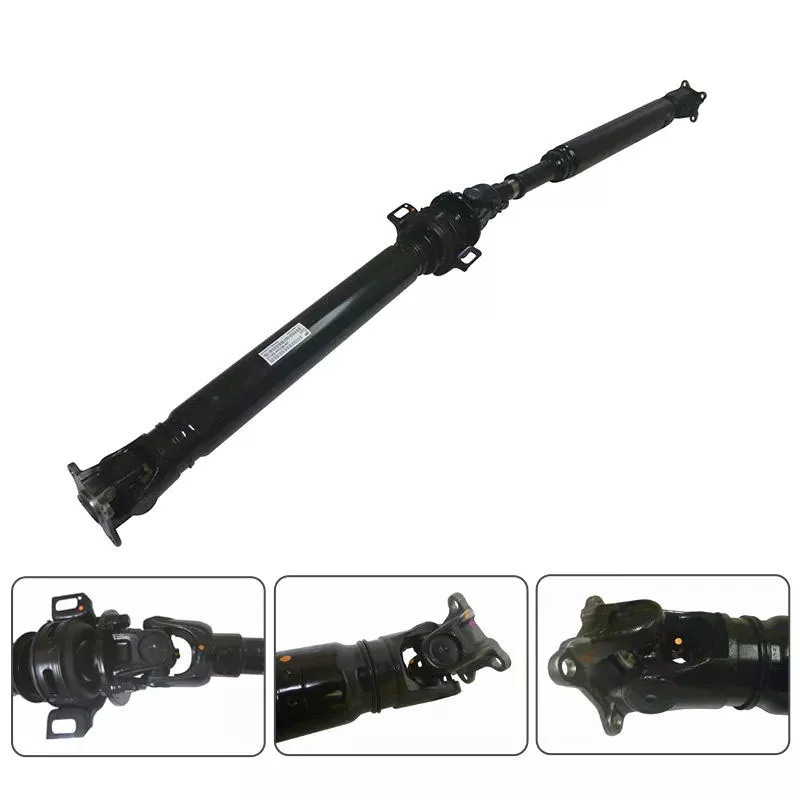
HangZhou Xihu (West Lake) Dis. Cardanshaft Co.,LTD is a leading professional manufacturer of cardan shafts in China. It is located in HangZhou ,ZheJiang Province. Our company has focused on the research and development , design and manufacture with different kinds of cardan shafts for almost 15 years.
Our producted cardan shafts are widely used in domestic large steel enterprises, such as ZheJiang Baosteel, HangZhou Iron and Steel Corporation, HangZhou Steel Corp and other domestic large-scale iron and steel enterprises.Now more products are exported to Europe, North America and Southeast Asia and other regions.
Our cardan shafts can be used to resist vibration and impact in the harsh environment of steel rolling, and the service life of cardan shafts is longer. We can also customize the special connection modes of cardan shafts in accordance of customers’ requirements .High precision, flexible joints, easy installation, perfect after-sales service and so on are highlight features of our products.
1.Product specification
1, advance technology
2, high accuracy and closely structure
3, high quality, the best price and good services
4, Strictly quality control by ISO9001: 2008.
5, with R&D Dept, OEM is available
2. About our advantages
1). With 10 years experience and professional OEM / ODM
2). Advance technology and R&D Dept with rich experience
3). Delivery in time
4).Competitive and reasonable price
5). High reputation
3.About our products
4.Application
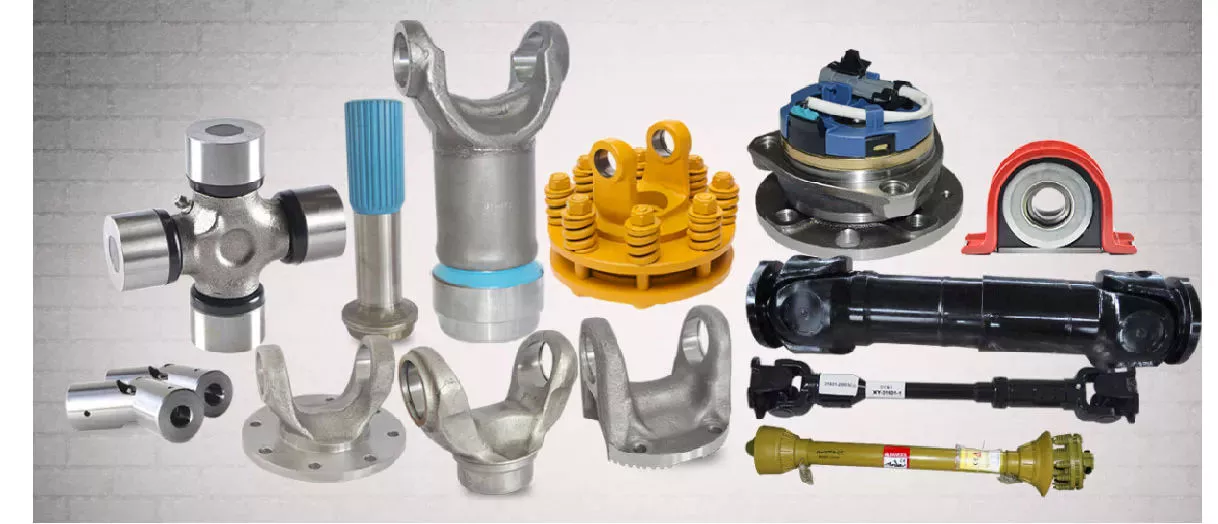
Universal shafts with spider for industrial application commonly refer to cardan shaft .It is 1 of the most widely used transmission components. Our products are widely supplied to rubber and plastics machineries, petroleum machineries, wind-power testing equipments and bullet trains testing equipments, boat, agriculture machines etc.
Welcome to contact us if you are interested in products and want further details.
Looking CHINAMFG to cooperating with you!
Brief Introduction
Processing flow
Applications
Quality Control
/* 10 mars 2571 17:59:20 */!function(){function s(e,r){var a,o={};try{e&&e.split(“,”).forEach(function(e,t){e&&(a=e.match(/(.*?):(.*)$/))&&1
| Matériel: | Acier allié |
|---|---|
| Charger: | Arbre de transmission |
| Rigidité et flexibilité : | Rigidité / Essieu rigide |
| Précision dimensionnelle du diamètre du tourillon : | IT6-IT9 |
| Forme de l'axe : | Arbre droit |
| Forme de la tige : | Hollow Axis |
| Personnalisation : |
Disponible
| Demande personnalisée |
|---|
Existe-t-il des variations dans la conception des arbres de prise de force pour différents types de machines ?
Oui, il existe différentes conceptions d'arbres de prise de force (PDF) afin de répondre aux exigences spécifiques des différents types de machines. Les arbres de PDF sont des composants très polyvalents et adaptables qui permettent de transmettre la puissance d'une source d'énergie, comme un tracteur ou un moteur, à une machine ou un équipement entraîné. Ces variations de conception sont nécessaires pour garantir la compatibilité, l'efficacité et la sécurité dans diverses applications. Voici une explication détaillée des différentes conceptions d'arbres de PDF pour différents types de machines :
1. Arbres de prise de force standard : Les arbres de prise de force standard sont les plus courants et largement utilisés dans de nombreuses applications. Ils se composent généralement d'un arbre en acier massif muni d'un joint de cardan à chaque extrémité. Ces joints de cardan permettent de compenser les désalignements angulaires entre la source d'énergie et la machine entraînée. Les arbres de prise de force standard conviennent aux applications où la distance entre la source d'énergie et la machine entraînée reste relativement fixe. On les retrouve fréquemment dans les outils agricoles, tels que les tondeuses, les presses à balles, les motoculteurs et les semoirs, ainsi que dans les applications industrielles.
2. Arbres de prise de force télescopiques : Les arbres de prise de force télescopiques sont conçus pour être ajustés en longueur. Ils sont constitués de deux ou plusieurs arbres concentriques coulissants. Ces arbres sont particulièrement avantageux lorsque la distance entre la source d'énergie et la machine entraînée est variable. En ajustant leur longueur, les opérateurs peuvent garantir une transmission de puissance optimale sans risque de frottement au sol ni d'insuffisance de longueur pour atteindre l'équipement. Les arbres de prise de force télescopiques sont couramment utilisés sur les outils frontaux, les souffleuses à neige, les remorques autochargeuses et autres applications où la distance entre la source d'énergie et l'outil est variable.
3. Arbres de prise de force à vitesse constante (CV) : Les arbres de prise de force à joint homocinétique (CV) intègrent des joints à vitesse constante pour compenser les défauts d'alignement et les variations angulaires. Ces joints assurent une transmission de vitesse et de couple constante, même lorsque la machine entraînée est inclinée par rapport à la source d'énergie. Les arbres de prise de force à joint homocinétique sont particulièrement avantageux dans les applications où la machine entraînée requiert flexibilité et une grande amplitude de mouvement. On les retrouve fréquemment sur les chargeuses articulées, les chariots télescopiques, les pulvérisateurs automoteurs et autres équipements nécessitant une transmission de puissance continue, même sous différents angles.
4. Arbres de prise de force entraînés par boîte de vitesses : Certaines machines exigent des rapports de vitesse ou de couple spécifiques entre la source d'énergie et l'équipement entraîné. Dans ce cas, les prises de force (PDF) peuvent intégrer des systèmes de réduction de vitesse. Les PDF entraînées par une boîte de vitesses permettent de réduire ou d'augmenter la vitesse et peuvent inverser le sens de rotation si nécessaire. Les rapports de réduction de la boîte de vitesses peuvent être ajustés pour correspondre aux exigences de vitesse et de couple de la machine entraînée. Ces PDF sont couramment utilisées dans les applications où la source d'énergie fonctionne à un niveau de vitesse ou de couple différent de celui de l'équipement qu'elle entraîne, comme dans certains procédés de fabrication industrielle et pour des machines spécialisées.
5. Arbres de prise de force à couple élevé : Certaines machines lourdes nécessitent un couple élevé pour la transmission de puissance. Les arbres de prise de force à couple élevé sont conçus pour répondre à ces exigences. Ils sont construits avec des composants renforcés, notamment des arbres de plus grand diamètre et des joints universels plus robustes, afin de supporter les besoins accrus en couple. Les arbres de prise de force à couple élevé sont couramment utilisés dans des équipements tels que les broyeurs de branches, les concasseurs et les machines agricoles lourdes qui requièrent une puissance et un couple importants pour leur fonctionnement.
6. Arbres de prise de force de sécurité : La sécurité est un aspect crucial lors de l'utilisation d'arbres de prise de force (PDF). Les arbres de PDF de sécurité intègrent des mécanismes visant à réduire les risques d'accidents et de blessures. Parmi les dispositifs de sécurité courants, on trouve les protections qui recouvrent l'arbre rotatif afin d'éviter tout contact accidentel. Ces protections, généralement en métal ou en plastique, sont conçues pour protéger les composants rotatifs tout en permettant le mouvement nécessaire à la transmission de la puissance. Les arbres de PDF de sécurité sont utilisés dans diverses applications où le risque d'enchevêtrement ou de contact accidentel avec l'arbre rotatif est élevé, comme les tondeuses à gazon, les débroussailleuses rotatives et autres équipements utilisés en aménagement paysager et en agriculture.
Voici quelques-unes des principales variations de conception des arbres de prise de force pour différents types de machines. Le choix de la conception dépend de facteurs tels que les exigences de l'application, les caractéristiques de la source d'énergie, les niveaux de couple, la flexibilité de mouvement et les considérations de sécurité. Les fabricants d'arbres de prise de force proposent une gamme de conceptions afin de garantir la compatibilité et une transmission de puissance efficace dans divers secteurs et applications.
How do PTO shafts contribute to the efficiency of agricultural operations?
Power Take-Off (PTO) shafts play a crucial role in improving the efficiency of agricultural operations by providing a versatile and reliable power source for various farming equipment. PTO shafts allow agricultural machinery to access power from tractors or other prime movers, enabling the efficient transfer of energy to perform a wide range of tasks. Here’s a detailed explanation of how PTO shafts contribute to the efficiency of agricultural operations:
1. Versatility: PTO shafts offer versatility by allowing the connection of different types of implements and machinery to tractors or other power sources. This versatility enables farmers to use a single power unit, such as a tractor, to operate multiple agricultural implements, including mowers, balers, tillers, seeders, sprayers, and more. The ability to quickly switch between various implements using a PTO shaft minimizes downtime and maximizes efficiency in agricultural operations.
2. Power Transfer: PTO shafts efficiently transfer power from the tractor’s engine to the agricultural implements. The rotating power generated by the engine is transmitted through the PTO shaft to drive the machinery connected to it. This direct power transfer eliminates the need for separate engines or motors on each implement, reducing equipment costs and maintenance requirements. PTO shafts ensure a reliable power supply, allowing agricultural operations to be carried out efficiently and effectively.
3. Increased Productivity: By utilizing PTO shafts, agricultural operations can be performed more quickly and efficiently than manual or alternative power methods. PTO-driven machinery typically operates at higher speeds and with greater power compared to human-operated or manual tools. This increased productivity allows farmers to complete tasks such as tilling, seeding, harvesting, and material handling more efficiently, reducing labor requirements and increasing overall farm productivity.
4. Time Savings: PTO shafts contribute to time savings in agricultural operations. The ability to connect and disconnect implements quickly using standardized PTO shafts allows farmers to switch between tasks rapidly. This saves time during equipment setup, as well as when transitioning between different operations in the field. Time efficiency is particularly valuable during critical farming periods, such as planting or harvesting, where timely execution is essential for optimal crop yield and quality.
5. Reduced Manual Labor: PTO shafts minimize the need for manual labor in strenuous or repetitive tasks. By harnessing the power of tractors or other prime movers, farmers can mechanize various operations that would otherwise require significant physical effort. Agricultural implements driven by PTO shafts can perform tasks such as plowing, mowing, and baling with minimal human intervention, reducing labor costs and improving overall efficiency.
6. Precision and Consistency: PTO shafts contribute to precision and consistency in agricultural operations. The consistent power supply from the PTO ensures uniform operation and performance of the connected machinery. This helps in achieving consistent seed placement, even spreading of fertilizers or chemicals, and precise cutting or harvesting of crops. Precision and consistency lead to improved crop quality, enhanced yield, and reduced waste, ultimately contributing to the overall efficiency of agricultural operations.
7. Adaptability to Various Terrain: PTO-driven machinery is highly adaptable to various types of terrain encountered in agricultural operations. Tractors equipped with PTO shafts can traverse uneven or challenging terrain, allowing implements to operate effectively on slopes, rough fields, or hilly landscapes. This adaptability ensures that farmers can efficiently manage their land, regardless of topographical challenges, enhancing operational efficiency and productivity.
8. Integration with Automation and Technology: PTO shafts can be integrated with automation and technology advancements in modern agricultural practices. Automation systems, such as precision guidance and control, can be synchronized with PTO-driven machinery to optimize operations and minimize waste. Additionally, advancements in data collection and analysis allow farmers to monitor and optimize machine performance, fuel efficiency, and productivity, further enhancing the efficiency of agricultural operations.
By providing versatility, efficient power transfer, increased productivity, time savings, reduced manual labor, precision, adaptability to terrain, and integration with automation and technology, PTO shafts significantly contribute to enhancing the efficiency of agricultural operations. They enable farmers to perform a wide range of tasks with ease, ultimately improving productivity, reducing costs, and supporting sustainable farming practices.

What is a PTO shaft and how is it used in agricultural and industrial equipment?
A power take-off (PTO) shaft is a mechanical component used in agricultural and industrial equipment to transfer power from a power source, such as an engine or motor, to another machine or implement. It is a driveline shaft that transmits rotational power and torque, allowing the connected equipment to perform various tasks. PTO shafts are commonly used in agricultural machinery, such as tractors, as well as in industrial equipment, including generators, pumps, and construction machinery. Here’s a detailed explanation of what a PTO shaft is and how it is used:
Structure and Components: A typical PTO shaft consists of a hollow metal tube with universal joints at each end. The hollow tube allows the shaft to rotate freely, while the universal joints accommodate angular misalignments between the power source and the driven equipment. The universal joints consist of a cross-shaped yoke with needle bearings, providing flexibility and allowing the transmission of power at varying angles. Some PTO shafts may also include a telescopic section to adjust the length for different equipment setups or to accommodate varying distances between the power source and the driven machine.
Power Transfer: The primary function of a PTO shaft is to transfer power and torque from the power source to the driven equipment. The power source, typically an engine or motor, drives the PTO shaft through a mechanical connection, such as a gearbox or a clutch. As the power source rotates, it transmits rotational force to the PTO shaft. The PTO shaft, in turn, transfers this rotational power and torque to the driven equipment, enabling it to perform its intended function. The torque and rotational speed transmitted through the PTO shaft depend on the power source’s characteristics and the gear ratio or clutch engagement.
Agricultural Applications: In agriculture, PTO shafts are commonly used in tractors to power various implements and attachments. The PTO shaft is connected to the tractor’s power take-off, a rotating drive shaft located at the rear of the tractor. By engaging the PTO clutch, the tractor’s engine power is transferred through the PTO shaft to the attached implements. Agricultural machinery, such as mowers, balers, tillers, sprayers, and grain augers, often rely on PTO shafts to receive power for their operation. The PTO shaft allows the implements to be powered directly by the tractor’s engine, eliminating the need for separate power sources and increasing the versatility and efficiency of agricultural operations.
Industrial Applications: PTO shafts also find extensive use in various industrial applications. Industrial equipment, such as generators, pumps, compressors, and industrial mixers, often incorporate PTO shafts to receive power from engines or electric motors. The PTO shaft connects the power source to the driven equipment, allowing it to operate and perform its intended function. In construction machinery, PTO shafts can be found in equipment like concrete mixers, hydraulic hammers, and post hole diggers, enabling the transfer of power from the machinery’s engine to the specific attachment or tool being used.
Safety Considerations: It is important to note that PTO shafts can pose safety risks if not handled properly. The rotating shaft can cause serious injuries if operators come into contact with it while it is in operation. To ensure safety, PTO shafts are often equipped with shielding or guards that cover the rotating shaft and universal joints, preventing accidental contact. It is crucial to maintain and inspect these safety features regularly to ensure their effectiveness. Additionally, operators should receive proper training on PTO shaft operation, including safe attachment and detachment procedures, as well as the use of personal protective equipment when working near PTO-driven machinery.
In summary, a PTO shaft is a mechanical component used in agricultural and industrial equipment to transmit power and torque from a power source to a driven machine or implement. It enables the direct power transfer from engines or motors to various equipment, increasing efficiency and versatility in agricultural and industrial operations. While PTO shafts offer significant benefits, operators must be aware of the associated safety considerations and take appropriate precautions to prevent accidents and injuries.


editor by CX 2024-01-09