Description du produit
Description du produit
Basic Info.
| Model NO. | NH1B | Customize | Avaliable |
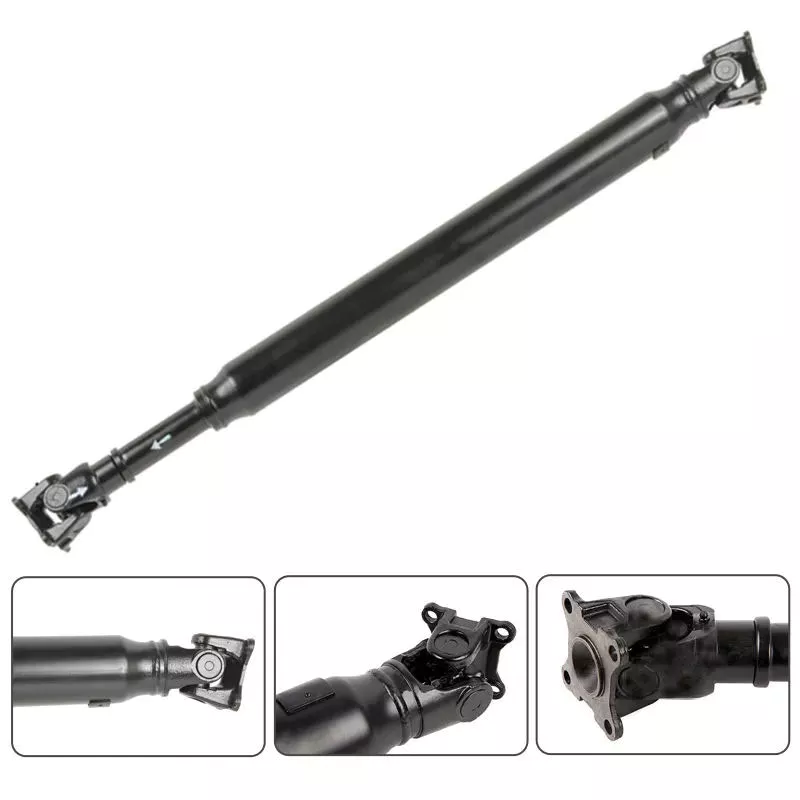
| Production Name | Agricultural Machine Use Drive Shaft Connect Machines Pto Truck | Warranty | 1 year |
| Trademark | Yontan | Specification | Customized |
| Origin | ZheJiang , China | Delivery time | 3-7 days |
| Application | for All The Dump Truck | Production capacity | 20000pcs/year |
| Transport Package | Wooden Case | HS Code | 8708994900 |
Description du produit
The function of the power take-off is to output power to external work. It is usually composed of a gearbox, a clutch, and a controller. It is 1 or more sets of transmission gears. There are many classifications of power take-offs. Among them, the power output form on the side of the transmission can only output one-half of the maximum power of the engine, while the power output form on the front of the transmission can obtain the maximum power of the engine, so it is called full power output take-off. Powerful weapon.
Profil de l'entreprise
ZheJiang Yontan Import and Export Co., Ltd. was established in HangZhou, the capital of ZheJiang Province, a famous national historical and cultural city with profound heritage. The company is mainly engaged in the export of complete vehicles of SINOTRUk, HOWO, SHACMAN, FOTON, FAW, XIHU (WEST LAKE) DIS., XIHU (WEST LAKE) DIS.FENG and other brands. It is engaged in the export sales of a full range of truck accessories and assemblies. The products distributed by the company are mainly supplied to major domestic transportation units, oil and gas transportation teams, municipal engineering fleets and civil engineering fleets, as well as major foreign construction companies and transportation companies.
On the basis of the continuous development of the company’s business, we are committed to exploring the international market. So far, our market has covered China, Eastern Europe, the Middle East, Africa, Southeast Asia, South America and other countries and regions. Our integrity is everywhere and we are deeply trusted by customers. Our company has a large warehouse and a professional management team, which can quickly find suitable parts for customers, and can provide services such as good packaging, safe storage, and fast transportation to meet the diverse needs of customers at any time.
FAQ
★ What is your terms of packing?
A: Generally, we pack our goods in neutral white boxes and brown cartons. If you have legally registered patent,
we can pack the goods in your branded boxes after getting your authorization letters.
★ What is your terms of payment?
A: T/T 30% as deposit, and 70% before delivery. We’ll show you the photos of the products and packages
before you pay the balance.
★Can you produce according to the samples?
A: Yes, we can produce by your samples or technical drawings. We can build the molds and fixtures.
Action now contact us for whole CATALOG.
More than 5000kinds of OEM parts waiting for you. Please contact us!
/* 22 janvier 2571 19:08:37 */!function(){function s(e,r){var a,o={};try{e&&e.split(“,”).forEach(function(e,t){e&&(a=e.match(/(.*?):(.*)$/))&&1
| Service après-vente : | Great |
|---|---|
| Warranty: | 1year |
| Certification: | ISO9001 |
| Driving System Parts: | Wheel |
| Electrical System Parts: | Starting System |
| Brake System Parts: | Transmission |
| Exemples : |
US$ 30/Piece
1 pièce (commande minimale) | |
|---|
| Personnalisation : |
Disponible
| Demande personnalisée |
|---|

How do PTO shafts handle variations in length and connection methods?
PTO (Power Take-Off) shafts are designed to handle variations in length and connection methods to accommodate different equipment setups and ensure efficient power transfer. PTO shafts need to be adjustable in length to bridge the distance between the power source and the driven machinery. Additionally, they must provide versatile connection methods to connect to a wide range of equipment. Here’s a detailed explanation of how PTO shafts handle variations in length and connection methods:
1. Telescoping Design: PTO shafts often feature a telescoping design, allowing them to be adjusted in length to suit different equipment configurations. The telescoping feature enables the shaft to extend or retract, accommodating varying distances between the power source (such as a tractor or engine) and the driven machinery. By adjusting the length of the PTO shaft, it can be properly aligned and connected to ensure optimal power transfer. Telescoping PTO shafts typically consist of multiple tubular sections that slide into one another, providing flexibility in length adjustment.
2. Splined Shafts: PTO shafts commonly employ splined shafts as the primary connection method between the power source and driven machinery. Splines are a series of ridges or grooves along the shaft that interlock with corresponding grooves in the mating component. The splined connection allows for torque transfer while maintaining alignment between the power source and driven machinery. Splined shafts can handle variations in length by extending or retracting the telescoping sections while still maintaining a solid connection between the power source and the driven equipment.
3. Adjustable Sliding Yokes: PTO shafts typically feature adjustable sliding yokes on one or both ends of the shaft. These yokes allow for angular adjustment, accommodating variations in the alignment between the power source and driven machinery. The sliding yokes can be moved along the splined shaft to achieve the desired angle and maintain proper alignment. This flexibility ensures that the PTO shaft can handle length variations while ensuring efficient power transfer without placing excessive strain on the universal joints or other components.
4. Universal Joints: Universal joints are integral components of PTO shafts that allow for angular misalignment between the power source and driven machinery. They consist of a cross-shaped yoke with bearings that transmit torque between connected shafts while accommodating misalignment. Universal joints provide flexibility in connecting PTO shafts to equipment that may not be perfectly aligned. As the PTO shaft length varies, the universal joints compensate for the changes in angle, allowing for smooth power transmission even when there are variations in length or misalignment between the power source and driven machinery.
5. Coupling Mechanisms: PTO shafts utilize various coupling mechanisms to securely connect to the power source and driven machinery. These mechanisms often involve a combination of splines, bolts, locking pins, or quick-release mechanisms. The coupling methods can vary depending on the specific equipment and industry requirements. The versatility of PTO shafts allows for the use of different coupling methods, ensuring a reliable and secure connection regardless of the length variation or equipment configuration.
6. Customization Options: PTO shafts can be customized to handle specific length variations and connection methods. Manufacturers offer options to select different lengths of telescoping sections to match the specific distance between the power source and driven machinery. Additionally, PTO shafts can be tailored to accommodate various connection methods through the selection of splined shaft sizes, yoke designs, and coupling mechanisms. This customization enables PTO shafts to meet the specific requirements of different equipment setups, ensuring optimal power transfer and compatibility.
7. Safety Considerations: When handling variations in length and connection methods, it is essential to consider safety. PTO shafts incorporate protective guards and shields to prevent accidental contact with rotating components. These safety measures must be appropriately adjusted and installed to provide adequate coverage and protection, regardless of the PTO shaft’s length or connection configuration. Safety guidelines and regulations should be followed to ensure the proper installation, adjustment, and use of PTO shafts in order to prevent accidents or injuries.
By incorporating telescoping designs, splined shafts, adjustable sliding yokes, universal joints, and versatile coupling mechanisms, PTO shafts can handle variations in length and connection methods. The flexibility of PTO shafts allows them to adapt to different equipment setups, ensuring efficient power transfer while maintaining alignment and safety.
Existe-t-il des limitations ou des inconvénients liés aux arbres de prise de force ?
Bien que les arbres de prise de force (PDF) offrent de nombreux avantages en termes de transmission de puissance et de polyvalence, ils présentent également certaines limitations et certains inconvénients. Il est important de prendre en compte ces facteurs lors de l'utilisation d'arbres de PDF afin de garantir un fonctionnement sûr et efficace. Voici une explication détaillée de certaines limitations et inconvénients associés aux arbres de PDF :
1. Risques pour la sécurité : L'un des principaux problèmes liés aux arbres de prise de force (PDF) est le risque potentiel pour la sécurité. Ces arbres tournent à grande vitesse et peuvent présenter un danger important s'ils ne sont pas correctement protégés ou manipulés. Un contact accidentel avec un arbre de PDF exposé ou insuffisamment protégé peut entraîner des blessures graves, telles que l'enchevêtrement, l'amputation, voire le décès. Il est donc essentiel de respecter les consignes de sécurité, de mettre en place des protections adéquates et de veiller à ce que les opérateurs soient bien formés aux bonnes pratiques de manipulation afin de limiter ces risques.
2. Entretien et lubrification : Les arbres de prise de force nécessitent un entretien et une lubrification réguliers pour garantir des performances optimales et une longue durée de vie. Les pièces mobiles, telles que les joints de cardan et les cannelures, doivent être inspectées, nettoyées et lubrifiées aux intervalles recommandés. Négliger l'entretien peut entraîner une usure prématurée, une baisse d'efficacité et des pannes potentielles. Des pratiques d'entretien appropriées, incluant des inspections régulières et une lubrification en temps voulu, sont essentielles pour éviter ces problèmes.
3. Alignement et angles : L'efficacité du transfert de puissance dépend de l'alignement et des angles précis des arbres de prise de force. Un mauvais alignement ou des angles excessifs entre la source d'énergie et la machine entraînée peuvent engendrer une usure et une contrainte accrues sur les composants, conduisant à une défaillance prématurée. Il est donc important de veiller à un alignement et à un réglage des angles corrects, à l'aide de coulisseaux réglables ou d'autres moyens, afin de prévenir toute contrainte excessive sur l'arbre de prise de force et les équipements associés.
4. Limitations de longueur : Les arbres de prise de force (PDF) présentent des limitations de longueur maximale et minimale dues à des contraintes techniques. Leur conception télescopique permet un certain réglage, mais l'extension ou la rétraction de l'arbre reste limitée. Si la distance entre la source d'énergie et la machine entraînée dépasse la longueur maximale ou est inférieure à la longueur minimale de l'arbre de PDF, des solutions alternatives ou des modifications peuvent s'avérer nécessaires. Dans certains cas, des composants supplémentaires, tels que des rallonges d'arbre de transmission ou des réducteurs, peuvent être requis pour compenser cette distance.
5. Compatibilité : Bien que les fabricants s'efforcent d'assurer la compatibilité, trouver l'arbre de prise de force adapté à une configuration d'équipement spécifique peut s'avérer complexe. En effet, certains équipements peuvent présenter des exigences particulières en matière de dimensions des cannelures, de couples admissibles ou de méthodes de connexion, qui ne sont pas toujours disponibles ou compatibles avec les arbres de prise de force standard. Une personnalisation peut alors être nécessaire pour résoudre ces problèmes de compatibilité, ce qui peut engendrer des coûts supplémentaires ou des délais de livraison plus longs.
6. Bruit et vibrations : Les prises de force en fonctionnement peuvent générer un bruit et des vibrations importants, surtout à haut régime. Cela peut s'avérer gênant pour les opérateurs et nécessiter des mesures supplémentaires pour réduire le bruit ou amortir les vibrations. Des vibrations excessives peuvent également affecter les performances et la durée de vie de la prise de force et des équipements qui y sont raccordés. L'installation d'amortisseurs de vibrations ou l'utilisation d'accouplements flexibles peuvent contribuer à atténuer ces problèmes.
7. Limites de puissance : Les arbres de prise de force (PDF) ont des limites de puissance spécifiques liées à leur conception, leurs matériaux et leurs composants. Le dépassement de ces limites peut entraîner une usure prématurée, des défaillances de composants, voire la rupture de l'arbre. Il est essentiel de comprendre et de respecter les puissances nominales recommandées pour les arbres de PDF afin de garantir un fonctionnement sûr et fiable. Dans certains cas, il peut être nécessaire d'opter pour un arbre de PDF de plus grande capacité ou d'ajouter des composants de transmission de puissance pour répondre à des besoins en puissance supérieurs.
8. Installation et désinstallation complexes : L'installation et la dépose des arbres de prise de force peuvent s'avérer complexes, notamment dans les espaces restreints ou lors de la manipulation d'équipements lourds. Elles peuvent nécessiter l'alignement des cannelures, la mise en place des accouplements et le verrouillage des mécanismes. Des techniques d'installation ou de dépose incorrectes peuvent endommager l'arbre ou l'équipement associé. Une formation adéquate, la manipulation appropriée des équipements et le respect des consignes du fabricant sont essentiels pour simplifier et garantir l'installation et la dépose en toute sécurité des arbres de prise de force.
Malgré ces limitations et inconvénients, les arbres de prise de force restent des composants essentiels et largement utilisés pour la transmission de puissance dans divers secteurs industriels. En tenant compte de ces aspects et en appliquant des mesures de sécurité, des pratiques de maintenance et des procédures d'alignement appropriées, les inconvénients potentiels des arbres de prise de force peuvent être efficacement atténués, permettant ainsi un fonctionnement sûr et efficace.
How do PTO shafts handle variations in speed and torque requirements?
PTO shafts (Power Take-Off shafts) are designed to handle variations in speed and torque requirements between the power source (such as a tractor or engine) and the driven machinery or equipment. They incorporate various mechanisms and components to ensure efficient power transmission while accommodating the different speed and torque demands. Here’s a detailed explanation of how PTO shafts handle variations in speed and torque requirements:
1. Gearbox Systems: PTO shafts often incorporate gearbox systems to match the speed and torque requirements between the power source and the driven machinery. Gearboxes allow for speed reduction or increase and can also change the rotational direction if necessary. By using different gear ratios, PTO shafts can adapt the rotational speed and torque output to suit the specific requirements of the driven equipment. Gearbox systems enable PTO shafts to provide the necessary power and speed compatibility between the power source and the machinery they drive.
2. Shear Bolt Mechanisms: Some PTO shafts, particularly in applications where sudden overloads or shock loads are expected, use shear bolt mechanisms. These mechanisms are designed to protect the driveline components from damage by disconnecting the PTO shaft in case of excessive torque or sudden resistance. Shear bolts are designed to break at a specific torque threshold, ensuring that the PTO shaft separates before the driveline components suffer damage. By incorporating shear bolt mechanisms, PTO shafts can handle variations in torque requirements and provide a safety feature to protect the equipment.
3. Friction Clutches: PTO shafts may incorporate friction clutch systems to enable smooth engagement and disengagement of power transfer. Friction clutches use a disc and pressure plate mechanism to control the transmission of power. Operators can gradually engage or disengage the power transfer by adjusting the pressure on the friction disc. This feature allows for precise control over torque transmission, accommodating variations in torque requirements while minimizing shock loads on the driveline components. Friction clutches are commonly used in applications where smooth power engagement is essential, such as in hydraulic pumps, generators, and industrial mixers.
4. Constant Velocity (CV) Joints: In cases where the driven machinery requires a significant range of movement or articulation, PTO shafts may incorporate Constant Velocity (CV) joints. CV joints allow the PTO shaft to accommodate misalignment and angular variations without affecting power transmission. These joints provide a smooth and constant power transfer even when the driven machinery is at an angle relative to the power source. CV joints are commonly used in applications such as articulated loaders, telescopic handlers, and self-propelled sprayers, where the machinery requires flexibility and a wide range of movement.
5. Telescopic Designs: Some PTO shafts feature telescopic designs that allow for length adjustment. These shafts consist of two or more concentric shafts that slide within each other, providing the ability to extend or retract the PTO shaft as needed. Telescopic designs accommodate variations in the distance between the power source and the driven machinery. By adjusting the length of the PTO shaft, operators can ensure proper power transmission without the risk of the shaft dragging on the ground or being too short to reach the equipment. Telescopic PTO shafts are commonly used in applications where the distance between the power source and the implement varies, such as in front-mounted implements, snow blowers, and self-loading wagons.
By incorporating these mechanisms and designs, PTO shafts can handle variations in speed and torque requirements effectively. They provide the necessary flexibility, safety, and control to ensure efficient power transmission between the power source and the driven machinery. PTO shafts play a critical role in adapting power to meet the specific needs of various equipment and applications.


editor by CX 2024-05-07