Descrição do produto
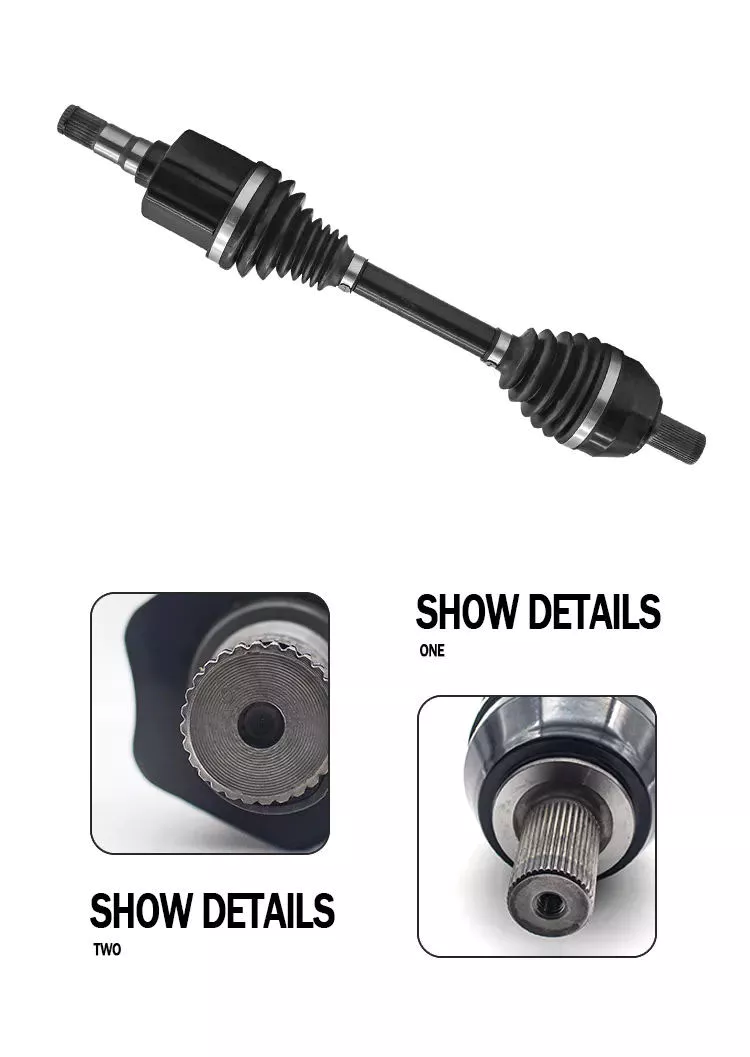
Specification OF PTO Drive Shaft —Speedway:
We developed and produced many tractor spare parts for Japanese Tractors .
Product Name: Japanese tractor transmission clutch disc parts for B1400 B7000
Tractor Model we can supply: B1500/1400,B5000,B6000, B7000, TU1400, TX1400, TX1500, YM F1401, YM1400 ETC.
The parts for example: Tyres, rim Jante, Kit coupling KB-TX 3 point linkage. Exhaust pipe Steering wheel. Kit coupling YM F14/F15, gear shaft, PTO shaft, PTO cardan, key, regulator ect.
Most of the spare parts are with stock. If you are interested in, please feel easy to contact me.
Other relevant parts for cars or machinery we have made in our workshop are as follows:
Drive shaft parts and assemblies,
Universal joint parts and assemblies,
PTO drive shafts,
Spline shafts,
Slip yokes,
Weld yokes,
Flange yokes,
Steering columns,
Connecting rods,
etc.
Descrição do produto
Pto Drive Shaft Item:
| Item | Cross journal size | 540dak-rpm | 1000dak-rpm | |||
| Série 1 | 22mm | 54mm | 12KW | 16HP | 18KW | 25HP |
| Series 2 | 23.8mm | 61.3mm | 15KW | 21HP | 23KW | 31HP |
| Series 3 | 27mm | 70mm | 26KW | 35HP | 40KW | 55HP |
| Série 4 | 27mm | 74.6mm | 26KW | 35HP | 40KW | 55HP |
| Series 5 | 30.2mm | 80mm | 35KW | 47HP | 54KW | 74HP |
| Série 6 | 30.2mm | 92mm | 47KW | 64HP | 74KW | 100HP |
| Series 7 | 30.2mm | 106.5mm | 55KW | 75HP | 87KW | 18HP |
| Série 8 | 35mm | 106.5mm
|
70KW | 95HP | 110KW | 150HP |
| Series 38 | 38mm | 102mm | 70KW | 95HP | 110KW | 150HP |
perfil de companhia
Certificações
Perguntas frequentes
/* March 10, 2571 17:59:20 */!function(){function s(e,r){var a,o={};try{e&&e.split(“,”).forEach(function(e,t){e&&(a=e.match(/(.*?):(.*)$/))&&1
| Tipo: | Haste |
|---|---|
| Uso: | Agricultural Products Processing, Farmland Infrastructure, Harvester, Planting and Fertilization, Grain Threshing, Cleaning and Drying |
| Material: | Stainless Steel |
| Fonte de alimentação: | Eixo de acionamento da tomada de força |
| Peso: | Standard |
| Serviço pós-venda: | 1 ano |
| Exemplos: |
US$ 300/Piece
1 unidade (pedido mínimo) | |
|---|
How do manufacturers ensure the compatibility of PTO shafts with different equipment?
Manufacturers employ various measures to ensure the compatibility of PTO (Power Take-Off) shafts with different equipment. Compatibility is crucial to ensure that PTO shafts can effectively transfer power from the power source to the driven machinery without compromising performance, safety, or ease of use. Here’s a detailed explanation of how manufacturers ensure compatibility:
1. Standardization: PTO shafts are designed and manufactured based on standardized specifications. These specifications outline the essential parameters such as shaft dimensions, spline sizes, torque ratings, and safety requirements. By adhering to standardized designs, manufacturers ensure that PTO shafts are compatible with a wide range of equipment that meets the same standards. Standardization allows for interchangeability, meaning that PTO shafts from one manufacturer can be used with equipment from another manufacturer as long as they conform to the same specifications.
2. Collaboration with Equipment Manufacturers: PTO shaft manufacturers often collaborate closely with equipment manufacturers to ensure compatibility. They work together to understand the specific requirements of the equipment and design PTO shafts that seamlessly integrate with the machinery. This collaboration may involve sharing technical specifications, conducting joint testing, and exchanging feedback. By working in partnership, manufacturers can address any compatibility issues early in the design and development process, resulting in PTO shafts that are tailored to the equipment’s needs.
3. Customization Options: PTO shaft manufacturers offer customization options to accommodate different equipment configurations. They provide flexibility in terms of shaft length, spline sizes, yoke designs, and coupling mechanisms. Equipment manufacturers can specify the required parameters, and the PTO shafts can be customized accordingly. This ensures that the PTO shafts precisely match the equipment’s power input/output requirements and connection methods, guaranteeing compatibility and efficient power transfer.
4. Testing and Validation: Manufacturers conduct rigorous testing and validation processes to ensure the compatibility and performance of PTO shafts. They subject the shafts to various tests, including torque testing, rotational speed testing, and durability testing. These tests verify that the PTO shafts can handle the expected power loads and operating conditions without failure. By validating the performance of the PTO shafts, manufacturers can ensure that they are compatible with a wide range of equipment and can reliably transfer power under different operating scenarios.
5. Compliance with Industry Standards: PTO shaft manufacturers adhere to industry standards and regulations to ensure compatibility. Organizations such as the American Society of Agricultural and Biological Engineers (ASABE) establish safety and performance standards for PTO shafts. Manufacturers design and produce their shafts in accordance with these standards, ensuring that their products meet the necessary requirements for compatibility and safety. Compliance with industry standards provides assurance to equipment manufacturers and end-users that the PTO shafts are compatible and suitable for use with different equipment.
6. Documentation and Guidelines: Manufacturers provide comprehensive documentation and guidelines to assist equipment manufacturers and end-users in ensuring compatibility. This documentation includes technical specifications, installation instructions, maintenance guidelines, and safety recommendations. The documentation helps equipment manufacturers select the appropriate PTO shaft for their equipment and provides guidance on proper installation and use. By following the manufacturer’s guidelines, equipment manufacturers can ensure compatibility and optimize the performance of the PTO shafts.
7. Ongoing Research and Development: PTO shaft manufacturers continuously invest in research and development to enhance compatibility with different equipment. They stay updated with industry trends, technological advancements, and evolving equipment requirements. This ongoing research and development enable manufacturers to improve the design, materials, and features of PTO shafts, ensuring compatibility with the latest equipment innovations and addressing any compatibility challenges that may arise.
By employing standardization, collaborating with equipment manufacturers, offering customization options, conducting thorough testing, complying with industry standards, providing documentation and guidelines, and investing in research and development, manufacturers ensure the compatibility of PTO shafts with different equipment. This compatibility allows for seamless integration, efficient power transfer, and optimal performance across a wide range of machinery and equipment in various industries.

How do PTO shafts handle variations in load and torque during operation?
PTO (Power Take-Off) shafts are designed to handle variations in load and torque during operation by employing specific mechanisms and features that ensure efficient power transfer and protection against overload conditions. Here’s a detailed explanation of how PTO shafts handle variations in load and torque:
1. Mechanical Design: PTO shafts are engineered with robust mechanical design principles that enable them to handle variations in load and torque. They are typically constructed using high-strength materials such as steel, which provides durability and resistance to bending or twisting forces. The shaft’s diameter, wall thickness, and overall dimensions are carefully calculated to withstand the expected torque levels and load variations. The mechanical design of the PTO shaft ensures that it can transmit power reliably and accommodate the dynamic forces encountered during operation.
2. Universal Joints: Universal joints are a key component of PTO shafts that allow for flexibility and compensation of misalignment between the power source and driven machinery. These joints can accommodate variations in angular alignment, which may occur due to changes in load or movement of the machinery. Universal joints consist of a cross-shaped yoke with needle bearings that allow for smooth rotation and transfer of torque, even when the shafts are not perfectly aligned. The design of universal joints enables PTO shafts to handle variations in load and torque while maintaining consistent power transmission.
3. Slip Clutches: Slip clutches are often incorporated into PTO shafts to provide overload protection. These clutches allow the PTO shaft to slip or disengage momentarily when excessive torque or resistance is encountered. Slip clutches typically consist of friction plates that can be adjusted to a specific torque setting. When the torque surpasses the predetermined limit, the clutch slips, preventing damage to the PTO shaft and connected equipment. Slip clutches are particularly useful when sudden changes in load or torque occur, providing a safety mechanism to protect the PTO shaft and associated machinery.
4. Torque Limiters: Torque limiters are another protective feature found in some PTO shafts. These devices are designed to automatically disengage the power transmission when a predetermined torque threshold is exceeded. Torque limiters can be mechanical, such as shear pin couplings or friction clutches, or electronic, utilizing sensors and control systems. When the torque exceeds the set limit, the torque limiter disengages, preventing further power transfer and protecting the PTO shaft from overload conditions. Torque limiters are effective in handling sudden spikes in torque and safeguarding the PTO shaft and associated equipment.
5. Maintenance and Inspection: Regular maintenance and inspection of PTO shafts are essential to ensure their proper functioning and ability to handle variations in load and torque. Routine maintenance includes lubrication of universal joints, inspection of shaft integrity, and tightening of fasteners. Regular inspections allow for early detection of wear, misalignment, or other issues that may affect the PTO shaft’s performance. By addressing maintenance and inspection requirements, operators can identify and address any concerns that may arise due to variations in load and torque, ensuring the continued safe and efficient operation of the PTO shaft.
6. Operator Awareness and Control: Operators play a crucial role in managing variations in load and torque during PTO shaft operation. They should be aware of the machinery’s operational limits, including the recommended torque ratings and load capacities of the PTO shaft. Proper training and understanding of the equipment’s capabilities enable operators to make informed decisions and adjust the operation when encountering significant load or torque changes. Operators should also be vigilant in monitoring the equipment’s performance, watching for any signs of excessive vibration, noise, or other indications of potential issues related to load and torque variations.
By incorporating robust mechanical design, utilizing universal joints, slip clutches, torque limiters, and implementing proper maintenance practices, PTO shafts are equipped to handle variations in load and torque during operation. These features ensure reliable power transmission, protect against overload conditions, and contribute to the safe and efficient functioning of the PTO shaft and the machinery it drives.

Quais são os benefícios que os eixos de tomada de força (PTO) oferecem para diferentes tipos de máquinas?
Os eixos de tomada de força (PTO, na sigla em inglês) oferecem diversas vantagens para vários tipos de máquinas em aplicações agrícolas e industriais. Eles proporcionam um meio flexível e eficiente de transmissão de potência, permitindo que as máquinas executem tarefas e funções específicas. A seguir, uma explicação detalhada dos benefícios que os eixos de tomada de força oferecem para diferentes tipos de máquinas:
Versatilidade: Os eixos de tomada de força (TDF) contribuem para a versatilidade das máquinas, permitindo que sejam acionadas por uma fonte de energia comum, como um trator ou um motor. Isso significa que uma única fonte de energia pode ser usada para acionar vários implementos ou máquinas, simplesmente conectando e desconectando o eixo de TDF. Por exemplo, na agricultura, um trator equipado com um eixo de TDF pode acionar diversos implementos, como segadoras, enfardadeiras, cultivadores, pulverizadores e transportadores de grãos. Da mesma forma, em aplicações industriais, os eixos de TDF permitem o uso de um único motor para acionar diferentes máquinas ou equipamentos, como geradores, bombas, compressores e misturadores industriais.
Eficiência: Os eixos de tomada de força (TDF) oferecem um método eficiente de transferência de potência da fonte de energia para a máquina. Ao conectar diretamente a fonte de energia à máquina acionada, os eixos de TDF minimizam as perdas de energia que podem ocorrer com outros métodos de transmissão de potência. Essa transferência direta de potência resulta em maior eficiência e melhor desempenho geral da máquina. Além disso, os eixos de TDF permitem o ajuste da velocidade de rotação e da potência de saída para atender às necessidades específicas da máquina, garantindo a operação ideal e reduzindo o consumo desnecessário de energia.
Redução de custos: A utilização de eixos de tomada de força (TDF) pode gerar economia de custos de diversas maneiras. Primeiramente, ao utilizar uma única fonte de energia para acionar várias máquinas ou implementos, elimina-se a necessidade de motores separados para cada equipamento, reduzindo os custos de capital. Em segundo lugar, os eixos de TDF eliminam a necessidade de fontes adicionais de combustível ou energia, pois utilizam a fonte de energia existente, resultando em menores despesas com combustível ou energia. Além disso, a versatilidade oferecida pelos eixos de TDF permite uma melhor utilização dos equipamentos, maximizando o retorno do investimento.
Flexibilidade: Os eixos de tomada de força (TDF) oferecem flexibilidade em termos de configuração e instalação dos equipamentos. Seu comprimento pode ser ajustado ou podem ser equipados com seções telescópicas, permitindo fácil adaptação a diferentes arranjos de equipamentos e distâncias variáveis entre a fonte de energia e a máquina acionada. Essa flexibilidade permite que os operadores conectem e desconectem os eixos de TDF rapidamente, conforme necessário, facilitando trocas de equipamentos eficientes e reduzindo o tempo de inatividade. Além disso, a capacidade de ajustar a velocidade de rotação e a potência dos eixos de TDF adiciona ainda mais flexibilidade, atendendo aos requisitos específicos de diferentes máquinas e aplicações.
Facilidade de uso: Os eixos de tomada de força (TDF) são relativamente fáceis de usar, tornando-os acessíveis a operadores com treinamento mínimo. O processo de conexão e desconexão dos eixos de TDF é simples, geralmente envolvendo um acoplamento ou mecanismo de travamento fácil. Essa facilidade de uso aprimora a operabilidade do equipamento, permitindo que os operadores alternem rapidamente entre diferentes implementos ou máquinas sem grande esforço ou procedimentos demorados. Além disso, a transferência direta de potência por meio dos eixos de TDF simplifica a operação do equipamento, pois a máquina pode ser alimentada pela fonte de energia existente sem a necessidade de controles adicionais ou sistemas de gerenciamento de energia.
Aumento da produtividade: Os eixos de tomada de força (TDF) contribuem para o aumento da produtividade em operações agrícolas e industriais. Ao possibilitar o uso de configurações versáteis de máquinas, os operadores podem executar uma ampla gama de tarefas utilizando uma única fonte de energia. Isso elimina a necessidade de mão de obra manual ou o uso de múltiplas máquinas, otimizando o fluxo de trabalho e reduzindo o tempo necessário para concluir diversas operações. A eficiência e a confiabilidade da transmissão de potência por meio dos eixos de TDF também contribuem para o aumento da produtividade, garantindo a operação consistente e eficaz das máquinas, resultando em maior produção e menor tempo de inatividade.
Segurança: Embora não estejam diretamente relacionados ao desempenho da máquina, os eixos da tomada de força (TDF) também oferecem benefícios de segurança. A implementação de proteções ou resguardos de segurança nos eixos da TDF ajuda a prevenir o contato acidental com o eixo rotativo, reduzindo o risco de lesões aos operadores. Esses recursos de segurança são projetados para cobrir o eixo rotativo e as juntas universais, garantindo que os operadores não entrem em contato com eles durante a operação. O treinamento adequado na operação do eixo da TDF e a adesão às normas de segurança aumentam ainda mais a segurança do operador ao trabalhar com máquinas acionadas por TDF.
Em resumo, os eixos de tomada de força (TDF) oferecem uma série de benefícios para diversos tipos de máquinas. Esses benefícios incluem maior versatilidade, melhoria da eficiência, redução de custos, flexibilidade na configuração dos equipamentos, facilidade de uso, aumento da produtividade e maior segurança para o operador. Os eixos de TDF desempenham um papel crucial em aplicações agrícolas e industriais, permitindo a transferência direta de potência de uma fonte comum para diferentes máquinas ou implementos, resultando em desempenho otimizado e maior eficácia operacional.


editor by CX 2024-02-07