Descrição do produto
Tractor Rotary Mowers Bevel Fertilizer Spreader Tillers Right Angle Pto Shaft Reducer Gearbox for Farm and Agricultural Machinery
Established in Nov.2002,HangZhou CHINAMFG is a professional manufacturer and supplier in supplying spare parts and accessories for agricultural machinery. In addition to the 3000 standards parts, we also offer our customers tailor-made articles or assemblies that are for special application.
HangZhou CHINAMFG focused on the development and production of gearboxes with a professional team and continue to learn advanced technology; the use of first-class equipment; high quality supply chain system, relying on these, the gearboxes get high reputation among customers at home and abroad.
These gearboxes are widely used in rotary tillers, lawn mowers, harvesters, hole diggers, pesticide sprayers, irrigation machines, fertilizer spreaders, blenders and so on. The main products are:
–Straight bevel gearbox
–Spiral bevel gearbox
–Planetary reducer
–Worm gearbox
HangZhou CHINAMFG International Trading Co.,Ltd is a modern enterprise specilizing in the development, production, sales and services of PTO shaft. We adhere to the principle of “Precise Driveline, Advocate Green”, using advanced technology and equipments to ensure all the technical standards of precise driveline. So that the transmission efficiency can be maxmized and every drop of resource of customers’ can be saved. Meanwhile, we have a customer-centric service system, providing a full range of pre-sale, sale and after-sale service. Customer satisfaction is our forever pursuit.
We follow the principle of people first, trying our best to set up a pleasant surroundings and platform of performance for each employee, so everyone can be self-consciously active to join in “Precise Driveline, Adocate Green” to embody the self-worth, enterprise value and social value.
Newnuro’s goal is: reducing customer’s purchase budget, support customers to earn more market.
Newnuro always finds solution for customers.Customer satisfaction is our ultimate goal and forever pursuit.
/* 22 de janeiro de 2571 19:08:37 */!function(){function s(e,r){var a,o={};try{e&&e.split(“”,).forEach(function(e,t){e&&(a=e.match(/(.*?):(.*)$/))&&1
| Aplicativo: | Machinery, Agricultural Machinery |
|---|---|
| Function: | Distribution Power, Change Drive Torque, Change Drive Direction, Speed Changing, Speed Reduction, Speed Increase |
| Layout: | Assembled |
| Dureza: | Superfície dentária endurecida |
| Installation: | Horizontal Type |
| Step: | Single-Step |
| Exemplos: |
US$ 50/Peça
1 unidade (pedido mínimo) | |
|---|
| Personalização: |
Disponível
| Solicitação personalizada |
|---|
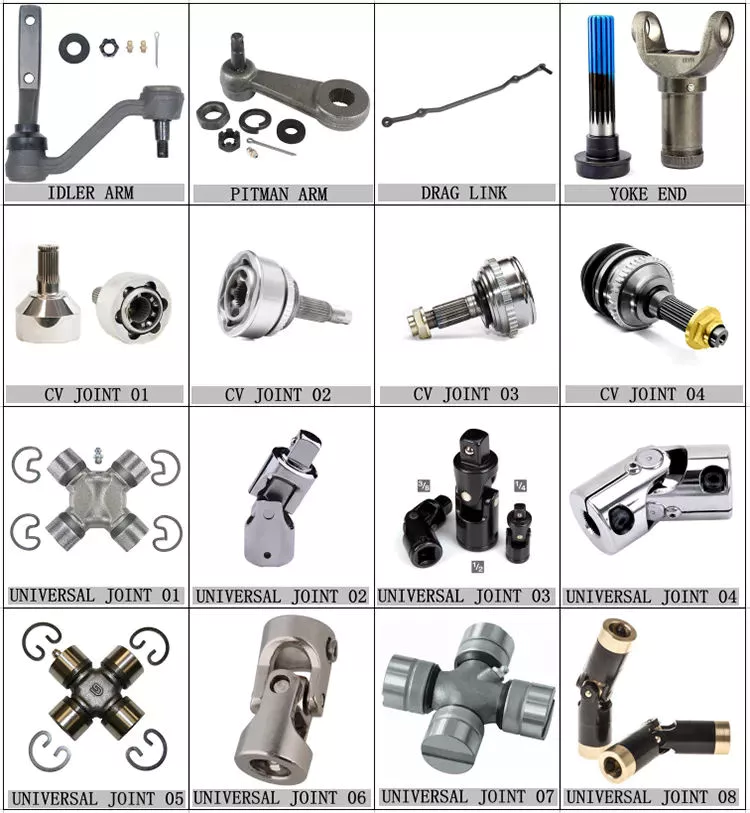
Os eixos de tomada de força (TDF) podem ser adaptados para uso tanto em ambientes agrícolas quanto industriais?
Sim, os eixos de tomada de força (TDF) podem ser adaptados para uso tanto em ambientes agrícolas quanto industriais. Embora os eixos de TDF sejam comumente associados a máquinas agrícolas, eles são componentes versáteis que podem ser utilizados em diversas aplicações além do setor agrícola. Com as devidas modificações e considerações, os eixos de TDF podem transmitir potência com eficiência também em ambientes industriais. Aqui está uma explicação detalhada de como os eixos de TDF podem ser adaptados para uso agrícola e industrial:
1. Projeto padrão do eixo da tomada de força (PTO): Os eixos de tomada de força (TDF) possuem um design padronizado que permite compatibilidade e intercambialidade entre diferentes equipamentos e máquinas. Essa padronização possibilita o uso dos eixos de TDF em diversas aplicações, incluindo ambientes agrícolas e industriais. Os componentes básicos de um eixo de TDF, como juntas universais, eixos estriados e proteções, permanecem consistentes, independentemente da aplicação específica. Essa consistência facilita a adaptação e a integração em diferentes máquinas e equipamentos.
2. Comprimento e Dimensionamento da Haste: Os eixos da tomada de força (TDF) podem ser personalizados em termos de comprimento e dimensões para atender a requisitos específicos em ambientes agrícolas e industriais. O comprimento do eixo pode ser ajustado para acomodar diferentes distâncias entre a fonte de energia e a máquina acionada. Essa flexibilidade permite uma transmissão de potência ideal e garante a compatibilidade com diversas configurações de equipamentos. Da mesma forma, as dimensões do eixo da TDF, incluindo o diâmetro e as especificações do eixo estriado, podem ser adaptadas para atender aos requisitos de torque e potência de diferentes aplicações, seja na agricultura ou na indústria.
3. Requisitos de energia: Os eixos de tomada de força (TDF) são projetados para transferir potência de uma fonte de energia para máquinas acionadas. Em aplicações agrícolas, a fonte de energia geralmente é um trator ou outros veículos agrícolas, enquanto em aplicações industriais, pode ser um motor, um motor elétrico ou uma unidade de potência específica do setor. Os eixos de TDF podem ser adaptados para atender a diferentes requisitos de potência, considerando fatores como capacidade de torque, velocidade de rotação e as demandas específicas da máquina ou equipamento acionado. Ao selecionar o eixo de TDF apropriado com base nos requisitos de potência, o eixo pode transferir potência de forma eficaz tanto em aplicações agrícolas quanto industriais.
4. Considerações de segurança: A segurança é um aspecto crítico no projeto e uso de eixos de tomada de força (TDF), independentemente da aplicação. Os eixos de TDF incorporam recursos de segurança, como proteções e blindagens, para evitar o contato acidental com componentes rotativos. Essas medidas de segurança são essenciais em ambientes agrícolas e industriais para minimizar o risco de emaranhamento, lesões ou danos. A adaptação de eixos de TDF para uso industrial pode exigir considerações de segurança adicionais, com base nos riscos específicos presentes nesses ambientes. No entanto, os princípios e recursos básicos de segurança dos eixos de TDF podem ser aplicados e adaptados para garantir a operação segura em ambos os contextos.
5. Acessórios especializados: Os eixos de tomada de força (TDF) podem ser equipados com acessórios ou adaptadores especiais para se adaptarem a diferentes máquinas ou equipamentos acionados. Em aplicações agrícolas, os eixos de TDF são comumente conectados a implementos como segadoras, enfardadeiras ou pulverizadores. Em aplicações industriais, os eixos de TDF podem ser adaptados para se conectarem a diversas máquinas industriais, incluindo bombas, geradores, compressores ou transportadores. Esses acessórios especiais garantem a compatibilidade e a transferência eficiente de potência entre o eixo de TDF e o equipamento acionado, permitindo uma integração perfeita tanto em aplicações agrícolas quanto industriais.
6. Considerações ambientais: Os eixos de tomada de força (TDF) podem ser adaptados para atender a condições ambientais específicas, tanto em ambientes agrícolas quanto industriais. Por exemplo, em aplicações agrícolas, os eixos de TDF podem precisar suportar exposição à sujeira, poeira, umidade e condições climáticas variáveis. Os ambientes industriais podem apresentar desafios ambientais únicos, como exposição a produtos químicos, altas temperaturas ou materiais abrasivos. Ao selecionar materiais, revestimentos protetores e vedações adequados para o ambiente específico, os eixos podem ser adaptados para garantir desempenho confiável e durável em diversas situações.
7. Conformidade com as normas: Os eixos de tomada de força (TDF), sejam utilizados em ambientes agrícolas ou industriais, precisam estar em conformidade com as normas e regulamentações de segurança pertinentes. Os fabricantes seguem as diretrizes e os requisitos estabelecidos por organizações como a Sociedade Americana de Engenheiros Agrícolas e Biológicos (ASABE) ou outras autoridades regionais de segurança. A conformidade garante que os eixos de TDF atendam aos critérios de segurança e aos padrões de desempenho aplicáveis tanto a ambientes agrícolas quanto industriais. Os usuários podem confiar em eixos de TDF padronizados que foram submetidos a testes e certificação, oferecendo garantia quanto à sua confiabilidade e segurança.
Considerando os fatores mencionados acima, os eixos de tomada de força (TDF) podem ser adaptados para transferir potência de forma eficaz tanto em ambientes agrícolas quanto industriais. A versatilidade dos eixos de TDF, aliada às opções de personalização, às considerações de segurança, aos acessórios especializados e à conformidade com as normas, permite sua integração bem-sucedida em uma ampla gama de máquinas e equipamentos em diversos setores.

How do PTO shafts handle variations in load and torque during operation?
PTO (Power Take-Off) shafts are designed to handle variations in load and torque during operation by employing specific mechanisms and features that ensure efficient power transfer and protection against overload conditions. Here’s a detailed explanation of how PTO shafts handle variations in load and torque:
1. Mechanical Design: PTO shafts are engineered with robust mechanical design principles that enable them to handle variations in load and torque. They are typically constructed using high-strength materials such as steel, which provides durability and resistance to bending or twisting forces. The shaft’s diameter, wall thickness, and overall dimensions are carefully calculated to withstand the expected torque levels and load variations. The mechanical design of the PTO shaft ensures that it can transmit power reliably and accommodate the dynamic forces encountered during operation.
2. Universal Joints: Universal joints are a key component of PTO shafts that allow for flexibility and compensation of misalignment between the power source and driven machinery. These joints can accommodate variations in angular alignment, which may occur due to changes in load or movement of the machinery. Universal joints consist of a cross-shaped yoke with needle bearings that allow for smooth rotation and transfer of torque, even when the shafts are not perfectly aligned. The design of universal joints enables PTO shafts to handle variations in load and torque while maintaining consistent power transmission.
3. Slip Clutches: Slip clutches are often incorporated into PTO shafts to provide overload protection. These clutches allow the PTO shaft to slip or disengage momentarily when excessive torque or resistance is encountered. Slip clutches typically consist of friction plates that can be adjusted to a specific torque setting. When the torque surpasses the predetermined limit, the clutch slips, preventing damage to the PTO shaft and connected equipment. Slip clutches are particularly useful when sudden changes in load or torque occur, providing a safety mechanism to protect the PTO shaft and associated machinery.
4. Torque Limiters: Torque limiters are another protective feature found in some PTO shafts. These devices are designed to automatically disengage the power transmission when a predetermined torque threshold is exceeded. Torque limiters can be mechanical, such as shear pin couplings or friction clutches, or electronic, utilizing sensors and control systems. When the torque exceeds the set limit, the torque limiter disengages, preventing further power transfer and protecting the PTO shaft from overload conditions. Torque limiters are effective in handling sudden spikes in torque and safeguarding the PTO shaft and associated equipment.
5. Maintenance and Inspection: Regular maintenance and inspection of PTO shafts are essential to ensure their proper functioning and ability to handle variations in load and torque. Routine maintenance includes lubrication of universal joints, inspection of shaft integrity, and tightening of fasteners. Regular inspections allow for early detection of wear, misalignment, or other issues that may affect the PTO shaft’s performance. By addressing maintenance and inspection requirements, operators can identify and address any concerns that may arise due to variations in load and torque, ensuring the continued safe and efficient operation of the PTO shaft.
6. Operator Awareness and Control: Operators play a crucial role in managing variations in load and torque during PTO shaft operation. They should be aware of the machinery’s operational limits, including the recommended torque ratings and load capacities of the PTO shaft. Proper training and understanding of the equipment’s capabilities enable operators to make informed decisions and adjust the operation when encountering significant load or torque changes. Operators should also be vigilant in monitoring the equipment’s performance, watching for any signs of excessive vibration, noise, or other indications of potential issues related to load and torque variations.
By incorporating robust mechanical design, utilizing universal joints, slip clutches, torque limiters, and implementing proper maintenance practices, PTO shafts are equipped to handle variations in load and torque during operation. These features ensure reliable power transmission, protect against overload conditions, and contribute to the safe and efficient functioning of the PTO shaft and the machinery it drives.

Você pode explicar os diferentes tipos de eixos de tomada de força (PTO) e suas aplicações?
Os eixos de tomada de força (PTO, na sigla em inglês) vêm em vários tipos, cada um projetado para aplicações e requisitos específicos. Os diferentes tipos de eixos de tomada de força oferecem versatilidade e compatibilidade com uma ampla gama de máquinas e implementos. Aqui está uma explicação dos tipos mais comuns de eixos de tomada de força e suas aplicações:
1. Eixo da tomada de força padrão: O eixo de tomada de força (TDF) padrão, também conhecido como eixo estriado, é o tipo mais comum usado em máquinas agrícolas e industriais. Consiste em um eixo de aço maciço com estrias ou ranhuras ao longo de seu comprimento. O eixo de TDF padrão normalmente possui seis estrias, embora também existam variações com quatro ou oito estrias. Este tipo de eixo de TDF é amplamente utilizado em tratores e diversos implementos, incluindo segadoras, enfardadeiras, cultivadores e roçadeiras. As estrias proporcionam uma conexão segura entre a fonte de energia e a máquina acionada, garantindo uma transferência de potência eficiente.
2. Parafuso de cisalhamento do eixo da tomada de força: Os eixos de tomada de força (TDF) com parafuso de cisalhamento são projetados com um recurso de segurança que permite a separação do eixo em caso de sobrecarga ou choque repentino, protegendo os componentes da transmissão. Esses eixos de TDF incorporam um mecanismo de parafuso de cisalhamento que conecta a tomada de força do trator à máquina acionada. Em caso de carga excessiva ou resistência repentina, o parafuso de cisalhamento é projetado para romper, desconectando o eixo de TDF e evitando danos à transmissão. Os eixos de TDF com parafuso de cisalhamento são comumente usados em equipamentos que podem encontrar obstruções repentinas ou situações de alta tensão, como trituradores de madeira, destocadores e cortadores rotativos de alta potência.
3. Eixo da tomada de força com embreagem de fricção: Os eixos de tomada de força (TDF) com embreagem de fricção possuem um mecanismo de embreagem que permite o engate e desengate suaves da transmissão de potência. Esses eixos de TDF geralmente incorporam um disco de fricção e uma placa de pressão, semelhante a um sistema de embreagem tradicional de veículo. A embreagem de fricção permite que os operadores engatem ou desengatem a transmissão de potência gradualmente, reduzindo impactos e minimizando o desgaste dos componentes da transmissão. Os eixos de TDF com embreagem de fricção são comumente usados em aplicações onde é necessário um controle preciso do engate de potência, como em bombas hidráulicas, geradores e misturadores industriais.
4. Eixo da tomada de força (TDF) de velocidade constante (CV): Eixos de tomada de força (TDF) de velocidade constante (CV), também conhecidos como eixos homocinéticos, são projetados para acomodar altos ângulos de desalinhamento sem afetar a transmissão de potência. Eles utilizam um mecanismo de junta universal que permite uma transferência de potência suave mesmo quando a máquina acionada está em um ângulo em relação à fonte de energia. Os eixos de TDF CV são frequentemente usados em aplicações onde a máquina requer uma amplitude significativa de movimento ou articulação, como em carregadeiras articuladas, manipuladores telescópicos e pulverizadores autopropelidos.
5. Eixo telescópico da tomada de força: Eixos telescópicos de tomada de força (TDF) têm comprimento ajustável, permitindo flexibilidade na configuração do equipamento e em diferentes distâncias entre a fonte de energia e a máquina acionada. Consistem em dois ou mais eixos concêntricos que deslizam um dentro do outro, possibilitando a extensão ou retração do eixo da TDF conforme a necessidade. Eixos telescópicos de TDF são comumente utilizados em aplicações onde a distância entre a tomada de força do trator e o implemento varia, como em implementos frontais, sopradores de neve e vagões autocarregáveis. O design telescópico facilita a adaptação a diferentes configurações de equipamentos e minimiza o risco de o eixo da TDF arrastar no solo.
6. Eixo da tomada de força da caixa de engrenagens: Os eixos de tomada de força (TDF) com caixa de engrenagens são projetados para adaptar a transmissão de potência entre diferentes velocidades ou direções de rotação. Eles incorporam um mecanismo de caixa de engrenagens que permite a redução ou o aumento da velocidade, bem como a capacidade de alterar o sentido de rotação. Os eixos de TDF com caixa de engrenagens são comumente usados em aplicações onde a máquina acionada requer uma velocidade ou sentido de rotação diferente daquele da tomada de força do trator. Exemplos incluem transportadores de grãos, misturadores de ração e equipamentos industriais que requerem relações de velocidade específicas ou capacidade de reversão.
É importante observar que a disponibilidade e as aplicações específicas dos tipos de eixos de tomada de força (TDF) podem variar de acordo com fatores regionais e específicos do setor. Além disso, determinadas máquinas ou implementos podem exigir eixos de TDF especializados ou personalizados para atender a requisitos específicos.
Em resumo, os diferentes tipos de eixos de tomada de força (TDF), como os eixos padrão, de parafuso de cisalhamento, de embreagem de fricção, de velocidade constante (CV), telescópicos e de caixa de engrenagens, oferecem versatilidade e compatibilidade com diversas máquinas e implementos. Cada tipo de eixo de TDF é projetado para atender a necessidades específicas, como eficiência na transferência de potência, segurança, engate suave, tolerância a desalinhamento, adaptabilidade e ajuste de velocidade/direção. Compreender os diferentes tipos de eixos de TDF e suas aplicações é crucial para selecionar o eixo apropriado para a máquina em questão e garantir desempenho e confiabilidade ideais.

editor by CX 2024-03-27