Produktbeskrivning
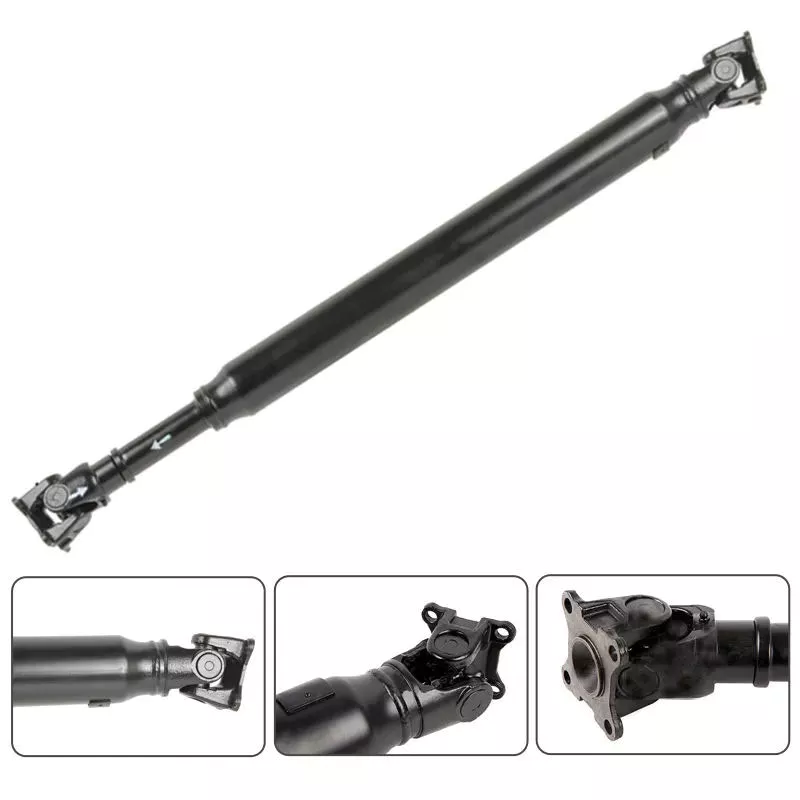
Premium Agricultural Machinery Transmission, Driveline, Pto Shaft
| Product No | Pto Shaft |
| Use For | Agricultual Machinery |
| OEM | Acceptable |
| Tube Types for PTO Shaft | Triangle,Lemon.Star |
| Universalkoppling | Series1-8 |
| Colors of PTO Shaft | Base on Customer’s requirement |
| PTO Shaft Series | Series1-8 |
| Yoke Type | Available Options |
| Equipment End Connection Way | CV,Clutch,Yoke |
| Warranty | 1 Year |
Product Specifications
Detaljerade foton
Företagsprofil
HangZhou Rongwang Industry and Trade Co., Ltd. was established in 2007. The company develops and produces gearboxes, transmission shafts, and related accessories for various types of lawn mowers, rotary tillers, excavators, and other agricultural machinery. The products are sold to various countries in Europe and America. The company currently has processing and testing equipment such as machining centers, CNC machine tools, and coordinate measuring instruments, and has a strong research and development team, as well as complete after-sales support services.
The company is committed to meeting and surpassing customer needs with a rigorous work style, providing high-performance and high-quality products. We warmly welcome domestic and foreign enterprises to come and discuss cooperation. The company is willing to take on a new look and constantly innovate. Sincere and enthusiastic service, as always, close communication and cooperation with colleagues at home and abroad, working hand in hand to create brilliance.
Applicatio
Corporate Purpose
The company always adheres to the business philosophy of “integrity, excellence, innovation, and progress” , striving for survival with quality and development with technology.The employees of Rongwang Industry and Trade have many years of experience in mechanical processing and manufacturing, while also absorbing advanced technology and processes from both domestic and foreign countries.And has passed ISO9001 quality system certification certification.
Rongwang Enterprise Purpose: To create excellent enterprises with excellent products, discounted prices, and excellent services.
Vision:Power the industry, Transmit the world.Rongwang Machinery aims to be the leader in the power transmission industry.Mission: To provide trustworthy and affordable products for our customers.”Trustworthy”means high quality and safe products.We are trying to offer lower cost products without sacrificing quality.
/* 22 januari 2571 19:08:37 */!function(){function s(e,r){var a,o={};try{e&&e.split(“,”).forEach(function(e,t){e&&(a=e.match(/(.*?):(.*)$/)))
| Material: | Alloy Steel |
|---|---|
| Load: | Drive Shaft |
| Stiffness & Flexibility: | Flexible Shaft |
| Journal Diameter Dimensional Accuracy: | IT6-IT9 |
| Axis Shape: | Straight Shaft |
| Shaft Shape: | Real Axis |
| Prover: |
US$ 20/Piece
1 styck (minsta beställning) | |
|---|
| Anpassning: |
Tillgänglig
| Anpassad förfrågan |
|---|
Vilka underhållsrutiner är viktiga för att förlänga livslängden på kraftuttagsaxlar?
Att sköta kraftuttagsaxlar ordentligt och regelbundet underhålla dem är avgörande för att förlänga deras livslängd och säkerställa optimal prestanda. Genom att följa viktiga underhållsrutiner kan du förhindra för tidigt slitage, identifiera potentiella problem tidigt och maximera livslängden på dina kraftuttagsaxlar. Här är några viktiga underhållsrutiner att tänka på:
1. Regelbunden inspektion: Utför rutinmässiga visuella inspektioner av kraftuttagsaxeln för att kontrollera om det finns tecken på skador, slitage eller feljustering. Leta efter sprickor, bucklor, böjda sektioner eller lösa komponenter. Inspektera universalkopplingar, kopplingsmekanismer, skydd och andra tillhörande delar. Var uppmärksam på ovanliga ljud, vibrationer eller prestandaförändringar, eftersom dessa kan tyda på underliggande problem som kräver uppmärksamhet.
2. Smörjning: Korrekt smörjning är avgörande för smidig drift och livslängd hos kraftuttagsaxlar. Följ tillverkarens rekommendationer angående smörjintervall och använd rekommenderad smörjmedelstyp. Smörj universalkopplingar, CV-kopplingar (om tillämpligt) och andra rörliga delar enligt specifikationerna. Kontrollera regelbundet att smörjmedelsnivåerna är tillräckliga och fyll på vid behov. Säkerställ att smörjmedlet som används är kompatibelt med axelmaterialet och inte drar till sig smuts eller skräp som kan orsaka nötning eller skador.
3. Rengöring: Håll kraftuttagsaxeln ren och fri från smuts, skräp och andra föroreningar. Avlägsna regelbundet ansamlad smuts, fett eller rester med en borste eller tryckluft. Var särskilt noggrann med att rengöra universalkopplingarna och områden där axeln är ansluten till andra komponenter. Rengöring förhindrar ansamling av slipande partiklar som kan påskynda slitage och försämra axelns prestanda.
4. Inspektion och underhåll av skydd: Kontrollera skyddsanordningarna och sköldarna regelbundet för att säkerställa att de sitter ordentligt på plats och är fria från skador. Skydd spelar en avgörande roll för att förhindra oavsiktlig kontakt med den roterande axeln och minimera risken för skador. Reparera eller byt ut skadade eller saknade skydd omedelbart. Säkerställ att skydden är korrekt inriktade och ger tillräckligt skydd för alla rörliga delar på kraftuttagsaxeln.
5. Kontroll av vridmoment och fästelement: Kontrollera regelbundet åtdragningsmomentet på fästelement, såsom bultar och muttrar, som håller fast kraftuttagsaxeln och tillhörande komponenter. Med tiden kan vibrationer och normal drift lossa dessa fästelement och äventyra axelns integritet. Använd lämpliga åtdragningsmomentspecifikationer från tillverkaren för att säkerställa korrekt åtdragning. Kontrollera regelbundet att fästelementen är åtdragna och dra åt dem vid behov.
6. Underhåll av brytbult eller slirkoppling: Om din kraftuttagsaxel har brytbults- eller slirkopplingsmekanismer, se till att de fungerar korrekt. Inspektera brytbultarna för tecken på slitage eller skador och byt ut dem vid behov. Kontrollera slirkopplingen för korrekt justering och smidig drift. Följ tillverkarens rekommendationer angående underhåll och justering av dessa säkerhetsmekanismer för att säkerställa att de effektivt skyddar drivlinans komponenter.
7. Korrekt förvaring: När kraftuttagsaxeln inte används, förvara den i en ren och torr miljö. Skydda axeln från fukt, extrema temperaturer och frätande ämnen. Om möjligt, förvara axeln i vertikalt läge för att förhindra böjning eller deformation. Överväg att använda skyddskåpor eller fodral för att skydda axeln från damm, smuts och andra potentiella skador.
8. Operatörsutbildning: Ge operatörerna ordentlig utbildning i korrekt drift, underhåll och säkerhetsprocedurer relaterade till kraftuttagsaxlarna. Utbilda dem om vikten av regelbundna inspektioner, smörjning och efterlevnad av rekommenderade underhållspraxis. Uppmuntra operatörerna att rapportera eventuella avvikelser eller problem omedelbart för att förhindra ytterligare skador och säkerställa snabba reparationer eller justeringar.
9. Tillverkare och expertvägledning: Konsultera tillverkarens riktlinjer och rekommendationer gällande underhållsrutiner specifika för din kraftuttagsaxelmodell. Sök dessutom råd från experter eller auktoriserade servicetekniker som är kunniga om underhåll av kraftuttagsaxlar. De kan ge värdefulla insikter och hjälp med att implementera de bästa underhållsrutinerna för just dina kraftuttagsaxlar.
Genom att följa dessa underhållsrutiner kan du förlänga livslängden på dina kraftuttagsaxlar, optimera deras prestanda och minska sannolikheten för oväntade fel eller kostsamma reparationer. Regelbundna inspektioner, smörjning, rengöring, underhåll av skydd, åtdragningsmomentkontroller och korrekt förvaring är alla viktiga för att säkerställa dina kraftuttagsaxlars livslängd och tillförlitlighet.
Are there any limitations or disadvantages associated with PTO shafts?
While PTO (Power Take-Off) shafts offer numerous advantages in terms of power transfer and versatility, they also have certain limitations and disadvantages. It’s important to consider these factors when using PTO shafts to ensure safe and efficient operation. Here’s a detailed explanation of some limitations and disadvantages associated with PTO shafts:
1. Safety Hazards: One of the primary concerns with PTO shafts is the potential for safety hazards. PTO shafts rotate at high speeds and can pose a significant risk if not properly guarded or handled. Accidental contact with an exposed or inadequately shielded PTO shaft can result in severe injuries, including entanglement, amputation, or even fatalities. It is crucial to follow safety guidelines, implement proper guarding, and ensure that operators are well-trained on safe handling practices to mitigate these risks.
2. Maintenance and Lubrication: PTO shafts require regular maintenance and lubrication to ensure optimal performance and longevity. The moving parts, such as universal joints and splines, need to be inspected, cleaned, and lubricated at recommended intervals. Neglecting maintenance can lead to premature wear, decreased efficiency, and potential failures. Proper maintenance practices, including regular inspections and timely lubrication, are essential to mitigate these issues.
3. Alignment and Angles: PTO shafts rely on proper alignment and angles to ensure efficient power transfer. Misalignment or excessive angles between the power source and driven machinery can cause increased wear and strain on the components, leading to premature failure. Ensuring proper alignment and angle adjustment, using adjustable sliding yokes or other means, is important to prevent excessive stress on the PTO shaft and associated equipment.
4. Length Limitations: PTO shafts have limitations on their maximum and minimum length due to engineering constraints. The telescoping design allows for some adjustment, but there is a practical limit to how much the shaft can extend or retract. If the distance between the power source and driven machinery exceeds the maximum or falls below the minimum length of the PTO shaft, alternative solutions or modifications may be required. In some cases, additional components such as drive shaft extensions or gearboxes may be necessary to bridge the distance.
5. Compatibility: While manufacturers strive to ensure compatibility, there can still be challenges in finding the right PTO shaft for specific equipment configurations. Equipment may have unique requirements in terms of spline sizes, torque ratings, or connection methods that may not be readily available or compatible with off-the-shelf PTO shafts. Customization may be required to address these compatibility issues, which can result in increased costs or lead times.
6. Noise and Vibrations: PTO shafts in operation can generate significant noise and vibrations, especially at higher speeds. This can be a nuisance for operators and may require additional measures to reduce noise levels or dampen vibrations. Excessive vibrations can also affect the overall performance and lifespan of the PTO shaft and connected equipment. Implementing vibration dampeners or using flexible couplings can help mitigate these issues.
7. Power Limits: PTO shafts have specific power limits based on their design, materials, and components. Exceeding these power limits can lead to premature wear, component failures, or even shaft breakage. It is crucial to understand and adhere to the recommended power ratings for PTO shafts to ensure safe and reliable operation. In some cases, upgrading to a higher-capacity PTO shaft or implementing additional power transmission components may be necessary to accommodate higher power requirements.
8. Complex Installation and Removal: Installing and removing PTO shafts can be a complex process, especially in confined spaces or when dealing with heavy equipment. It may require aligning splines, engaging couplings, and securing locking mechanisms. Improper installation or removal techniques can lead to damage to the shaft or associated equipment. Proper training, handling equipment, and following manufacturer guidelines are essential to simplify and ensure the safe installation and removal of PTO shafts.
Despite these limitations and disadvantages, PTO shafts remain widely used and valuable components for power transfer in various industries. By addressing these considerations and implementing proper safety measures, maintenance practices, and alignment procedures, the potential drawbacks of PTO shafts can be effectively mitigated, allowing for safe and efficient operation.
How do PTO shafts handle variations in speed and torque requirements?
PTO shafts (Power Take-Off shafts) are designed to handle variations in speed and torque requirements between the power source (such as a tractor or engine) and the driven machinery or equipment. They incorporate various mechanisms and components to ensure efficient power transmission while accommodating the different speed and torque demands. Here’s a detailed explanation of how PTO shafts handle variations in speed and torque requirements:
1. Gearbox Systems: PTO shafts often incorporate gearbox systems to match the speed and torque requirements between the power source and the driven machinery. Gearboxes allow for speed reduction or increase and can also change the rotational direction if necessary. By using different gear ratios, PTO shafts can adapt the rotational speed and torque output to suit the specific requirements of the driven equipment. Gearbox systems enable PTO shafts to provide the necessary power and speed compatibility between the power source and the machinery they drive.
2. Shear Bolt Mechanisms: Some PTO shafts, particularly in applications where sudden overloads or shock loads are expected, use shear bolt mechanisms. These mechanisms are designed to protect the driveline components from damage by disconnecting the PTO shaft in case of excessive torque or sudden resistance. Shear bolts are designed to break at a specific torque threshold, ensuring that the PTO shaft separates before the driveline components suffer damage. By incorporating shear bolt mechanisms, PTO shafts can handle variations in torque requirements and provide a safety feature to protect the equipment.
3. Friction Clutches: PTO shafts may incorporate friction clutch systems to enable smooth engagement and disengagement of power transfer. Friction clutches use a disc and pressure plate mechanism to control the transmission of power. Operators can gradually engage or disengage the power transfer by adjusting the pressure on the friction disc. This feature allows for precise control over torque transmission, accommodating variations in torque requirements while minimizing shock loads on the driveline components. Friction clutches are commonly used in applications where smooth power engagement is essential, such as in hydraulic pumps, generators, and industrial mixers.
4. Constant Velocity (CV) Joints: In cases where the driven machinery requires a significant range of movement or articulation, PTO shafts may incorporate Constant Velocity (CV) joints. CV joints allow the PTO shaft to accommodate misalignment and angular variations without affecting power transmission. These joints provide a smooth and constant power transfer even when the driven machinery is at an angle relative to the power source. CV joints are commonly used in applications such as articulated loaders, telescopic handlers, and self-propelled sprayers, where the machinery requires flexibility and a wide range of movement.
5. Telescopic Designs: Some PTO shafts feature telescopic designs that allow for length adjustment. These shafts consist of two or more concentric shafts that slide within each other, providing the ability to extend or retract the PTO shaft as needed. Telescopic designs accommodate variations in the distance between the power source and the driven machinery. By adjusting the length of the PTO shaft, operators can ensure proper power transmission without the risk of the shaft dragging on the ground or being too short to reach the equipment. Telescopic PTO shafts are commonly used in applications where the distance between the power source and the implement varies, such as in front-mounted implements, snow blowers, and self-loading wagons.
By incorporating these mechanisms and designs, PTO shafts can handle variations in speed and torque requirements effectively. They provide the necessary flexibility, safety, and control to ensure efficient power transmission between the power source and the driven machinery. PTO shafts play a critical role in adapting power to meet the specific needs of various equipment and applications.


editor by CX 2024-04-15