Produktbeskrivning
Quality agricultural Tractor Pto Shaft Cover for farm implement
1. Tubes or Pipes
We’ve already got Triangular profile tube and Lemon profile tube for all the series we provide.
And we have some star tube, splined tube and other profile tubes required by our customers (for a certain series). (Please notice that our catalog doesnt contain all the items we produce)
If you want tubes other than triangular or lemon, please provide drawings or pictures.
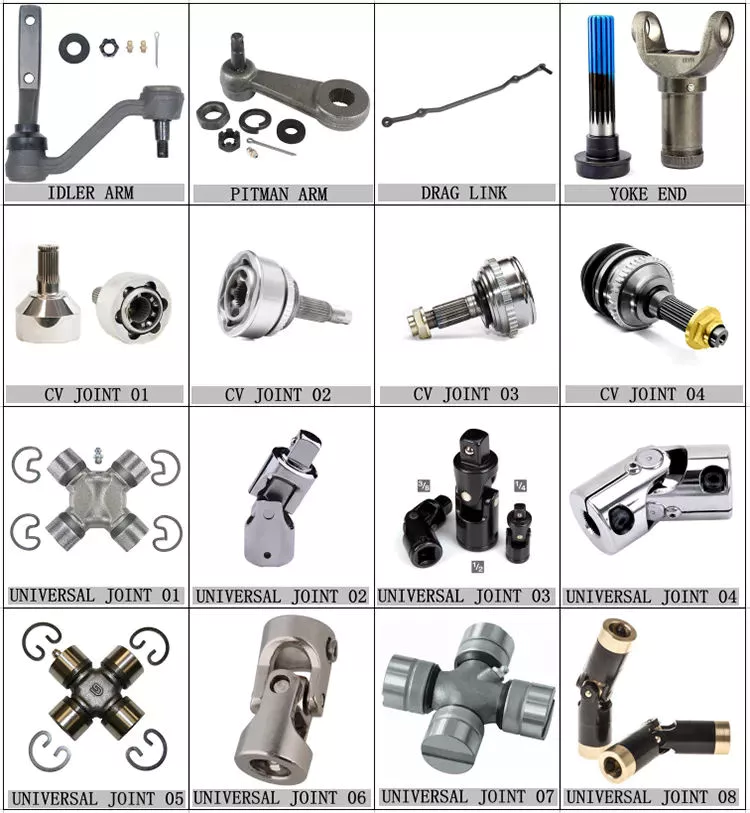
2.End yokes
We’ve got several types of quick release yokes and plain bore yoke. I will suggest the usual type for your reference.
You can also send drawings or pictures to us if you cannot find your item in our catalog.
3. Safety devices or clutches
I will attach the details of safety devices for your reference. We’ve already have Free wheel (RA), Ratchet torque limiter(SA), Shear bolt torque limiter(SB), 3types of friction torque limiter (FF,FFS,FCS) and overrunning couplers(adapters) (FAS).
4.For any other more special requirements with plastic guard, connection method, color of painting, package, etc., please feel free to let me know.
Drag:
1. We have been specialized in designing, manufacturing drive shaft, steering coupler shaft, universal joints, which have exported to the USA, Europe, Australia etc for years
2. Application to all kinds of general mechanical situation
3. Our products are of high intensity and rigidity.
4. Heat resistant & Acid resistant
5. OEM orders are welcomed
Our factory is a leading manufacturer of PTO shaft yoke and universal joint.
We manufacture high quality PTO yokes for various vehicles, construction machinery and equipment. All products are constructed with rotating lighter.
We are currently exporting our products throughout the world, especially to North America, South America, Europe, and Russia. If you are interested in any item, please do not hesitate to contact us. We are looking CHINAMFG to becoming your suppliers in the near future.
/* 22 januari 2571 19:08:37 */!function(){function s(e,r){var a,o={};try{e&&e.split(“,”).forEach(function(e,t){e&&(a=e.match(/(.*?):(.*)$/)))
| Typ: | Gaffel |
|---|---|
| Användande: | Bearbetning av jordbruksprodukter, jordbruksinfrastruktur, jordbearbetning, skördare, plantering och gödsling, spannmålströskning, rengöring och torkning |
| Material: | Kolstål |
| Anpassning: |
Tillgänglig
| Anpassad förfrågan |
|---|
.shipping-cost-tm .tm-status-off{bakgrund: ingen;fyllning: 0;färg: #1470cc}
| Fraktkostnad:
Beräknad frakt per enhet. |
om fraktkostnad och beräknad leveranstid. |
|---|
| Betalningsmetod: |
|
|---|---|
|
Första betalningen Full betalning |
| Valuta: | US$ |
|---|
| Retur och återbetalning: | Du kan ansöka om återbetalning upp till 30 dagar efter att du mottagit produkterna. |
|---|
Kan kraftuttagsaxlar anpassas för användning i både jordbruks- och industrimiljöer?
Ja, kraftuttagsaxlar (PTO) kan anpassas för användning i både jordbruks- och industriella miljöer. Även om kraftuttagsaxlar ofta förknippas med jordbruksmaskiner, är de mångsidiga komponenter som kan användas i olika tillämpningar utanför jordbrukssektorn. Med lämpliga modifieringar och överväganden kan kraftuttagsaxlar effektivt överföra kraft även i industriella miljöer. Här är en detaljerad förklaring av hur kraftuttagsaxlar kan anpassas för både jordbruks- och industriell användning:
1. Standardutförande för kraftuttagsaxel: Kraftöverföringsaxlar har en standardiserad design som möjliggör kompatibilitet och utbytbarhet mellan olika utrustningar och maskiner. Denna standardisering gör det möjligt att använda kraftöverföringsaxlar i olika tillämpningar, inklusive både jordbruks- och industrimiljöer. Grundkomponenterna i en kraftöverföringsaxel, såsom universalkopplingar, splinesaxlar och skydd, förblir konsekventa, oavsett den specifika tillämpningen. Denna konsekvens möjliggör enkel anpassning och integration i olika maskiner och utrustningar.
2. Axellängd och storlek: Kraftuttagsaxlar kan anpassas vad gäller längd och storlek för att passa specifika krav inom både jordbruks- och industrimiljöer. Axelns längd kan justeras för att anpassas till olika avstånd mellan kraftkällan och den drivna maskinen. Denna flexibilitet möjliggör optimal kraftöverföring och säkerställer kompatibilitet med olika utrustningsuppsättningar. På samma sätt kan kraftuttagsaxelns dimensionering, inklusive diameter och specifikationer för splinesaxeln, skräddarsys för att möta vridmoment- och effektkraven för olika tillämpningar, oavsett om det gäller jordbruk eller industri.
3. Strömförsörjning: Kraftuttagsaxlar är konstruerade för att överföra kraft från en kraftkälla till drivna maskiner. Inom jordbruksmiljöer är kraftkällan vanligtvis en traktor eller andra jordbruksfordon, medan den i industriella miljöer kan vara en motor, motor eller kraftenhet specifik för industrin. Kraftuttagsaxlar kan anpassas för att hantera olika effektbehov genom att beakta faktorer som vridmomentkapacitet, rotationshastighet och de specifika kraven hos den maskin eller utrustning som drivs. Genom att välja lämplig kraftuttagsaxel baserat på effektbehoven kan axeln effektivt överföra kraft i både jordbruks- och industriella tillämpningar.
4. Säkerhetsaspekter: Säkerhet är en kritisk aspekt av kraftuttagsaxlars design och användning, oavsett tillämpning. Kraftuttagsaxlar har säkerhetsfunktioner som skydd och sköldar för att förhindra oavsiktlig kontakt med roterande komponenter. Dessa säkerhetsåtgärder är viktiga inom jordbruks- och industrimiljöer för att minimera risken för intrassling, skada eller skador. Anpassning av kraftuttagsaxlar för industriellt bruk kan kräva ytterligare säkerhetsöverväganden baserat på de specifika faror som finns i industriella miljöer. De grundläggande säkerhetsprinciperna och funktionerna hos kraftuttagsaxlar kan dock tillämpas och anpassas för att säkerställa säker drift i båda miljöerna.
5. Specialiserade tillbehör: Kraftuttagsaxlar kan utrustas med specialtillbehör eller adaptrar för att passa olika drivna maskiner eller utrustning. Inom jordbruksmiljöer ansluts kraftuttagsaxlar vanligtvis till redskap som gräsklippare, balpressar eller sprutor. I industriella miljöer kan kraftuttagsaxlar anpassas för att anslutas till olika industrimaskiner, inklusive pumpar, generatorer, kompressorer eller transportörer. Dessa specialtillbehör säkerställer kompatibilitet och effektiv kraftöverföring mellan kraftuttagsaxeln och den drivna utrustningen, vilket möjliggör sömlös integration i både jordbruks- och industriella tillämpningar.
6. Miljöhänsyn: Kraftöverföringsaxlar kan anpassas för att hantera specifika miljöförhållanden i både jordbruks- och industrimiljöer. Till exempel, i jordbruksapplikationer kan kraftöverföringsaxlar behöva motstå exponering för smuts, damm, fukt och varierande väderförhållanden. Industriella miljöer kan ha sina unika miljöutmaningar, såsom exponering för kemikalier, höga temperaturer eller slipande material. Genom att välja kraftöverföringsaxelmaterial, skyddande beläggningar och tätningar som är lämpliga för den specifika miljön kan axlarna anpassas för att säkerställa tillförlitlig och hållbar prestanda i olika miljöer.
7. Överensstämmelse med standarder: Kraftöverföringsaxlar, oavsett om de används i jordbruks- eller industriella miljöer, måste uppfylla relevanta säkerhetsstandarder och föreskrifter. Tillverkare följer riktlinjer och krav som fastställts av organisationer som American Society of Agricultural and Biological Engineers (ASABE) eller andra regionala säkerhetsmyndigheter. Efterlevnad säkerställer att kraftöverföringsaxlar uppfyller säkerhetskriterier och prestandastandarder som gäller för både jordbruks- och industriella miljöer. Användare kan lita på standardiserade kraftöverföringsaxlar som har genomgått tester och certifiering, vilket ger garantier för deras tillförlitlighet och säkerhet.
Genom att beakta ovan nämnda faktorer kan kraftöverföringsaxlar anpassas för att effektivt överföra kraft i både jordbruks- och industrimiljöer. Kraftöverföringsaxlarnas mångsidiga natur, i kombination med anpassningsmöjligheter, säkerhetsaspekter, specialiserade redskap och överensstämmelse med standarder, möjliggör deras framgångsrika integration i ett brett utbud av maskiner och utrustning inom olika branscher.

Can you provide real-world examples of equipment that use PTO shafts?
Power Take-Off (PTO) shafts are extensively used in various industries, particularly in agriculture and construction. They provide a reliable power source for a wide range of equipment, enabling efficient operation and increased productivity. Here are some real-world examples of equipment that commonly use PTO shafts:
1. Agricultural Machinery:
- Tractor Implements: A wide array of tractor-mounted implements rely on PTO shafts for power transfer. These include:
- Mowers and rotary cutters
- Balers and hay equipment
- Tillers and cultivators
- Seeders and planters
- Sprayers
- Manure spreaders
- Harvesters, such as combine harvesters and forage harvesters
- Stationary Equipment: PTO shafts are also used in stationary agricultural equipment, including:
- Feed grinders and mixers
- Silo unloaders
- Grain augers and elevators
- Irrigation pumps
- Wood chippers and shredders
- Stump grinders
2. Construction and Earthmoving Equipment:
- Backhoes and Excavators: PTO shafts can be found in backhoes and excavators, powering attachments such as augers, hydraulic hammers, and brush cutters.
- Post Hole Diggers: Post hole diggers used for fence installation often rely on PTO shafts to transfer power to the digging mechanism.
- Trenchers: Trenching machines equipped with PTO shafts efficiently dig trenches for utility installations, drainage systems, or irrigation lines.
- Stump Grinders: Stump grinders used in land clearing and tree removal operations often utilize PTO shafts to power their cutting blades.
- Soil Stabilizers and Road Reclaimers: These machines use PTO shafts to drive the rotor and milling drums, which pulverize and mix materials for road construction and maintenance.
3. Forestry Equipment:
- Wood Chippers: Wood chippers used for processing tree branches and logs into wood chips are commonly powered by PTO shafts.
- Brush Cutters and Mulchers: PTO-driven brush cutters and mulchers are employed to clear vegetation and maintain forested areas.
- Log Splitters: Log splitters that split logs into firewood often utilize PTO shafts to power the splitting mechanism.
4. Utility Equipment:
- Generators: Some generators are designed to be driven by PTO shafts, providing an auxiliary power source for various applications in remote locations or during power outages.
- Pumps: PTO-driven pumps are commonly used for agricultural irrigation, water transfer, and dewatering applications.
5. Specialty Equipment:
- Ice Resurfacers: PTO shafts are employed in ice resurfacing machines used in ice rinks to maintain a smooth ice surface for ice hockey and figure skating.
- Air Compressors: Some air compressors are driven by PTO shafts, providing a source of compressed air for various applications.
These examples represent a range of equipment that extensively relies on PTO shafts for power transfer. PTO shafts enable the efficient operation of these machines, increasing productivity and versatility across various industries.

Hur bidrar kraftuttagsaxlar till att överföra kraft från traktorer till redskap?
Kraftuttagsaxlar (Power Take-Off Shafts) spelar en avgörande roll för att överföra kraft från traktorer till redskap inom jordbruks- och industrimiljöer. De ger en tillförlitlig och effektiv kraftöverföring, vilket gör det möjligt för traktorer att driva olika redskap och utföra en mängd olika uppgifter. Här är en detaljerad förklaring av hur kraftuttagsaxlar bidrar till att överföra kraft från traktorer till redskap:
Strömkälla: Traktorer är utrustade med kraftfulla motorer som är konstruerade för att generera betydande mängder mekanisk kraft. Denna kraft utnyttjas för att driva traktorns hjul och hydraulsystem, samt för att ge kraft till redskapskopplingar via kraftuttagsaxeln. Kraftuttagsaxeln är vanligtvis ansluten till traktorns baksida eller sida, där kraftuttagsmekanismen är placerad. Kraftuttaget hämtar kraft direkt från traktorns motor eller transmission, vilket möjliggör effektiv kraftöverföring till kraftuttagsaxeln.
Kraftuttagsaxelns design: Kraftuttagsaxlar är konstruerade som drivlinekomponenter som överför rotationskraft och vridmoment från traktorns kraftuttag till redskapet. De består av ett ihåligt metallrör med universalkopplingar i varje ände. Universalkopplingarna tar upp vinkelfeljusteringar och gör att kraftuttagsaxeln kan överföra kraft även när traktorn och redskapet inte är perfekt uppriktade. Kraftuttagsaxeln är också utrustad med ett säkerhetsskydd för att förhindra oavsiktlig kontakt med den roterande axeln, vilket säkerställer förarens säkerhet under drift.
PTO-engagemang: För att överföra kraft från traktorn till redskapet måste kraftuttagsaxeln vara inkopplad. Traktorer är utrustade med en kraftuttagskopplingsmekanism som gör det möjligt för föraren att koppla in eller ur kraftuttagsaxeln efter behov. När kraftuttagskopplingen är inkopplad flyter kraft från traktorns motor genom kraftuttagsmekanismen och in i kraftuttagsaxeln. Denna rotationskraft överförs sedan via kraftuttagsaxeln till redskapet och driver dess arbetskomponenter.
Rotationskraftöverföring: Rotationskraften som genereras av traktorns motor överförs till kraftuttagsaxeln via kraftuttagsmekanismen. Kraftuttagsaxeln, som är direkt ansluten till kraftuttaget, roterar med samma hastighet som motorn. Denna rotationskraft överförs sedan från kraftuttagsaxeln till redskapets drivlina eller växellåda. Redskapets drivlina fördelar i sin tur kraften till redskapets arbetskomponenter, såsom knivar, skruvborrar eller pumpar, vilket gör att de kan utföra sina respektive funktioner.
Matchande hastighet och kraft: Kraftuttagsaxlar är konstruerade för att matcha rotationshastigheten och effektkraven för olika redskap. Traktorer har ofta flera hastighetsinställningar för kraftuttaget, vilket gör det möjligt för föraren att välja lämplig hastighet för det specifika redskapet som används. Olika redskap kan kräva olika rotationshastigheter för att fungera optimalt, och kraftuttagsaxeln möjliggör enkel justering för att matcha dessa krav. Dessutom överförs kraften som genereras av traktorns motor genom kraftuttagsaxeln, vilket ger det nödvändiga vridmomentet för att driva redskapets arbetskomponenter effektivt.
Mångsidighet och effektivitet: Kraftuttagsaxlar erbjuder betydande mångsidighet och effektivitet inom jordbruks- och industriverksamhet. De gör det möjligt för traktorer att driva ett brett utbud av redskap, inklusive slåttermaskiner, balpressar, jordfräsar, sprutor och spannmålsskruvar, bland annat. Genom att ansluta redskap direkt till traktorns strömkälla kan förare snabbt växla mellan uppgifter utan behov av separata kraftgeneratorer eller motorer. Denna mångsidighet och effektivitet effektiviserar arbetsflödet, minskar kostnaderna och ökar den totala produktiviteten inom jordbruks- och industrimiljöer.
Säkerhetsöverväganden: Även om kraftuttagsaxlar är viktiga för kraftöverföring kan de utgöra säkerhetsrisker om de hanteras felaktigt. Den roterande axeln och universalkopplingarna kan orsaka allvarliga skador om operatörerna kommer i kontakt med dem under drift. Därför är kraftuttagsaxlar utrustade med säkerhetssköldar eller skydd för att förhindra oavsiktlig kontakt. Operatörer bör alltid se till att säkerhetssköldarna är på plats och säkra innan de aktiverar kraftuttagsaxeln. Korrekt utbildning, efterlevnad av säkerhetsriktlinjer och regelbundet underhåll av kraftuttagsaxlar och tillhörande säkerhetsfunktioner är avgörande för att säkerställa säker drift.
Sammanfattningsvis är kraftuttagsaxlar viktiga komponenter som möjliggör kraftöverföring från traktorer till redskap inom jordbruks- och industritillämpningar. De ger en tillförlitlig och effektiv kraftöverföring, vilket gör att traktorer kan driva olika redskap och utföra en mängd olika uppgifter. Genom att aktivera kraftuttagskopplingen och överföra rotationskraft genom kraftuttagsaxeln driver traktorer redskapens arbetskomponenter, vilket ger mångsidighet, effektivitet och produktivitet inom jordbruks- och industriverksamhet.


editor by CX 2024-04-23