คำอธิบายผลิตภัณฑ์
| หมายเลขรุ่น | 05(Push Pin)+RA2(Overrunning Clutch) |
| การทำงาน | การส่งกำลัง |
| ใช้ | รถแทรกเตอร์และอุปกรณ์การเกษตรต่างๆ |
| ประเภทแอก | push pin/quick release/ball attachment/collar/double push pin/bolt pins/split pins |
| การประมวลผลแอก | การตีขึ้นรูป |
| ชนิดท่อ | Trianglar/star/lemon |
| ประเภทสไปลน์ | ประเภทสไปลน์ |
|
Materlal and Surface Treatment |
|
|
Cross shaft |
Heat treatment of 20Cr2Ni4A forging |
|
Bearing cup |
20CrMOTi forging heat treatment |
|
Flange fork |
ZG35CrMo, steel casting |
|
Spline shaft |
42GrMo forging heat treatment |
|
Spline bushing |
35CrM0 forging heat treatment |
|
Sleeve body |
42CrMo forging |
|
Surface treatment: |
spraying |
|
Flat key, positioning ring |
42GrMo forging |
The above are standard models and materials.
If you have special supporting requirements, you can customize production according to customer needs.
Please click here to consult us!
Application scenarios
/* 22 มกราคม 2571 19:08:37 */!function(){function s(e,r){var a,o={};try{e&&e.split(“,”).forEach(function(e,t){e&&(a=e.match(/(.*?):(.*)$/))&&1
| Standard: | GB, EN, OEM |
|---|---|
| Surface Treatment: | All |
| Energy Source: | All |
| วัสดุ: | All |
| Load: | Drive Shaft |
| Stiffness & Flexibility: | Flexible Shaft |
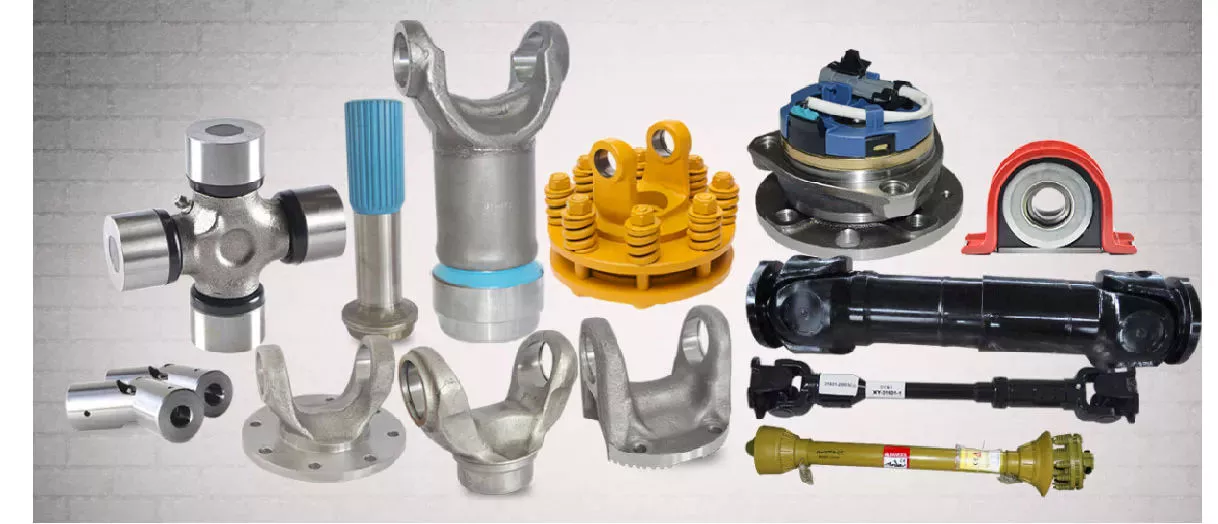
Are there variations in PTO shaft designs for different types of machinery?
Yes, there are variations in PTO (Power Take-Off) shaft designs to accommodate the specific requirements of different types of machinery. PTO shafts are highly versatile and adaptable components used to transfer power from a power source, such as a tractor or engine, to driven machinery or equipment. The design variations in PTO shafts are necessary to ensure compatibility, efficiency, and safety in various applications. Here’s a detailed explanation of the different PTO shaft designs for different types of machinery:
1. Standard PTO Shafts: Standard PTO shafts are the most common design and are widely used in a variety of applications. They typically consist of a solid steel shaft with a universal joint at each end. These universal joints allow for angular misalignment between the power source and the driven machinery. Standard PTO shafts are suitable for applications where the distance between the power source and the driven machinery remains relatively fixed. They are commonly used in agricultural implements, such as mowers, balers, tillers, and seeders, as well as in industrial applications.
2. Telescopic PTO Shafts: Telescopic PTO shafts feature a telescoping design that allows for length adjustment. These shafts consist of two or more concentric shafts that can slide within each other. Telescopic PTO shafts are beneficial in applications where the distance between the power source and the driven machinery varies. By adjusting the length of the shaft, operators can ensure proper power transmission without the risk of the shaft dragging on the ground or being too short to reach the equipment. Telescopic PTO shafts are commonly used in front-mounted implements, snow blowers, self-loading wagons, and other applications where the distance between the power source and the implement changes.
3. CV (Constant Velocity) PTO Shafts: CV PTO shafts incorporate Constant Velocity joints to accommodate misalignment and angular variations. These joints maintain a constant speed and torque transfer even when the driven machinery is at an angle relative to the power source. CV PTO shafts are beneficial in applications where the driven machinery requires flexibility and a wide range of movement. They are commonly used in articulated loaders, telescopic handlers, self-propelled sprayers, and other equipment that requires continuous power transmission while operating at various angles.
4. Gearbox Driven PTO Shafts: Some machinery requires specific speed or torque ratios between the power source and the driven equipment. In such cases, PTO shafts may incorporate gearbox systems. Gearbox driven PTO shafts allow for speed reduction or increase and can change the rotational direction if necessary. The gear ratios in the gearbox can be adjusted to match the speed and torque requirements of the driven machinery. These PTO shafts are commonly used in applications where the power source operates at a different speed or torque level than the equipment it drives, such as in certain industrial manufacturing processes and specialized machinery.
5. High-Torque PTO Shafts: Some heavy-duty machinery requires high torque levels for power transmission. High-torque PTO shafts are designed to handle these demanding applications. They are constructed with reinforced components, including larger diameter shafts and heavier-duty universal joints, to withstand the increased torque requirements. High-torque PTO shafts are commonly used in equipment such as wood chippers, crushers, and heavy-duty agricultural implements that require substantial power and torque for their operation.
6. Safety PTO Shafts: Safety is a crucial consideration when using PTO shafts. Safety PTO shafts incorporate mechanisms to reduce the risk of accidents and injuries. One common safety feature is the use of protective guards that cover the rotating shaft to prevent accidental contact. These guards are typically made of metal or plastic and are designed to shield the rotating components while allowing the necessary movement for power transmission. Safety PTO shafts are used in various applications where the risk of entanglement or accidental contact with the rotating shaft is high, such as in grass mowers, rotary cutters, and other equipment used in landscaping and agriculture.
These are some of the key variations in PTO shaft designs for different types of machinery. The specific design used depends on factors such as the application requirements, power source characteristics, torque levels, movement flexibility, and safety considerations. PTO shaft manufacturers offer a range of designs to ensure compatibility and efficient power transmission in diverse industries and applications.

ควรปฏิบัติตามข้อควรระวังด้านความปลอดภัยอะไรบ้างเมื่อทำงานกับเพลา PTO?
การทำงานกับเพลาส่งกำลัง (PTO) จำเป็นต้องปฏิบัติตามข้อควรระวังด้านความปลอดภัยอย่างเคร่งครัด เพื่อป้องกันอุบัติเหตุและดูแลความปลอดภัยของบุคคลที่ปฏิบัติงานหรือทำงานอยู่ใกล้กับอุปกรณ์ เพลา PTO เป็นเครื่องจักรหมุนได้ และอาจก่อให้เกิดอันตรายอย่างมากหากไม่ได้รับการจัดการอย่างถูกต้อง ต่อไปนี้เป็นข้อควรระวังด้านความปลอดภัยที่สำคัญหลายประการที่ควรปฏิบัติตามเมื่อทำงานกับเพลา PTO:
1. ทำความคุ้นเคยกับอุปกรณ์: ก่อนที่จะใช้งานหรือทำงานใกล้กับเพลา PTO จำเป็นอย่างยิ่งที่จะต้องทำความเข้าใจการทำงานของอุปกรณ์อย่างละเอียด รวมถึงการกำหนดค่าเฉพาะของเพลา PTO คุณสมบัติด้านความปลอดภัย และเครื่องจักรที่เกี่ยวข้อง อ่านและปฏิบัติตามคำแนะนำและแนวทางด้านความปลอดภัยของผู้ผลิตที่เกี่ยวข้องกับเพลา PTO และอุปกรณ์ที่เกี่ยวข้อง การฝึกอบรมและความคุ้นเคยกับอุปกรณ์เป็นสิ่งสำคัญเพื่อให้มั่นใจได้ถึงการปฏิบัติงานอย่างปลอดภัย
2. สวมใส่อุปกรณ์ป้องกันส่วนบุคคล (PPE) ที่เหมาะสม: เมื่อทำงานกับเพลา PTO บุคคลควรสวมใส่อุปกรณ์ป้องกันส่วนบุคคลที่เหมาะสมเพื่อลดความเสี่ยงต่อการบาดเจ็บ ซึ่งอาจรวมถึงแว่นตานิรภัย อุปกรณ์ป้องกันหู ถุงมือ และรองเท้าที่แข็งแรง อุปกรณ์ป้องกันส่วนบุคคลช่วยป้องกันอันตรายที่อาจเกิดขึ้น เช่น เศษวัสดุที่กระเด็น เสียงดัง และการสัมผัสโดยไม่ตั้งใจกับชิ้นส่วนที่หมุนอยู่
3. การป้องกันและคุ้มครอง: ตรวจสอบให้แน่ใจว่าเพลา PTO และเครื่องจักรที่เกี่ยวข้องมีอุปกรณ์ป้องกันและแผ่นบังที่เหมาะสม อุปกรณ์ป้องกันช่วยป้องกันการสัมผัสโดยไม่ตั้งใจกับชิ้นส่วนที่หมุน ลดความเสี่ยงต่อการพันกันหรือการบาดเจ็บ เพลา PTO ควรมีแผ่นบังคลุมเพลาที่หมุนและข้อต่อยูนิเวอร์แซลที่เปิดโล่ง เครื่องจักรที่ขับเคลื่อนด้วยเพลา PTO ก็ควรมีอุปกรณ์ป้องกันที่เพียงพอเพื่อป้องกันการสัมผัสกับชิ้นส่วนที่เคลื่อนที่ด้วย
4. ยึดและจัดตำแหน่งส่วนประกอบเพลา PTO ให้แน่นสนิท: ก่อนใช้งานหรือเชื่อมต่อเพลา PTO โปรดตรวจสอบให้แน่ใจว่าส่วนประกอบทั้งหมดได้รับการยึดแน่นและจัดวางอย่างถูกต้อง ส่วนประกอบที่หลวมหรือไม่อยู่ในแนวเดียวกันอาจทำให้เพลาหลุด เสียสมดุล และอาจเกิดความเสียหายได้ โปรดปฏิบัติตามคำแนะนำของผู้ผลิตสำหรับการติดตั้งและการขันข้อต่อ โยง และจุดเชื่อมต่ออื่นๆ อย่างถูกต้อง การจัดวางที่ถูกต้องมีความสำคัญอย่างยิ่งในการป้องกันความเครียด การสั่นสะเทือน และการสึกหรอก่อนกำหนดของเพลา PTO และอุปกรณ์ที่เกี่ยวข้อง
5. หลีกเลี่ยงการสวมเสื้อผ้าหลวมๆ และเครื่องประดับ: ควรหลีกเลี่ยงการสวมใส่เสื้อผ้าหลวมๆ เครื่องประดับ หรือสิ่งของอื่นๆ ที่อาจพันติดกับเพลา PTO หรือเครื่องจักรที่เกี่ยวข้อง ควรเก็บผมยาวให้เรียบร้อย สวมเสื้อผ้าที่หลวมให้มิดชิด และถอดหรือเก็บเครื่องประดับที่ห้อยระย้าให้เรียบร้อย สิ่งของที่หลวมอาจติดอยู่ในชิ้นส่วนที่หมุนได้ ทำให้เกิดอันตรายร้ายแรงหรือการบาดเจ็บจากการพันกันได้
6. ห้ามดัดแปลงหรือถอดอุปกรณ์ความปลอดภัย: เพลา PTO มีอุปกรณ์ความปลอดภัยต่างๆ เช่น แผ่นป้องกัน ฝาครอบนิรภัย และตัวจำกัดแรงบิด เพื่อป้องกันอันตรายที่อาจเกิดขึ้น อุปกรณ์เหล่านี้ไม่ควรดัดแปลง ข้ามผ่าน หรือถอดออก การเปลี่ยนแปลงหรือปิดใช้งานอุปกรณ์ความปลอดภัยอาจเพิ่มความเสี่ยงต่ออุบัติเหตุและการบาดเจ็บอย่างมาก หากอุปกรณ์ความปลอดภัยใดๆ เสียหายหรือทำงานไม่ถูกต้อง ควรซ่อมแซมหรือเปลี่ยนใหม่โดยเร็ว
7. ปิดแหล่งจ่ายไฟก่อนทำการบำรุงรักษา: ก่อนดำเนินการบำรุงรักษา ซ่อมแซม หรือปรับแต่งใดๆ กับเพลา PTO หรือเครื่องจักรที่เกี่ยวข้อง โปรดตรวจสอบให้แน่ใจว่าแหล่งจ่ายไฟถูกปิดและตัดการเชื่อมต่ออย่างสมบูรณ์แล้ว ซึ่งรวมถึงการดับเครื่องยนต์ การตัดการเชื่อมต่อแหล่งจ่ายไฟ และการล็อคหรือกลไกความปลอดภัยใดๆ ควรปฏิบัติตามขั้นตอนการล็อค/ติดป้ายเตือนเพื่อป้องกันการจ่ายไฟหรือการสตาร์ทเครื่องโดยไม่ตั้งใจในระหว่างกิจกรรมการบำรุงรักษา
8. การบำรุงรักษาและการตรวจสอบอย่างสม่ำเสมอ: การบำรุงรักษาและการตรวจสอบเพลา PTO และอุปกรณ์ที่เกี่ยวข้องอย่างสม่ำเสมอเป็นสิ่งสำคัญสำหรับการใช้งานอย่างปลอดภัย ปฏิบัติตามตารางการบำรุงรักษาที่ผู้ผลิตแนะนำ และทำการตรวจสอบเป็นประจำเพื่อระบุสัญญาณของการสึกหรอ ความเสียหาย หรือการเบี่ยงเบน หล่อลื่นข้อต่ออเนกประสงค์ตามคำแนะนำของผู้ผลิตเพื่อให้มั่นใจว่าการทำงานราบรื่น ดำเนินการบำรุงรักษาหรือซ่อมแซมที่จำเป็นโดยทันทีเพื่อป้องกันอันตรายที่อาจเกิดขึ้น
9. การฝึกอบรมและการสื่อสาร: ตรวจสอบให้แน่ใจว่าบุคคลที่ปฏิบัติงานหรือทำงานใกล้เพลา PTO ได้รับการฝึกอบรมที่เหมาะสมเกี่ยวกับแนวทางการทำงานที่ปลอดภัย การระบุอันตราย และขั้นตอนฉุกเฉิน ส่งเสริมการสื่อสารที่ชัดเจนเกี่ยวกับการมีอยู่และการทำงานของเพลา PTO เพื่อป้องกันการสัมผัสหรือการรบกวนโดยไม่ตั้งใจ จัดตั้งวิธีการสื่อสารที่มีประสิทธิภาพ เช่น สัญญาณหรือวิทยุ เมื่อทำงานเป็นทีมหรือใกล้กับอุปกรณ์ที่มีเสียงดัง
10. สังเกตสิ่งรอบข้าง: ควรตระหนักถึงสถานการณ์รอบข้างขณะทำงานกับเพลา PTO ควรระมัดระวังตำแหน่งของผู้ที่อยู่รอบข้าง สิ่งกีดขวาง และอันตรายที่อาจเกิดขึ้น ตรวจสอบให้แน่ใจว่าพื้นที่ทำงานรอบเพลา PTO นั้นโล่งและปลอดภัย หลีกเลี่ยงสิ่งรบกวนและจดจ่ออยู่กับงานที่ทำเพื่อป้องกันอุบัติเหตุที่เกิดจากความประมาท
การปฏิบัติตามข้อควรระวังด้านความปลอดภัยเหล่านี้ จะช่วยลดความเสี่ยงต่ออุบัติเหตุและการบาดเจ็บขณะทำงานกับเพลา PTO ได้ ความปลอดภัยควรเป็นสิ่งสำคัญที่สุดเสมอ เพื่อให้มั่นใจได้ว่าสภาพแวดล้อมการทำงานมีความปลอดภัยและมีประสิทธิภาพ

Which industries commonly use PTO shafts for power transmission?
PTO shafts (Power Take-Off shafts) are widely used in various industries where power transmission is required to drive machinery and equipment. Their versatility, efficiency, and compatibility with different types of machinery make them valuable components in several sectors. Here’s a detailed explanation of the industries that commonly use PTO shafts for power transmission:
1. Agriculture: The agricultural industry extensively relies on PTO shafts for power transmission. Tractors equipped with PTOs are commonly used to drive a wide range of agricultural implements and machinery. PTO-driven equipment includes mowers, balers, tillers, seeders, sprayers, grain augers, harvesters, and many more. PTO shafts allow for the efficient transfer of power from the tractor’s engine to these implements, enabling various agricultural operations such as cutting, baling, tilling, planting, spraying, and harvesting. The agricultural sector heavily depends on PTO shafts to enhance productivity and streamline farming processes.
2. Construction and Earthmoving: In the construction and earthmoving industry, PTO shafts find applications in machinery used for excavation, grading, and material handling. PTO-driven equipment such as backhoes, loaders, excavators, trenchers, and stump grinders utilize PTO shafts to transfer power from the prime movers, typically hydraulic systems, to drive the necessary attachments. These attachments require the high torque and power provided by PTO shafts to perform tasks like digging, loading, trenching, and grinding. PTO shafts allow for versatile and efficient power transmission in construction and earthmoving operations.
3. Forestry: The forestry industry utilizes PTO shafts for power transmission in various logging and timber processing equipment. PTO-driven machinery such as wood chippers, sawmills, log splitters, and debarkers rely on PTO shafts to transfer power from tractors or dedicated power units to perform tasks like chipping, sawing, splitting, and debarking wood. PTO shafts provide the necessary power and torque to drive the cutting and processing mechanisms, enabling efficient and productive forestry operations.
4. Landscaping and Groundskeeping: PTO shafts play a crucial role in the landscaping and groundskeeping industry. Equipment like lawn mowers, rotary cutters, flail mowers, and aerators utilize PTO shafts to transfer power from tractors or dedicated power units to drive the cutting or grooming mechanisms. PTO shafts enable efficient power transmission, allowing operators to maintain lawns, parks, golf courses, and other outdoor spaces with precision and productivity.
5. Mining and Quarrying: PTO shafts have applications in the mining and quarrying industry, particularly in equipment used for material extraction, crushing, and screening. PTO-driven machinery such as crushers, screeners, and conveyors rely on PTO shafts to transfer power from engines or motors to drive the crushing and screening mechanisms, as well as the material handling systems. PTO shafts provide the necessary power and torque to process and transport bulk materials effectively in mining and quarrying operations.
6. Industrial Manufacturing: PTO shafts are utilized in various industrial manufacturing processes that require power transmission to drive specific machinery and equipment. Industries such as food processing, textile manufacturing, paper production, and chemical processing may use PTO-driven machinery for tasks like mixing, blending, cutting, extruding, and conveying. PTO shafts enable efficient power transfer to these machines, ensuring smooth and reliable operation in industrial manufacturing settings.
7. Utilities and Infrastructure Maintenance: PTO shafts find applications in utilities and infrastructure maintenance operations. Equipment like street sweepers, sewer cleaners, road maintenance machines, and drain augers utilize PTO shafts to transfer power from trucks or dedicated power units to perform tasks like sweeping, cleaning, and maintenance of roads, sewers, and other public infrastructure. PTO shafts enable efficient power transmission, ensuring effective and reliable operation of these utility and maintenance machines.
8. Others: PTO shafts are also used in several other industries and sectors where power transmission is required. This includes applications in the transportation industry for powering refrigeration units, fuel pumps, and hydraulic systems in trucks and trailers. PTO shafts also find applications in the marine industry for powering winches, pumps, and other equipment on boats and ships.
In summary, PTO shafts are commonly used in a wide range of industries for power transmission. These industries include agriculture, construction and earthmoving, forestry, landscaping and groundskeeping, mining and quarrying, industrial manufacturing, utilities and infrastructure maintenance, transportation, and marine sectors. PTO shafts play a critical rolein enhancing productivity, enabling efficient operation of machinery, and facilitating various tasks in these industries.

editor by CX 2024-02-28