Descrizione del prodotto
Quality agricultural Tractor Pto Shaft Cover for farm implement
1. Tubi o condotti
Disponiamo già di tubi con profilo triangolare e tubi con profilo a limone per tutte le serie che offriamo.
Disponiamo inoltre di tubi a stella, tubi scanalati e altri tubi profilati richiesti dai nostri clienti (per una determinata serie). (Si prega di notare che il nostro catalogo non contiene tutti gli articoli che produciamo).
Se desiderate tubi di forma diversa da quella triangolare o a limone, vi preghiamo di fornire disegni o immagini.
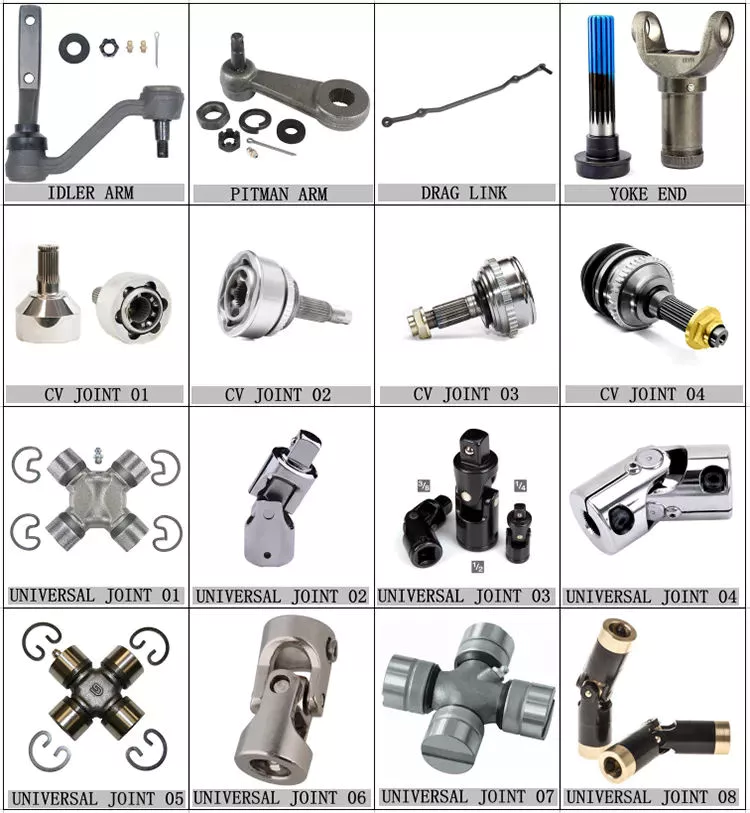
2. Gioghi terminali
Disponiamo di diversi tipi di forcelle a sgancio rapido e di forcelle a foro liscio. Per vostra informazione, vi suggerisco il tipo più comune.
Se non trovate l'articolo che cercate nel nostro catalogo, potete anche inviarci disegni o foto.
3. Dispositivi di sicurezza o frizioni
Allego i dettagli dei dispositivi di sicurezza per vostra consultazione. Disponiamo già di ruota libera (RA), limitatore di coppia a cricchetto (SA), limitatore di coppia a bullone di taglio (SB), 3 tipi di limitatore di coppia a frizione (FF, FFS, FCS) e giunti a ruota libera (adattatori) (FAS).
4. Per qualsiasi altra esigenza particolare relativa alla protezione in plastica, al metodo di collegamento, al colore della verniciatura, all'imballaggio, ecc., non esitate a contattarmi.
Caratteristiche:
1. Da anni siamo specializzati nella progettazione e produzione di alberi di trasmissione, alberi di accoppiamento dello sterzo e giunti universali, che esportiamo negli Stati Uniti, in Europa, in Australia, ecc.
2. Applicazione a tutti i tipi di situazioni meccaniche generali
3. I nostri prodotti sono caratterizzati da elevata resistenza e rigidità.
4. Resistente al calore e agli acidi
5. Gli ordini OEM sono benvenuti.
La nostra fabbrica è un produttore leader di giunti cardanici e giunti universali per alberi di presa di forza.
Produciamo giunti cardanici di alta qualità per vari veicoli, macchine edili e attrezzature. Tutti i prodotti sono costruiti con un sistema di azionamento rotante più leggero.
Attualmente esportiamo i nostri prodotti in tutto il mondo, in particolare in Nord America, Sud America, Europa e Russia. Se siete interessati a qualsiasi articolo, non esitate a contattarci. Speriamo di poter diventare presto vostri fornitori.
/* 22 gennaio 2571 19:08:37 */!function(){function s(e,r){var a,o={};try{e&&e.split(“,”).forEach(function(e,t){e&&(a=e.match(/(.*?):(.*)$/))&&1
| Tipo: | Forchetta |
|---|---|
| Utilizzo: | Trasformazione di prodotti agricoli, infrastrutture agricole, lavorazione del terreno, mietitura, semina e fertilizzazione, trebbiatura, pulizia ed essiccazione dei cereali. |
| Materiale: | acciaio al carbonio |
| Personalizzazione: |
Disponibile
| Richiesta personalizzata |
|---|
.shipping-cost-tm .tm-status-off{background: none;padding:0;color: #1470cc}
| Shipping Cost:
Estimated freight per unit. |
about shipping cost and estimated delivery time. |
|---|
| Payment Method: |
|
|---|---|
|
Initial Payment Full Payment |
| Currency: | US$ |
|---|
| Return&refunds: | You can apply for a refund up to 30 days after receipt of the products. |
|---|
È possibile adattare gli alberi cardanici per l'utilizzo sia in ambito agricolo che industriale?
Sì, gli alberi di presa di forza (PTO) possono essere adattati per l'uso sia in ambito agricolo che industriale. Sebbene gli alberi di presa di forza siano comunemente associati alle macchine agricole, si tratta di componenti versatili che possono essere utilizzati in diverse applicazioni al di fuori del settore agricolo. Con opportune modifiche e accorgimenti, gli alberi di presa di forza possono trasferire efficacemente potenza anche in ambito industriale. Ecco una spiegazione dettagliata di come gli alberi di presa di forza possono essere adattati per l'uso agricolo e industriale:
1. Design standard dell'albero cardanico: Gli alberi cardanici (PTO) hanno un design standardizzato che ne garantisce la compatibilità e l'intercambiabilità tra diverse attrezzature e macchinari. Questa standardizzazione permette di utilizzare gli alberi cardanici in svariate applicazioni, sia agricole che industriali. I componenti di base di un albero cardanico, come i giunti universali, gli alberi scanalati e le protezioni, rimangono invariati a prescindere dall'applicazione specifica. Tale uniformità facilita l'adattamento e l'integrazione in diversi macchinari e attrezzature.
2. Lunghezza e dimensioni dell'albero: Gli alberi cardanici (PTO) possono essere personalizzati in termini di lunghezza e dimensioni per soddisfare esigenze specifiche sia in ambito agricolo che industriale. La lunghezza dell'albero può essere regolata per adattarsi alle diverse distanze tra la fonte di energia e il macchinario azionato. Questa flessibilità consente una trasmissione di potenza ottimale e garantisce la compatibilità con diverse configurazioni di attrezzature. Allo stesso modo, le dimensioni dell'albero cardanico, compresi il diametro e le specifiche dell'albero scanalato, possono essere adattate per soddisfare i requisiti di coppia e potenza delle diverse applicazioni, sia in agricoltura che nell'industria.
3. Requisiti di alimentazione: Gli alberi cardanici (PTO) sono progettati per trasferire potenza da una fonte di energia a un macchinario azionato. In ambito agricolo, la fonte di energia è tipicamente un trattore o altri veicoli agricoli, mentre in ambito industriale può essere un motore, un propulsore o un'unità di potenza specifica per il settore. Gli alberi cardanici possono essere adattati per gestire diverse esigenze di potenza, tenendo conto di fattori quali la capacità di coppia, la velocità di rotazione e le specifiche necessità del macchinario o dell'attrezzatura azionata. Selezionando l'albero cardanico appropriato in base alle esigenze di potenza, è possibile trasferire efficacemente la potenza sia in applicazioni agricole che industriali.
4. Considerazioni sulla sicurezza: La sicurezza è un aspetto fondamentale nella progettazione e nell'utilizzo degli alberi cardanici, indipendentemente dall'applicazione. Gli alberi cardanici integrano dispositivi di sicurezza come protezioni e schermi per prevenire il contatto accidentale con i componenti rotanti. Queste misure di sicurezza sono essenziali in ambito agricolo e industriale per ridurre al minimo il rischio di impigliamento, lesioni o danni. L'adattamento degli alberi cardanici all'uso industriale può richiedere ulteriori considerazioni di sicurezza in base ai rischi specifici presenti negli ambienti industriali. Tuttavia, i principi e le caratteristiche di sicurezza fondamentali degli alberi cardanici possono essere applicati e adattati per garantire un funzionamento sicuro in entrambi i contesti.
5. Accessori specializzati: Gli alberi cardanici (PTO) possono essere equipaggiati con accessori o adattatori specifici per adattarsi a diverse macchine o attrezzature azionate. In ambito agricolo, gli alberi cardanici si collegano comunemente ad attrezzi come falciatrici, presse o irroratrici. In ambito industriale, gli alberi cardanici possono essere adattati per il collegamento a vari macchinari industriali, tra cui pompe, generatori, compressori o nastri trasportatori. Questi accessori specifici garantiscono la compatibilità e un efficiente trasferimento di potenza tra l'albero cardanico e l'attrezzatura azionata, consentendo una perfetta integrazione sia in ambito agricolo che industriale.
6. Considerazioni ambientali: Gli alberi cardanici (PTO) possono essere adattati per far fronte a specifiche condizioni ambientali sia in ambito agricolo che industriale. Ad esempio, nelle applicazioni agricole, gli alberi cardanici devono resistere all'esposizione a sporco, polvere, umidità e condizioni atmosferiche variabili. Gli ambienti industriali possono presentare sfide ambientali uniche, come l'esposizione a sostanze chimiche, alte temperature o materiali abrasivi. Selezionando materiali, rivestimenti protettivi e guarnizioni adatti all'ambiente specifico, gli alberi cardanici possono essere adattati per garantire prestazioni affidabili e durature in diversi contesti.
7. Conformità agli standard: Gli alberi cardanici, sia in ambito agricolo che industriale, devono essere conformi alle normative e agli standard di sicurezza pertinenti. I produttori si attengono alle linee guida e ai requisiti stabiliti da organizzazioni come l'American Society of Agricultural and Biological Engineers (ASABE) o altre autorità regionali in materia di sicurezza. La conformità garantisce che gli alberi cardanici soddisfino i criteri di sicurezza e gli standard prestazionali applicabili sia in ambito agricolo che industriale. Gli utilizzatori possono fare affidamento su alberi cardanici standardizzati, sottoposti a test e certificazione, che offrono garanzie in termini di affidabilità e sicurezza.
Considerando i fattori sopra menzionati, gli alberi cardanici possono essere adattati per trasferire efficacemente la potenza sia in ambito agricolo che industriale. La versatilità degli alberi cardanici, unita alle opzioni di personalizzazione, alle considerazioni di sicurezza, agli accessori specializzati e alla conformità alle normative, ne consente la proficua integrazione in un'ampia gamma di macchinari e attrezzature in diversi settori.

Can you provide real-world examples of equipment that use PTO shafts?
Power Take-Off (PTO) shafts are extensively used in various industries, particularly in agriculture and construction. They provide a reliable power source for a wide range of equipment, enabling efficient operation and increased productivity. Here are some real-world examples of equipment that commonly use PTO shafts:
1. Agricultural Machinery:
- Tractor Implements: A wide array of tractor-mounted implements rely on PTO shafts for power transfer. These include:
- Mowers and rotary cutters
- Balers and hay equipment
- Tillers and cultivators
- Seeders and planters
- Sprayers
- Manure spreaders
- Harvesters, such as combine harvesters and forage harvesters
- Stationary Equipment: PTO shafts are also used in stationary agricultural equipment, including:
- Feed grinders and mixers
- Silo unloaders
- Grain augers and elevators
- Irrigation pumps
- Wood chippers and shredders
- Stump grinders
2. Construction and Earthmoving Equipment:
- Backhoes and Excavators: PTO shafts can be found in backhoes and excavators, powering attachments such as augers, hydraulic hammers, and brush cutters.
- Post Hole Diggers: Post hole diggers used for fence installation often rely on PTO shafts to transfer power to the digging mechanism.
- Trenchers: Trenching machines equipped with PTO shafts efficiently dig trenches for utility installations, drainage systems, or irrigation lines.
- Stump Grinders: Stump grinders used in land clearing and tree removal operations often utilize PTO shafts to power their cutting blades.
- Soil Stabilizers and Road Reclaimers: These machines use PTO shafts to drive the rotor and milling drums, which pulverize and mix materials for road construction and maintenance.
3. Forestry Equipment:
- Wood Chippers: Wood chippers used for processing tree branches and logs into wood chips are commonly powered by PTO shafts.
- Brush Cutters and Mulchers: PTO-driven brush cutters and mulchers are employed to clear vegetation and maintain forested areas.
- Log Splitters: Log splitters that split logs into firewood often utilize PTO shafts to power the splitting mechanism.
4. Utility Equipment:
- Generators: Some generators are designed to be driven by PTO shafts, providing an auxiliary power source for various applications in remote locations or during power outages.
- Pumps: PTO-driven pumps are commonly used for agricultural irrigation, water transfer, and dewatering applications.
5. Specialty Equipment:
- Ice Resurfacers: PTO shafts are employed in ice resurfacing machines used in ice rinks to maintain a smooth ice surface for ice hockey and figure skating.
- Air Compressors: Some air compressors are driven by PTO shafts, providing a source of compressed air for various applications.
These examples represent a range of equipment that extensively relies on PTO shafts for power transfer. PTO shafts enable the efficient operation of these machines, increasing productivity and versatility across various industries.

How do PTO shafts contribute to transferring power from tractors to implements?
PTO shafts (Power Take-Off shafts) play a critical role in transferring power from tractors to implements in agricultural and industrial settings. They provide a reliable and efficient means of power transmission, enabling tractors to drive various implements and perform a wide range of tasks. Here’s a detailed explanation of how PTO shafts contribute to transferring power from tractors to implements:
Fonte di alimentazione: Tractors are equipped with powerful engines designed to generate substantial amounts of mechanical power. This power is harnessed to drive the tractor’s wheels and operate hydraulic systems, as well as to provide power for the attachment of implements through the PTO shaft. The PTO shaft typically connects to the rear or side of the tractor, where the power take-off mechanism is located. The power take-off derives power directly from the tractor’s engine or transmission, allowing for efficient power transfer to the PTO shaft.
PTO Shaft Design: PTO shafts are designed as driveline components that transmit rotational power and torque from the tractor’s power take-off to the implement. They consist of a hollow metal tube with universal joints at each end. The universal joints accommodate angular misalignments and allow the PTO shaft to transmit power even when the tractor and implement are not perfectly aligned. The PTO shaft is also equipped with a safety shield or guard to prevent accidental contact with the rotating shaft, ensuring operator safety during operation.
PTO Engagement: To transfer power from the tractor to the implement, the PTO shaft needs to be engaged. Tractors are equipped with a PTO clutch mechanism that allows operators to engage or disengage the PTO shaft as needed. When the PTO clutch is engaged, power flows from the tractor’s engine through the power take-off mechanism and into the PTO shaft. This rotational power is then transmitted through the PTO shaft to the implement, driving its working components.
Rotational Power Transmission: The rotational power generated by the tractor’s engine is transferred to the PTO shaft through the power take-off mechanism. The PTO shaft, being directly connected to the power take-off, rotates at the same speed as the engine. This rotational power is then transmitted from the PTO shaft to the implement’s driveline or gearbox. The implement’s driveline, in turn, distributes the power to the implement’s working components, such as blades, augers, or pumps, enabling them to carry out their respective functions.
Matching Speed and Power: PTO shafts are designed to match the rotational speed and power requirements of various implements. Tractors often feature multiple speed settings for the PTO, allowing operators to select the appropriate speed for the specific implement being used. Different implements may require different rotational speeds to operate optimally, and the PTO shaft allows for easy adjustment to match those requirements. Additionally, the power generated by the tractor’s engine is transmitted through the PTO shaft, providing the necessary torque to drive the implement’s working components effectively.
Versatility and Efficiency: PTO shafts offer significant versatility and efficiency in agricultural and industrial operations. They allow tractors to power a wide range of implements, including mowers, balers, tillers, sprayers, and grain augers, among others. By connecting implements directly to the tractor’s power source, operators can quickly switch between tasks without the need for separate power generators or engines. This versatility and efficiency streamline workflow, reduce costs, and increase overall productivity in agricultural and industrial settings.
Considerazioni sulla sicurezza: While PTO shafts are essential for power transmission, they can pose safety risks if mishandled. The rotating shaft and universal joints can cause severe injuries if operators come into contact with them while in operation. That’s why PTO shafts are equipped with safety shields or guards to prevent accidental contact. Operators should always ensure that the safety shields are in place and secure before engaging the PTO shaft. Proper training, adherence to safety guidelines, and regular maintenance of PTO shafts and associated safety features are crucial to ensuring safe operation.
In summary, PTO shafts are vital components that enable the transfer of power from tractors to implements in agricultural and industrial applications. They provide a reliable and efficient means of power transmission, allowing tractors to drive various implements and perform a wide range of tasks. By engaging the PTO clutch and transmitting rotational power through the PTO shaft, tractors power the working components of implements, providing versatility, efficiency, and productivity in agricultural and industrial operations.


editor by CX 2024-04-23