Descrição do produto
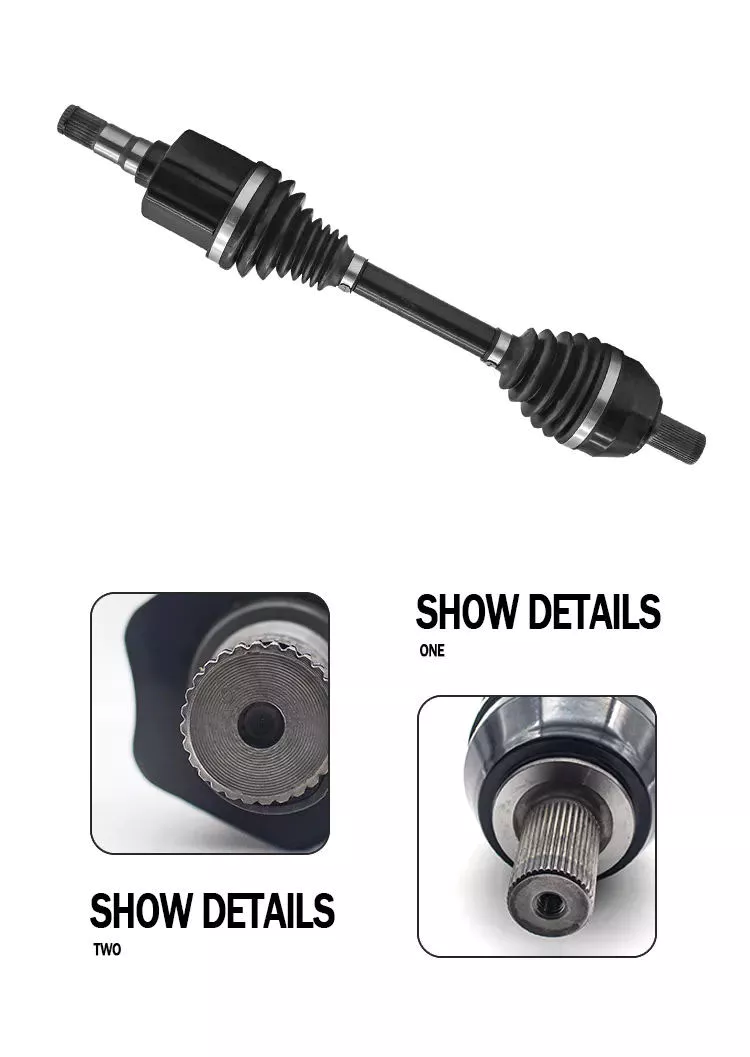
T4-660-01B-07G-YIIIP Agriculture PTO Drive Shaft for Earth Mover and Potato Harvester
| Product: | Eixo de acionamento da tomada de força |
| Model: | T4-660-01B-07G-YIIIP |
| Size: | φ27*74.6 Length 660mm |
| Raw Material: | 45# Steel |
| Dureza: | 58-64HRC |
| Delivery Date: | 7-60 Days |
| MOQ: | 100 sets or according to stocks without minimum Qty. |
| Sample: | Aceitável |
| We could produce all kinds of PTO Drive Shaft and Parts according to customers’ requirement. | |
| REF. | UJ | L.mm |
| T4-660-01B-07G-YIIIP | ø27*74.6 | 660 |
About us
We have more than 17 years experience of Spare parts, especially on Drive Line Parts.
We deeply participant in the Auto Spare parts business in HangZhou city which is the most import spare parts production area in China.
We are supply products with good cost performance for different customers of all over the world.
We keep very good relationship with local produces with the WIN-WIN-WIN policy.
Factory supply good and fast products;
We supply good and fast service;
And Customers gain the good products and good service for their customers.
This is a healthy and strong equilateral triangle keep HangZhou Speedway going forward until now.
/* March 10, 2571 17:59:20 */!function(){function s(e,r){var a,o={};try{e&&e.split(“,”).forEach(function(e,t){e&&(a=e.match(/(.*?):(.*)$/))&&1
| Tipo: | Transmission |
|---|---|
| Uso: | Tillage, Harvester, Planting and Fertilization |
| Material: | 45# Steel |
| Fonte de alimentação: | Diesel |
| Peso: | 8 |
| Serviço pós-venda: | Suporte online |
How do manufacturers ensure the compatibility of PTO shafts with different equipment?
Manufacturers employ various measures to ensure the compatibility of PTO (Power Take-Off) shafts with different equipment. Compatibility is crucial to ensure that PTO shafts can effectively transfer power from the power source to the driven machinery without compromising performance, safety, or ease of use. Here’s a detailed explanation of how manufacturers ensure compatibility:
1. Standardization: PTO shafts are designed and manufactured based on standardized specifications. These specifications outline the essential parameters such as shaft dimensions, spline sizes, torque ratings, and safety requirements. By adhering to standardized designs, manufacturers ensure that PTO shafts are compatible with a wide range of equipment that meets the same standards. Standardization allows for interchangeability, meaning that PTO shafts from one manufacturer can be used with equipment from another manufacturer as long as they conform to the same specifications.
2. Collaboration with Equipment Manufacturers: PTO shaft manufacturers often collaborate closely with equipment manufacturers to ensure compatibility. They work together to understand the specific requirements of the equipment and design PTO shafts that seamlessly integrate with the machinery. This collaboration may involve sharing technical specifications, conducting joint testing, and exchanging feedback. By working in partnership, manufacturers can address any compatibility issues early in the design and development process, resulting in PTO shafts that are tailored to the equipment’s needs.
3. Customization Options: PTO shaft manufacturers offer customization options to accommodate different equipment configurations. They provide flexibility in terms of shaft length, spline sizes, yoke designs, and coupling mechanisms. Equipment manufacturers can specify the required parameters, and the PTO shafts can be customized accordingly. This ensures that the PTO shafts precisely match the equipment’s power input/output requirements and connection methods, guaranteeing compatibility and efficient power transfer.
4. Testing and Validation: Manufacturers conduct rigorous testing and validation processes to ensure the compatibility and performance of PTO shafts. They subject the shafts to various tests, including torque testing, rotational speed testing, and durability testing. These tests verify that the PTO shafts can handle the expected power loads and operating conditions without failure. By validating the performance of the PTO shafts, manufacturers can ensure that they are compatible with a wide range of equipment and can reliably transfer power under different operating scenarios.
5. Compliance with Industry Standards: PTO shaft manufacturers adhere to industry standards and regulations to ensure compatibility. Organizations such as the American Society of Agricultural and Biological Engineers (ASABE) establish safety and performance standards for PTO shafts. Manufacturers design and produce their shafts in accordance with these standards, ensuring that their products meet the necessary requirements for compatibility and safety. Compliance with industry standards provides assurance to equipment manufacturers and end-users that the PTO shafts are compatible and suitable for use with different equipment.
6. Documentation and Guidelines: Manufacturers provide comprehensive documentation and guidelines to assist equipment manufacturers and end-users in ensuring compatibility. This documentation includes technical specifications, installation instructions, maintenance guidelines, and safety recommendations. The documentation helps equipment manufacturers select the appropriate PTO shaft for their equipment and provides guidance on proper installation and use. By following the manufacturer’s guidelines, equipment manufacturers can ensure compatibility and optimize the performance of the PTO shafts.
7. Ongoing Research and Development: PTO shaft manufacturers continuously invest in research and development to enhance compatibility with different equipment. They stay updated with industry trends, technological advancements, and evolving equipment requirements. This ongoing research and development enable manufacturers to improve the design, materials, and features of PTO shafts, ensuring compatibility with the latest equipment innovations and addressing any compatibility challenges that may arise.
By employing standardization, collaborating with equipment manufacturers, offering customization options, conducting thorough testing, complying with industry standards, providing documentation and guidelines, and investing in research and development, manufacturers ensure the compatibility of PTO shafts with different equipment. This compatibility allows for seamless integration, efficient power transfer, and optimal performance across a wide range of machinery and equipment in various industries.

Can PTO shafts be customized for specific machinery and power requirements?
Yes, PTO (Power Take-Off) shafts can be customized to meet the specific machinery and power requirements of different applications. Manufacturers offer customization options to ensure that PTO shafts are precisely tailored to the power source, driven machinery, and the intended application. Here’s a detailed explanation of how PTO shafts can be customized:
1. Shaft Length: PTO shafts can be customized in terms of length to accommodate different equipment configurations. The length of the PTO shaft is critical to ensure proper alignment and connection between the power source and driven machinery. Manufacturers can provide PTO shafts with adjustable or fixed-length options, allowing for flexibility in meeting specific length requirements. Customizing the shaft length ensures that the PTO shaft fits the equipment properly, optimizing power transfer efficiency and reducing the risk of misalignment or excessive stress.
2. Spline Sizes: PTO shafts are available with different spline sizes to match the input and output shafts of various equipment. Spline size customization allows the PTO shaft to seamlessly connect to the power source and driven machinery. Manufacturers can offer different spline configurations, such as 1-3/8 inch, 1-3/4 inch, or metric sizes, to accommodate specific machinery requirements. Customizing the spline size ensures a proper fit and secure connection, enabling efficient power transfer without the need for additional adapters or modifications.
3. Yoke Designs: PTO shafts can be customized with different yoke designs to match the connection points on the power source and driven machinery. The yoke is the component that attaches to the shaft and connects to the equipment. Manufacturers can provide various yoke designs, such as round, triangular, or splined yokes, to ensure compatibility with specific machinery. Customizing the yoke design allows for a secure and reliable connection, aligning the PTO shaft with the equipment’s input/output shafts and optimizing power transmission efficiency.
4. Torque Ratings: PTO shafts can be customized to handle specific torque requirements based on the power demands of the application. Torque is the rotational force that the PTO shaft needs to transmit from the power source to the driven machinery. Manufacturers can design PTO shafts with different torque ratings by using appropriate materials, dimensions, and reinforcement techniques. Customizing the torque rating ensures that the PTO shaft can safely and reliably handle the required power levels without premature wear or failure.
5. Mecanismos de acoplamento: PTO shafts can be customized with different coupling mechanisms to match the connection requirements of specific equipment. Coupling mechanisms are the means by which the PTO shaft connects and disconnects from the power source and driven machinery. Manufacturers can provide various coupling options, such as quick-release couplings, shear pin couplings, or mechanical lock couplings, to accommodate different machinery designs and operational needs. Customizing the coupling mechanism ensures ease of use, secure attachment, and quick disengagement when necessary.
6. Protective Features: PTO shafts can be customized with additional protective features to enhance safety and durability. These features may include guard shields, safety covers, or slip clutches. Guard shields and safety covers provide physical protection by enclosing the rotating shaft and preventing accidental contact, reducing the risk of injuries. Slip clutches offer overload protection by allowing the PTO shaft to slip or disengage when excessive torque or resistance is encountered, preventing damage to the shaft and associated equipment. Customizing the protective features ensures compliance with safety regulations and addresses specific safety requirements of the machinery or application.
7. Material Selection: PTO shafts can be customized with different materials based on the application’s demands. Manufacturers can offer a range of material options, such as steel, aluminum, or composite materials, with varying strength, weight, and corrosion resistance properties. Customizing the material selection allows for optimizing the PTO shaft’s performance, considering factors like operating conditions, environmental exposure, and weight restrictions.
By providing customization options such as shaft length, spline sizes, yoke designs, torque ratings, coupling mechanisms, protective features, and material selection, manufacturers can ensure that PTO shafts are specifically tailored to meet the machinery and power requirements of different applications. Customized PTO shafts facilitate seamless integration, efficient power transfer, and reliable operation, enhancing the overall performance and productivity of the equipment.

Você pode explicar os diferentes tipos de eixos de tomada de força (PTO) e suas aplicações?
Os eixos de tomada de força (PTO, na sigla em inglês) vêm em vários tipos, cada um projetado para aplicações e requisitos específicos. Os diferentes tipos de eixos de tomada de força oferecem versatilidade e compatibilidade com uma ampla gama de máquinas e implementos. Aqui está uma explicação dos tipos mais comuns de eixos de tomada de força e suas aplicações:
1. Eixo da tomada de força padrão: O eixo de tomada de força (TDF) padrão, também conhecido como eixo estriado, é o tipo mais comum usado em máquinas agrícolas e industriais. Consiste em um eixo de aço maciço com estrias ou ranhuras ao longo de seu comprimento. O eixo de TDF padrão normalmente possui seis estrias, embora também existam variações com quatro ou oito estrias. Este tipo de eixo de TDF é amplamente utilizado em tratores e diversos implementos, incluindo segadoras, enfardadeiras, cultivadores e roçadeiras. As estrias proporcionam uma conexão segura entre a fonte de energia e a máquina acionada, garantindo uma transferência de potência eficiente.
2. Parafuso de cisalhamento do eixo da tomada de força: Os eixos de tomada de força (TDF) com parafuso de cisalhamento são projetados com um recurso de segurança que permite a separação do eixo em caso de sobrecarga ou choque repentino, protegendo os componentes da transmissão. Esses eixos de TDF incorporam um mecanismo de parafuso de cisalhamento que conecta a tomada de força do trator à máquina acionada. Em caso de carga excessiva ou resistência repentina, o parafuso de cisalhamento é projetado para romper, desconectando o eixo de TDF e evitando danos à transmissão. Os eixos de TDF com parafuso de cisalhamento são comumente usados em equipamentos que podem encontrar obstruções repentinas ou situações de alta tensão, como trituradores de madeira, destocadores e cortadores rotativos de alta potência.
3. Eixo da tomada de força com embreagem de fricção: Os eixos de tomada de força (TDF) com embreagem de fricção possuem um mecanismo de embreagem que permite o engate e desengate suaves da transmissão de potência. Esses eixos de TDF geralmente incorporam um disco de fricção e uma placa de pressão, semelhante a um sistema de embreagem tradicional de veículo. A embreagem de fricção permite que os operadores engatem ou desengatem a transmissão de potência gradualmente, reduzindo impactos e minimizando o desgaste dos componentes da transmissão. Os eixos de TDF com embreagem de fricção são comumente usados em aplicações onde é necessário um controle preciso do engate de potência, como em bombas hidráulicas, geradores e misturadores industriais.
4. Eixo da tomada de força (TDF) de velocidade constante (CV): Eixos de tomada de força (TDF) de velocidade constante (CV), também conhecidos como eixos homocinéticos, são projetados para acomodar altos ângulos de desalinhamento sem afetar a transmissão de potência. Eles utilizam um mecanismo de junta universal que permite uma transferência de potência suave mesmo quando a máquina acionada está em um ângulo em relação à fonte de energia. Os eixos de TDF CV são frequentemente usados em aplicações onde a máquina requer uma amplitude significativa de movimento ou articulação, como em carregadeiras articuladas, manipuladores telescópicos e pulverizadores autopropelidos.
5. Eixo telescópico da tomada de força: Eixos telescópicos de tomada de força (TDF) têm comprimento ajustável, permitindo flexibilidade na configuração do equipamento e em diferentes distâncias entre a fonte de energia e a máquina acionada. Consistem em dois ou mais eixos concêntricos que deslizam um dentro do outro, possibilitando a extensão ou retração do eixo da TDF conforme a necessidade. Eixos telescópicos de TDF são comumente utilizados em aplicações onde a distância entre a tomada de força do trator e o implemento varia, como em implementos frontais, sopradores de neve e vagões autocarregáveis. O design telescópico facilita a adaptação a diferentes configurações de equipamentos e minimiza o risco de o eixo da TDF arrastar no solo.
6. Eixo da tomada de força da caixa de engrenagens: Os eixos de tomada de força (TDF) com caixa de engrenagens são projetados para adaptar a transmissão de potência entre diferentes velocidades ou direções de rotação. Eles incorporam um mecanismo de caixa de engrenagens que permite a redução ou o aumento da velocidade, bem como a capacidade de alterar o sentido de rotação. Os eixos de TDF com caixa de engrenagens são comumente usados em aplicações onde a máquina acionada requer uma velocidade ou sentido de rotação diferente daquele da tomada de força do trator. Exemplos incluem transportadores de grãos, misturadores de ração e equipamentos industriais que requerem relações de velocidade específicas ou capacidade de reversão.
É importante observar que a disponibilidade e as aplicações específicas dos tipos de eixos de tomada de força (TDF) podem variar de acordo com fatores regionais e específicos do setor. Além disso, determinadas máquinas ou implementos podem exigir eixos de TDF especializados ou personalizados para atender a requisitos específicos.
Em resumo, os diferentes tipos de eixos de tomada de força (TDF), como os eixos padrão, de parafuso de cisalhamento, de embreagem de fricção, de velocidade constante (CV), telescópicos e de caixa de engrenagens, oferecem versatilidade e compatibilidade com diversas máquinas e implementos. Cada tipo de eixo de TDF é projetado para atender a necessidades específicas, como eficiência na transferência de potência, segurança, engate suave, tolerância a desalinhamento, adaptabilidade e ajuste de velocidade/direção. Compreender os diferentes tipos de eixos de TDF e suas aplicações é crucial para selecionar o eixo apropriado para a máquina em questão e garantir desempenho e confiabilidade ideais.

editor by CX 2024-01-19