Mô tả sản phẩm
Parameter specifications
| Certification | Shipment | Quality | material | Company System Certification |
| IATF16949 | in time | high | steel | ISO9001 |
Hồ sơ công ty
HangZhou Xihu (West Lake) Dis. East Port Gear Manufacturing factory is located in Zhoujia Industrial Zone, CHINAMFG Town, HangZhou, 3km away from Xihu (West Lake) Dis.qian Lake. It focuses on precision gear research, development, production and sales. The factory has obtained ISO9001: 2015 certificate, IATF16949:2016. The main export markets were North America, South America and Europe. Products can be customized and mainly includes: New Energy Motor Shaft, Oil Pump Gear, Agricultural Machinery Gear, Transmission Gear, Electric Vehicle gear, etc. We are sincerely willing to cooperate with enterprises from all over the world.
Equipment And Main Products
Certifications
Câu hỏi thường gặp
Q1:How is the quality of your product?
A:Our product has reliable quality, high wear life
Q2:Customization process/work flow?
Advisory – Material selection – 2D/3D Drawing – Quotation – Payment – Production – Quality Control – Package – Delivery
Q3: What is your terms of packing?
A:Generally, we pack our goods in wooden cases, If you have special request about packing, pls negotiate with us in advance, we can pack the goods as your request.
Q4:Price?
A:We will offer competitive price after receiving your drawing
Q5:What is your terms of payment?
A:30% T/T advanced, 70% T/T before shipping
Q6:What is your terms of delivery?
A: FOB
Q7:What drawing software does your company use?
A:CAXA
Q8:Do you test all your goods before delivery?
A: Vâng, chúng tôi có bài kiểm tra 100% trước khi giao hàng.
Q9:How about your delivery time?
A:Product can often be delivered within 40-90 days
Q10:Sample?
A:We offer paid sample.If you have sample requirements, please feel free to contact us at any time
Q11:What logistics packaging does your company use?
A:Express for urgent orders. UPS, FedEx, DHL, TNT, EMS.
Q12:Application range?
A:Automotive, medical, automation, agricultural, marine, etc.
Q13: How do you make our business long-term and good relationship?
A:1. We keep good quality and competitive price to ensure our customers benefit ;
2. We respect every customer as our friend and we sincerely do business and make friends with them,
no matter where they come from.
| Vật liệu: | Alloy Steel |
|---|---|
| Load: | Drive Shaft |
| Stiffness & Flexibility: | Stiffness / Rigid Axle |
| Samples: |
US$ 50/Piece
1 Piece(Min.Order) | Order Sample customized version
|
|---|
| Tùy chỉnh: |
Có sẵn
| Yêu cầu tùy chỉnh |
|---|
.shipping-cost-tm .tm-status-off{background: none;padding:0;color: #1470cc}
|
Shipping Cost:
Estimated freight per unit. |
about shipping cost and estimated delivery time. |
|---|
| Payment Method: |
|
|---|---|
|
Initial Payment Full Payment |
| Currency: | US$ |
|---|
| Return&refunds: | You can apply for a refund up to 30 days after receipt of the products. |
|---|
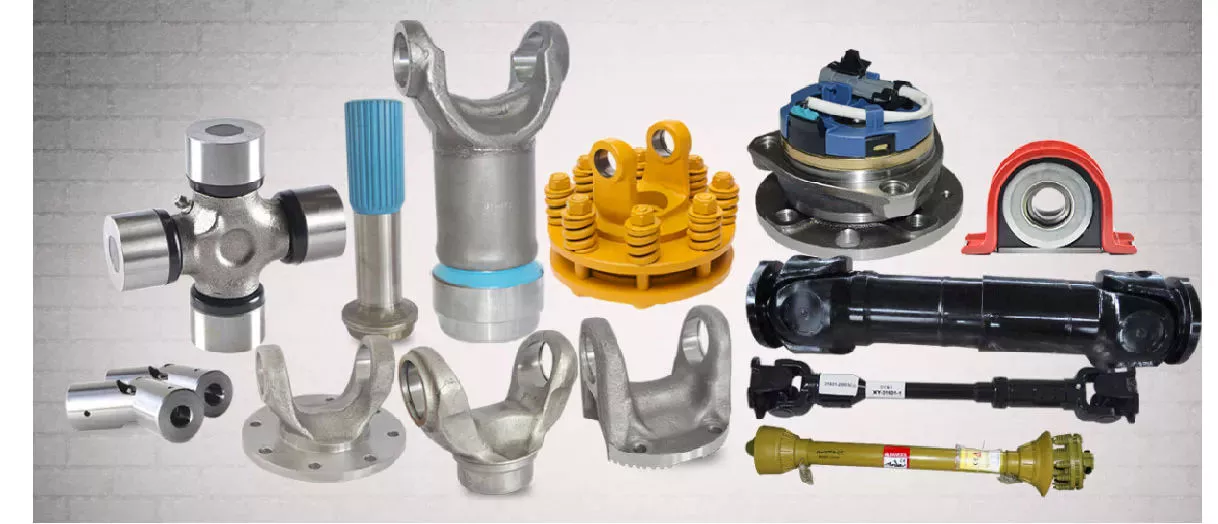
Are there variations in PTO shaft designs for different types of machinery?
Yes, there are variations in PTO (Power Take-Off) shaft designs to accommodate the specific requirements of different types of machinery. PTO shafts are highly versatile and adaptable components used to transfer power from a power source, such as a tractor or engine, to driven machinery or equipment. The design variations in PTO shafts are necessary to ensure compatibility, efficiency, and safety in various applications. Here’s a detailed explanation of the different PTO shaft designs for different types of machinery:
1. Standard PTO Shafts: Standard PTO shafts are the most common design and are widely used in a variety of applications. They typically consist of a solid steel shaft with a universal joint at each end. These universal joints allow for angular misalignment between the power source and the driven machinery. Standard PTO shafts are suitable for applications where the distance between the power source and the driven machinery remains relatively fixed. They are commonly used in agricultural implements, such as mowers, balers, tillers, and seeders, as well as in industrial applications.
2. Telescopic PTO Shafts: Telescopic PTO shafts feature a telescoping design that allows for length adjustment. These shafts consist of two or more concentric shafts that can slide within each other. Telescopic PTO shafts are beneficial in applications where the distance between the power source and the driven machinery varies. By adjusting the length of the shaft, operators can ensure proper power transmission without the risk of the shaft dragging on the ground or being too short to reach the equipment. Telescopic PTO shafts are commonly used in front-mounted implements, snow blowers, self-loading wagons, and other applications where the distance between the power source and the implement changes.
3. CV (Constant Velocity) PTO Shafts: CV PTO shafts incorporate Constant Velocity joints to accommodate misalignment and angular variations. These joints maintain a constant speed and torque transfer even when the driven machinery is at an angle relative to the power source. CV PTO shafts are beneficial in applications where the driven machinery requires flexibility and a wide range of movement. They are commonly used in articulated loaders, telescopic handlers, self-propelled sprayers, and other equipment that requires continuous power transmission while operating at various angles.
4. Gearbox Driven PTO Shafts: Some machinery requires specific speed or torque ratios between the power source and the driven equipment. In such cases, PTO shafts may incorporate gearbox systems. Gearbox driven PTO shafts allow for speed reduction or increase and can change the rotational direction if necessary. The gear ratios in the gearbox can be adjusted to match the speed and torque requirements of the driven machinery. These PTO shafts are commonly used in applications where the power source operates at a different speed or torque level than the equipment it drives, such as in certain industrial manufacturing processes and specialized machinery.
5. High-Torque PTO Shafts: Some heavy-duty machinery requires high torque levels for power transmission. High-torque PTO shafts are designed to handle these demanding applications. They are constructed with reinforced components, including larger diameter shafts and heavier-duty universal joints, to withstand the increased torque requirements. High-torque PTO shafts are commonly used in equipment such as wood chippers, crushers, and heavy-duty agricultural implements that require substantial power and torque for their operation.
6. Safety PTO Shafts: Safety is a crucial consideration when using PTO shafts. Safety PTO shafts incorporate mechanisms to reduce the risk of accidents and injuries. One common safety feature is the use of protective guards that cover the rotating shaft to prevent accidental contact. These guards are typically made of metal or plastic and are designed to shield the rotating components while allowing the necessary movement for power transmission. Safety PTO shafts are used in various applications where the risk of entanglement or accidental contact with the rotating shaft is high, such as in grass mowers, rotary cutters, and other equipment used in landscaping and agriculture.
These are some of the key variations in PTO shaft designs for different types of machinery. The specific design used depends on factors such as the application requirements, power source characteristics, torque levels, movement flexibility, and safety considerations. PTO shaft manufacturers offer a range of designs to ensure compatibility and efficient power transmission in diverse industries and applications.

Trục PTO xử lý sự thay đổi về tải trọng và mô-men xoắn trong quá trình hoạt động như thế nào?
Trục PTO (Trục truyền động) được thiết kế để xử lý các biến đổi về tải trọng và mô-men xoắn trong quá trình hoạt động bằng cách sử dụng các cơ chế và tính năng đặc biệt nhằm đảm bảo truyền tải năng lượng hiệu quả và bảo vệ chống lại tình trạng quá tải. Dưới đây là giải thích chi tiết về cách trục PTO xử lý các biến đổi về tải trọng và mô-men xoắn:
1. Thiết kế cơ khí: Trục PTO được thiết kế dựa trên các nguyên tắc cơ khí mạnh mẽ, cho phép chúng xử lý các biến đổi về tải trọng và mô-men xoắn. Chúng thường được chế tạo bằng các vật liệu có độ bền cao như thép, mang lại độ bền và khả năng chống lại lực uốn hoặc xoắn. Đường kính, độ dày thành và kích thước tổng thể của trục được tính toán cẩn thận để chịu được mức mô-men xoắn và biến đổi tải trọng dự kiến. Thiết kế cơ khí của trục PTO đảm bảo rằng nó có thể truyền tải năng lượng một cách đáng tin cậy và đáp ứng các lực động gặp phải trong quá trình hoạt động.
2. Khớp vạn năng: Khớp vạn năng là một bộ phận quan trọng của trục truyền động PTO, cho phép tính linh hoạt và bù trừ sự lệch trục giữa nguồn điện và máy móc được dẫn động. Các khớp này có thể thích ứng với các thay đổi về góc lệch, có thể xảy ra do sự thay đổi tải trọng hoặc chuyển động của máy móc. Khớp vạn năng bao gồm một càng chữ thập với các ổ bi kim cho phép quay trơn tru và truyền mô-men xoắn, ngay cả khi các trục không hoàn toàn thẳng hàng. Thiết kế của khớp vạn năng cho phép trục truyền động PTO xử lý các thay đổi về tải trọng và mô-men xoắn trong khi vẫn duy trì truyền tải điện năng ổn định.
3. Bộ ly hợp trượt: Các khớp ly hợp trượt thường được tích hợp vào trục PTO để bảo vệ quá tải. Các khớp ly hợp này cho phép trục PTO trượt hoặc ngắt kết nối tạm thời khi gặp phải mô-men xoắn hoặc lực cản quá lớn. Khớp ly hợp trượt thường bao gồm các tấm ma sát có thể điều chỉnh đến một mức mô-men xoắn cụ thể. Khi mô-men xoắn vượt quá giới hạn đã định trước, khớp ly hợp sẽ trượt, ngăn ngừa hư hỏng cho trục PTO và các thiết bị được kết nối. Khớp ly hợp trượt đặc biệt hữu ích khi có sự thay đổi đột ngột về tải trọng hoặc mô-men xoắn, cung cấp cơ chế an toàn để bảo vệ trục PTO và các máy móc liên quan.
4. Bộ giới hạn mô-men xoắn: Bộ giới hạn momen xoắn là một tính năng bảo vệ khác được tìm thấy trong một số trục PTO. Các thiết bị này được thiết kế để tự động ngắt truyền động khi momen xoắn vượt quá ngưỡng đã được xác định trước. Bộ giới hạn momen xoắn có thể là cơ khí, chẳng hạn như khớp nối chốt cắt hoặc ly hợp ma sát, hoặc điện tử, sử dụng cảm biến và hệ thống điều khiển. Khi momen xoắn vượt quá giới hạn đã đặt, bộ giới hạn momen xoắn sẽ ngắt, ngăn chặn việc truyền tải năng lượng tiếp tục và bảo vệ trục PTO khỏi tình trạng quá tải. Bộ giới hạn momen xoắn có hiệu quả trong việc xử lý các xung momen xoắn đột ngột và bảo vệ trục PTO và các thiết bị liên quan.
5. Bảo trì và kiểm tra: Việc bảo dưỡng và kiểm tra định kỳ trục PTO là rất cần thiết để đảm bảo chúng hoạt động đúng cách và có khả năng xử lý các thay đổi về tải trọng và mô-men xoắn. Bảo dưỡng định kỳ bao gồm bôi trơn các khớp nối vạn năng, kiểm tra độ bền của trục và siết chặt các ốc vít. Việc kiểm tra thường xuyên cho phép phát hiện sớm sự mài mòn, lệch trục hoặc các vấn đề khác có thể ảnh hưởng đến hiệu suất của trục PTO. Bằng cách đáp ứng các yêu cầu bảo dưỡng và kiểm tra, người vận hành có thể xác định và giải quyết bất kỳ vấn đề nào có thể phát sinh do sự thay đổi về tải trọng và mô-men xoắn, đảm bảo hoạt động an toàn và hiệu quả liên tục của trục PTO.
6. Nhận thức và khả năng kiểm soát của người vận hành: Người vận hành đóng vai trò quan trọng trong việc quản lý sự thay đổi về tải trọng và mô-men xoắn trong quá trình vận hành trục PTO. Họ cần nắm rõ giới hạn hoạt động của máy móc, bao gồm cả định mức mô-men xoắn và khả năng chịu tải khuyến nghị của trục PTO. Việc được đào tạo bài bản và hiểu rõ khả năng của thiết bị giúp người vận hành đưa ra quyết định sáng suốt và điều chỉnh hoạt động khi gặp phải những thay đổi đáng kể về tải trọng hoặc mô-men xoắn. Người vận hành cũng cần cảnh giác trong việc theo dõi hiệu suất của thiết bị, chú ý đến bất kỳ dấu hiệu rung động quá mức, tiếng ồn hoặc các dấu hiệu khác cho thấy các vấn đề tiềm ẩn liên quan đến sự thay đổi tải trọng và mô-men xoắn.
Nhờ thiết kế cơ khí chắc chắn, sử dụng khớp nối vạn năng, ly hợp trượt, bộ giới hạn mô-men xoắn và thực hiện các biện pháp bảo trì đúng cách, trục PTO được trang bị để xử lý các biến đổi về tải trọng và mô-men xoắn trong quá trình hoạt động. Những tính năng này đảm bảo truyền tải điện năng đáng tin cậy, bảo vệ chống lại tình trạng quá tải và góp phần vào hoạt động an toàn và hiệu quả của trục PTO và máy móc mà nó dẫn động.

How do PTO shafts contribute to transferring power from tractors to implements?
PTO shafts (Power Take-Off shafts) play a critical role in transferring power from tractors to implements in agricultural and industrial settings. They provide a reliable and efficient means of power transmission, enabling tractors to drive various implements and perform a wide range of tasks. Here’s a detailed explanation of how PTO shafts contribute to transferring power from tractors to implements:
Nguồn điện: Tractors are equipped with powerful engines designed to generate substantial amounts of mechanical power. This power is harnessed to drive the tractor’s wheels and operate hydraulic systems, as well as to provide power for the attachment of implements through the PTO shaft. The PTO shaft typically connects to the rear or side of the tractor, where the power take-off mechanism is located. The power take-off derives power directly from the tractor’s engine or transmission, allowing for efficient power transfer to the PTO shaft.
PTO Shaft Design: PTO shafts are designed as driveline components that transmit rotational power and torque from the tractor’s power take-off to the implement. They consist of a hollow metal tube with universal joints at each end. The universal joints accommodate angular misalignments and allow the PTO shaft to transmit power even when the tractor and implement are not perfectly aligned. The PTO shaft is also equipped with a safety shield or guard to prevent accidental contact with the rotating shaft, ensuring operator safety during operation.
PTO Engagement: To transfer power from the tractor to the implement, the PTO shaft needs to be engaged. Tractors are equipped with a PTO clutch mechanism that allows operators to engage or disengage the PTO shaft as needed. When the PTO clutch is engaged, power flows from the tractor’s engine through the power take-off mechanism and into the PTO shaft. This rotational power is then transmitted through the PTO shaft to the implement, driving its working components.
Rotational Power Transmission: The rotational power generated by the tractor’s engine is transferred to the PTO shaft through the power take-off mechanism. The PTO shaft, being directly connected to the power take-off, rotates at the same speed as the engine. This rotational power is then transmitted from the PTO shaft to the implement’s driveline or gearbox. The implement’s driveline, in turn, distributes the power to the implement’s working components, such as blades, augers, or pumps, enabling them to carry out their respective functions.
Matching Speed and Power: PTO shafts are designed to match the rotational speed and power requirements of various implements. Tractors often feature multiple speed settings for the PTO, allowing operators to select the appropriate speed for the specific implement being used. Different implements may require different rotational speeds to operate optimally, and the PTO shaft allows for easy adjustment to match those requirements. Additionally, the power generated by the tractor’s engine is transmitted through the PTO shaft, providing the necessary torque to drive the implement’s working components effectively.
Versatility and Efficiency: PTO shafts offer significant versatility and efficiency in agricultural and industrial operations. They allow tractors to power a wide range of implements, including mowers, balers, tillers, sprayers, and grain augers, among others. By connecting implements directly to the tractor’s power source, operators can quickly switch between tasks without the need for separate power generators or engines. This versatility and efficiency streamline workflow, reduce costs, and increase overall productivity in agricultural and industrial settings.
Safety Considerations: While PTO shafts are essential for power transmission, they can pose safety risks if mishandled. The rotating shaft and universal joints can cause severe injuries if operators come into contact with them while in operation. That’s why PTO shafts are equipped with safety shields or guards to prevent accidental contact. Operators should always ensure that the safety shields are in place and secure before engaging the PTO shaft. Proper training, adherence to safety guidelines, and regular maintenance of PTO shafts and associated safety features are crucial to ensuring safe operation.
In summary, PTO shafts are vital components that enable the transfer of power from tractors to implements in agricultural and industrial applications. They provide a reliable and efficient means of power transmission, allowing tractors to drive various implements and perform a wide range of tasks. By engaging the PTO clutch and transmitting rotational power through the PTO shaft, tractors power the working components of implements, providing versatility, efficiency, and productivity in agricultural and industrial operations.


editor by CX 2023-10-31