Description du produit
Specification OF PTO Drive Shaft —Speedway:
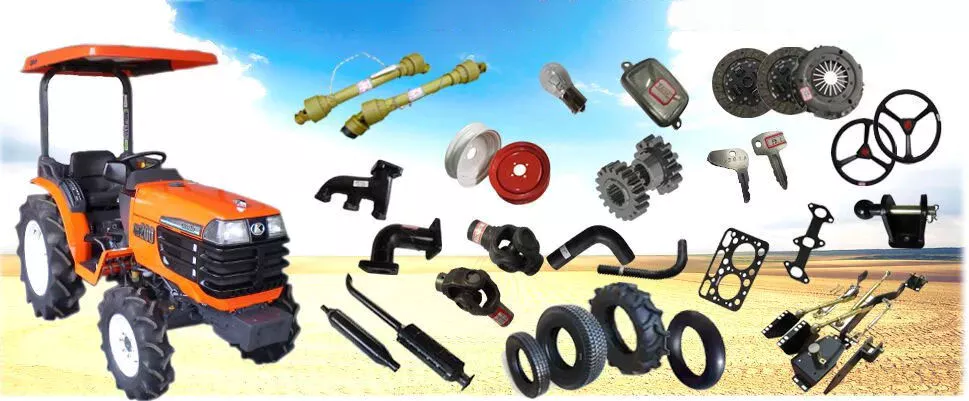
We developed and produced many tractor spare parts for Japanese Tractors .
Product Name: Japanese tractor transmission clutch disc parts for B1400 B7000
Tractor Model we can supply: B1500/1400,B5000,B6000, B7000, TU1400, TX1400, TX1500, YM F1401, YM1400 ETC.
The parts for example: Tyres, rim Jante, Kit coupling KB-TX 3 point linkage. Exhaust pipe Steering wheel. Kit coupling YM F14/F15, gear shaft, PTO shaft, PTO cardan, key, regulator ect.
Most of the spare parts are with stock. If you are interested in, please feel easy to contact me.
Other relevant parts for cars or machinery we have made in our workshop are as follows:
Drive shaft parts and assemblies,
Universal joint parts and assemblies,
PTO drive shafts,
Spline shafts,
Slip yokes,
Weld yokes,
Flange yokes,
Steering columns,
Connecting rods,
etc.
Description du produit
Pto Drive Shaft Item:
| Item | Cross journal size | 540dak-rpm | 1000dak-rpm | |||
| Série 1 | 22mm | 54mm | 12KW | 16HP | 18KW | 25HP |
| Series 2 | 23.8mm | 61.3mm | 15KW | 21HP | 23KW | 31HP |
| Series 3 | 27mm | 70mm | 26KW | 35HP | 40KW | 55HP |
| Série 4 | 27mm | 74.6mm | 26KW | 35HP | 40KW | 55HP |
| Series 5 | 30.2mm | 80mm | 35KW | 47HP | 54KW | 74HP |
| Série 6 | 30.2mm | 92mm | 47KW | 64HP | 74KW | 100HP |
| Series 7 | 30.2mm | 106.5mm | 55KW | 75HP | 87KW | 18HP |
| Série 8 | 35mm | 106.5mm
|
70KW | 95HP | 110KW | 150HP |
| Series 38 | 38mm | 102mm | 70KW | 95HP | 110KW | 150HP |
Profil de l'entreprise
Certifications
FAQ
/* 22 janvier 2571 19:08:37 */!function(){function s(e,r){var a,o={};try{e&&e.split(“,”).forEach(function(e,t){e&&(a=e.match(/(.*?):(.*)$/))&&1
| Taper: | Shaft |
|---|---|
| Usage: | Agricultural Products Processing, Farmland Infrastructure, Harvester, Planting and Fertilization, Grain Threshing, Cleaning and Drying |
| Matériel: | Stainless Steel |
| Source d'alimentation : | Pto Dirven Shaft |
| Weight: | Standard |
| After-sales Service: | 1 Year |
| Exemples : |
US$ 300/Piece
1 pièce (commande minimale) | |
|---|
Quelles sont les pratiques d'entretien essentielles pour prolonger la durée de vie des arbres de prise de force ?
Un entretien régulier et approprié des arbres de prise de force (PDF) est essentiel pour prolonger leur durée de vie et garantir des performances optimales. En suivant les bonnes pratiques d'entretien, vous pouvez prévenir l'usure prématurée, identifier rapidement les problèmes potentiels et maximiser la longévité de vos arbres de PDF. Voici quelques points clés à prendre en compte :
1. Inspection régulière : Effectuez des inspections visuelles régulières de l'arbre de prise de force afin de détecter tout signe de dommage, d'usure ou de désalignement. Recherchez les fissures, les bosses, les sections tordues ou les composants desserrés. Inspectez les joints universels, les mécanismes d'accouplement, les protections et les autres pièces associées. Soyez attentif à tout bruit inhabituel, vibration ou changement de performance, car cela peut indiquer des problèmes sous-jacents nécessitant une intervention.
2. Lubrification : Une lubrification adéquate est essentielle au bon fonctionnement et à la longévité des arbres de prise de force. Respectez les recommandations du fabricant concernant les intervalles de lubrification et utilisez le type de lubrifiant recommandé. Lubrifiez les joints de cardan, les joints homocinétiques (le cas échéant) et les autres pièces mobiles conformément aux spécifications. Contrôlez régulièrement le niveau de lubrifiant et faites l'appoint si nécessaire. Assurez-vous que le lubrifiant utilisé est compatible avec le matériau de l'arbre et qu'il n'attire pas la saleté ou les débris susceptibles de provoquer des abrasions ou des dommages.
3. Nettoyage : Veillez à ce que l'arbre de prise de force reste propre et exempt de saletés, de débris et autres contaminants. Nettoyez-le régulièrement à l'aide d'une brosse ou d'air comprimé afin d'éliminer toute accumulation de saletés, de graisse ou de résidus. Portez une attention particulière au nettoyage des joints de cardan et des zones de jonction de l'arbre avec d'autres composants. Ce nettoyage prévient l'accumulation de particules abrasives susceptibles d'accélérer l'usure et de nuire aux performances de l'arbre.
4. Inspection et entretien des gardes : Vérifiez régulièrement les protections et les écrans afin de vous assurer qu'ils sont bien en place et en bon état. Ces protections sont essentielles pour prévenir tout contact accidentel avec l'arbre rotatif et minimiser les risques de blessure. Réparez ou remplacez rapidement toute protection endommagée ou manquante. Assurez-vous que les protections sont correctement alignées et couvrent suffisamment toutes les pièces mobiles de l'arbre de prise de force.
5. Contrôles du couple et des fixations : Inspectez et vérifiez périodiquement le couple de serrage des fixations, telles que les boulons et les écrous, qui maintiennent l'arbre de prise de force et ses composants. Avec le temps, les vibrations et l'utilisation normale peuvent desserrer ces fixations et compromettre l'intégrité de l'arbre. Respectez les couples de serrage préconisés par le fabricant pour un serrage correct. Contrôlez régulièrement le serrage des fixations et resserrez-les si nécessaire.
6. Entretien du boulon de cisaillement ou de l'embrayage à friction : Si votre arbre de prise de force comporte des boulons de cisaillement ou un embrayage à friction, assurez-vous de leur bon fonctionnement. Inspectez les boulons de cisaillement afin de déceler toute usure ou tout dommage et remplacez-les si nécessaire. Vérifiez le réglage et le bon fonctionnement de l'embrayage à friction. Suivez les recommandations du fabricant concernant l'entretien et le réglage de ces dispositifs de sécurité afin de garantir leur efficacité dans la protection des composants de la transmission.
7. Stockage approprié : Lorsque l'arbre de prise de force n'est pas utilisé, rangez-le dans un endroit propre et sec. Protégez-le de l'humidité, des températures extrêmes et des substances corrosives. Si possible, rangez-le en position verticale pour éviter toute déformation. Pensez à utiliser des protections (capuchons, étuis, etc.) pour le préserver de la poussière, des saletés et autres sources potentielles de dommages.
8. Formation des opérateurs : Assurez une formation adéquate aux opérateurs sur le fonctionnement, l'entretien et les procédures de sécurité relatifs aux arbres de prise de force. Sensibilisez-les à l'importance des inspections régulières, de la lubrification et du respect des pratiques d'entretien recommandées. Encouragez-les à signaler rapidement toute anomalie ou tout problème afin de prévenir d'autres dommages et de garantir des réparations ou des réglages dans les meilleurs délais.
9. Conseils du fabricant et d'experts : Consultez les instructions et recommandations du fabricant concernant l'entretien spécifique à votre modèle d'arbre de prise de force. Par ailleurs, sollicitez l'avis d'experts ou de techniciens agréés spécialisés dans l'entretien des arbres de prise de force. Ils pourront vous apporter des conseils précieux et vous aider à mettre en œuvre les meilleures pratiques d'entretien pour vos arbres de prise de force.
En suivant ces pratiques d'entretien, vous prolongerez la durée de vie de vos arbres de prise de force, optimiserez leurs performances et réduirez les risques de pannes inattendues ou de réparations coûteuses. Inspections régulières, lubrification, nettoyage, entretien des protections, contrôles du couple de serrage et stockage adéquat sont essentiels pour garantir la longévité et la fiabilité de vos arbres de prise de force.

How do PTO shafts handle variations in load and torque during operation?
PTO (Power Take-Off) shafts are designed to handle variations in load and torque during operation by employing specific mechanisms and features that ensure efficient power transfer and protection against overload conditions. Here’s a detailed explanation of how PTO shafts handle variations in load and torque:
1. Mechanical Design: PTO shafts are engineered with robust mechanical design principles that enable them to handle variations in load and torque. They are typically constructed using high-strength materials such as steel, which provides durability and resistance to bending or twisting forces. The shaft’s diameter, wall thickness, and overall dimensions are carefully calculated to withstand the expected torque levels and load variations. The mechanical design of the PTO shaft ensures that it can transmit power reliably and accommodate the dynamic forces encountered during operation.
2. Universal Joints: Universal joints are a key component of PTO shafts that allow for flexibility and compensation of misalignment between the power source and driven machinery. These joints can accommodate variations in angular alignment, which may occur due to changes in load or movement of the machinery. Universal joints consist of a cross-shaped yoke with needle bearings that allow for smooth rotation and transfer of torque, even when the shafts are not perfectly aligned. The design of universal joints enables PTO shafts to handle variations in load and torque while maintaining consistent power transmission.
3. Slip Clutches: Slip clutches are often incorporated into PTO shafts to provide overload protection. These clutches allow the PTO shaft to slip or disengage momentarily when excessive torque or resistance is encountered. Slip clutches typically consist of friction plates that can be adjusted to a specific torque setting. When the torque surpasses the predetermined limit, the clutch slips, preventing damage to the PTO shaft and connected equipment. Slip clutches are particularly useful when sudden changes in load or torque occur, providing a safety mechanism to protect the PTO shaft and associated machinery.
4. Torque Limiters: Torque limiters are another protective feature found in some PTO shafts. These devices are designed to automatically disengage the power transmission when a predetermined torque threshold is exceeded. Torque limiters can be mechanical, such as shear pin couplings or friction clutches, or electronic, utilizing sensors and control systems. When the torque exceeds the set limit, the torque limiter disengages, preventing further power transfer and protecting the PTO shaft from overload conditions. Torque limiters are effective in handling sudden spikes in torque and safeguarding the PTO shaft and associated equipment.
5. Maintenance and Inspection: Regular maintenance and inspection of PTO shafts are essential to ensure their proper functioning and ability to handle variations in load and torque. Routine maintenance includes lubrication of universal joints, inspection of shaft integrity, and tightening of fasteners. Regular inspections allow for early detection of wear, misalignment, or other issues that may affect the PTO shaft’s performance. By addressing maintenance and inspection requirements, operators can identify and address any concerns that may arise due to variations in load and torque, ensuring the continued safe and efficient operation of the PTO shaft.
6. Operator Awareness and Control: Operators play a crucial role in managing variations in load and torque during PTO shaft operation. They should be aware of the machinery’s operational limits, including the recommended torque ratings and load capacities of the PTO shaft. Proper training and understanding of the equipment’s capabilities enable operators to make informed decisions and adjust the operation when encountering significant load or torque changes. Operators should also be vigilant in monitoring the equipment’s performance, watching for any signs of excessive vibration, noise, or other indications of potential issues related to load and torque variations.
By incorporating robust mechanical design, utilizing universal joints, slip clutches, torque limiters, and implementing proper maintenance practices, PTO shafts are equipped to handle variations in load and torque during operation. These features ensure reliable power transmission, protect against overload conditions, and contribute to the safe and efficient functioning of the PTO shaft and the machinery it drives.
How do PTO shafts handle variations in speed and torque requirements?
PTO shafts (Power Take-Off shafts) are designed to handle variations in speed and torque requirements between the power source (such as a tractor or engine) and the driven machinery or equipment. They incorporate various mechanisms and components to ensure efficient power transmission while accommodating the different speed and torque demands. Here’s a detailed explanation of how PTO shafts handle variations in speed and torque requirements:
1. Gearbox Systems: PTO shafts often incorporate gearbox systems to match the speed and torque requirements between the power source and the driven machinery. Gearboxes allow for speed reduction or increase and can also change the rotational direction if necessary. By using different gear ratios, PTO shafts can adapt the rotational speed and torque output to suit the specific requirements of the driven equipment. Gearbox systems enable PTO shafts to provide the necessary power and speed compatibility between the power source and the machinery they drive.
2. Shear Bolt Mechanisms: Some PTO shafts, particularly in applications where sudden overloads or shock loads are expected, use shear bolt mechanisms. These mechanisms are designed to protect the driveline components from damage by disconnecting the PTO shaft in case of excessive torque or sudden resistance. Shear bolts are designed to break at a specific torque threshold, ensuring that the PTO shaft separates before the driveline components suffer damage. By incorporating shear bolt mechanisms, PTO shafts can handle variations in torque requirements and provide a safety feature to protect the equipment.
3. Friction Clutches: PTO shafts may incorporate friction clutch systems to enable smooth engagement and disengagement of power transfer. Friction clutches use a disc and pressure plate mechanism to control the transmission of power. Operators can gradually engage or disengage the power transfer by adjusting the pressure on the friction disc. This feature allows for precise control over torque transmission, accommodating variations in torque requirements while minimizing shock loads on the driveline components. Friction clutches are commonly used in applications where smooth power engagement is essential, such as in hydraulic pumps, generators, and industrial mixers.
4. Constant Velocity (CV) Joints: In cases where the driven machinery requires a significant range of movement or articulation, PTO shafts may incorporate Constant Velocity (CV) joints. CV joints allow the PTO shaft to accommodate misalignment and angular variations without affecting power transmission. These joints provide a smooth and constant power transfer even when the driven machinery is at an angle relative to the power source. CV joints are commonly used in applications such as articulated loaders, telescopic handlers, and self-propelled sprayers, where the machinery requires flexibility and a wide range of movement.
5. Telescopic Designs: Some PTO shafts feature telescopic designs that allow for length adjustment. These shafts consist of two or more concentric shafts that slide within each other, providing the ability to extend or retract the PTO shaft as needed. Telescopic designs accommodate variations in the distance between the power source and the driven machinery. By adjusting the length of the PTO shaft, operators can ensure proper power transmission without the risk of the shaft dragging on the ground or being too short to reach the equipment. Telescopic PTO shafts are commonly used in applications where the distance between the power source and the implement varies, such as in front-mounted implements, snow blowers, and self-loading wagons.
By incorporating these mechanisms and designs, PTO shafts can handle variations in speed and torque requirements effectively. They provide the necessary flexibility, safety, and control to ensure efficient power transmission between the power source and the driven machinery. PTO shafts play a critical role in adapting power to meet the specific needs of various equipment and applications.


editor by CX 2024-03-01