Description du produit
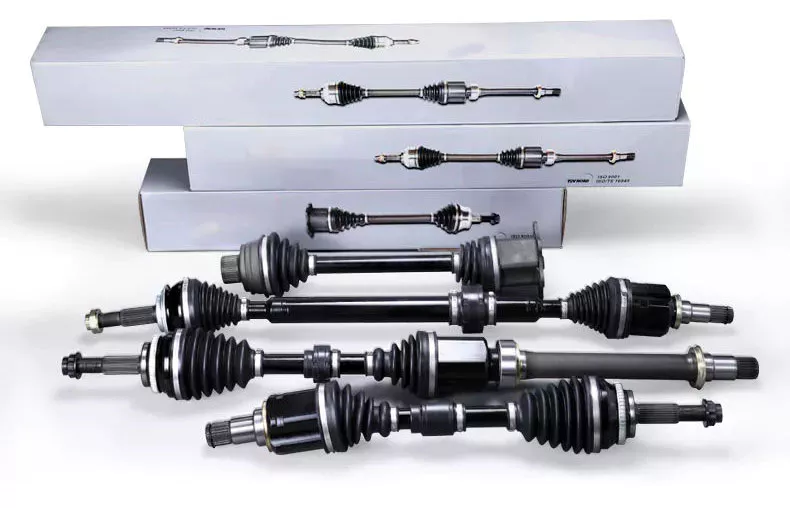
OEM pto draving shaft
Our Services
Why choosing us?
1.We are manufacturer, we have Well and High Quality Control
2.Prompt Delivery
3.Customer’s Design and Logo are Welcome
4.Competitive Prices directly from factory
5.Small Order Acceptable
6.OEM / ODM Accepted
Pre-sales service After-sales Service
*Inquiry and consulting support * training how to instal the machine
* View factory * training how to use the machine
company information :
SHUNYU company mainly supply Farm tractors, Combine harvesters and related Implements, as well as their spare parts.
Also we offer OEM service for Different brands tractors PTO Driving shafts, Gears, Rotary blades.
If you could not find the products on our website, Welcome to send us drawing or sample, we could custom as your needs.
/* 22 janvier 2571 19:08:37 */!function(){function s(e,r){var a,o={};try{e&&e.split(“,”).forEach(function(e,t){e&&(a=e.match(/(.*?):(.*)$/))&&1
| Taper: | Shaft |
|---|---|
| Usage: | Agricultural Products Processing, Harvester |
| Source d'alimentation : | Diesel |
| After-sales Service: | Online Support |
| Warranty: | 12 Months |
| Product Name: | OEM Shaft |
| Personnalisation : |
Disponible
| Demande personnalisée |
|---|
How do PTO shafts ensure efficient power transfer while maintaining safety?
PTO (Power Take-Off) shafts play a crucial role in ensuring efficient power transfer from a power source to driven machinery or equipment, while also maintaining safety. These shafts are designed with various features and mechanisms to optimize power transmission efficiency and mitigate potential hazards. Here’s a detailed explanation of how PTO shafts achieve efficient power transfer while prioritizing safety:
1. Mechanical Power Transmission: PTO shafts serve as mechanical linkages between the power source, typically a tractor or engine, and the driven machinery. They transmit rotational power from the power source to the equipment, enabling efficient transfer of energy. The mechanical design of PTO shafts, including their diameter, length, and material composition, is optimized to minimize power losses during transmission, ensuring that a significant portion of the power generated by the source is effectively delivered to the machinery.
2. Universal Joints and Flexible Couplings: PTO shafts are equipped with universal joints and flexible couplings that allow for angular misalignment and flexibility in movement. Universal joints accommodate variations in the alignment between the power source and the driven machinery, enabling smooth power transfer even when the two components are not perfectly aligned. Flexible couplings help to compensate for slight misalignments, reduce vibration, and prevent excessive stress on the shaft and connected components, thereby enhancing efficiency and reducing the risk of mechanical failure or damage.
3. Constant Velocity (CV) Joints: CV joints are often used in PTO shafts to maintain constant speed and torque transfer, particularly in applications where the driven machinery requires flexibility or operates at different angles. CV joints allow for smooth power transmission without significant fluctuations, even when the driven machinery is at an angle relative to the power source. By minimizing speed variations and power loss due to changing angles, CV joints contribute to efficient power transfer while ensuring consistent performance and reducing the likelihood of mechanical stress or premature wear.
4. Safety Guards and Shields: Safety is a paramount consideration in the design of PTO shafts. Protective guards and shields are installed to cover the rotating shaft and other moving parts. These guards act as physical barriers to prevent accidental contact with the rotating components, significantly reducing the risk of entanglement, injury, or damage. Safety guards are typically made of durable materials such as metal or plastic and are designed to allow the necessary movement for power transmission while providing adequate protection. Regular inspection and maintenance of these guards are crucial to ensure their effectiveness in maintaining safety.
5. Shear Bolt or Slip Clutch Mechanisms: PTO shafts often incorporate shear bolt or slip clutch mechanisms as safety features to protect the driveline components and prevent damage in case of excessive torque or sudden resistance. Shear bolts are designed to shear or break when the torque exceeds a predetermined threshold, disconnecting the PTO shaft from the power source. This helps prevent damage to the shaft, driven machinery, and power source. Slip clutches work similarly by allowing the PTO shaft to slip when excessive resistance is encountered, protecting the components from overload. These mechanisms act as safety measures to maintain the integrity of the PTO shaft and associated equipment while minimizing the risk of mechanical failures or accidents.
6. Compliance with Safety Standards: PTO shafts are designed and manufactured to comply with relevant safety standards and regulations. Manufacturers follow guidelines and requirements set by organizations such as the American Society of Agricultural and Biological Engineers (ASABE) or other regional safety authorities. Compliance with these standards ensures that PTO shafts meet specific safety criteria, including torque capacity, guard design, and other safety considerations. Users can rely on standardized PTO shafts that have undergone testing and certification, providing an additional layer of assurance regarding their safety and performance.
7. Operator Education and Training: To ensure safe and efficient operation, it is essential for operators to receive proper education and training on PTO shafts. Operators should be familiar with the specific safety features, maintenance requirements, and safe operating procedures for the PTO shafts used in their applications. This includes understanding the importance of using appropriate personal protective equipment, regularly inspecting the equipment for wear or damage, and following recommended maintenance schedules. Operator awareness and adherence to safety protocols significantly contribute to maintaining a safe working environment and maximizing the efficiency of power transfer.
In summary, PTO shafts ensure efficient power transfer while maintaining safety through their mechanical design, incorporation of universal joints and CV joints, installation of safety guards and shields, implementation of shear bolt or slip clutch mechanisms, compliance with safety standards, and operator education. By combining these features and practices, PTO shafts provide reliable and secure power transmission, minimizing power losses and potential risks associated with their operation.

Can you provide real-world examples of equipment that use PTO shafts?
Power Take-Off (PTO) shafts are extensively used in various industries, particularly in agriculture and construction. They provide a reliable power source for a wide range of equipment, enabling efficient operation and increased productivity. Here are some real-world examples of equipment that commonly use PTO shafts:
1. Agricultural Machinery:
- Tractor Implements: A wide array of tractor-mounted implements rely on PTO shafts for power transfer. These include:
- Mowers and rotary cutters
- Balers and hay equipment
- Tillers and cultivators
- Seeders and planters
- Sprayers
- Manure spreaders
- Harvesters, such as combine harvesters and forage harvesters
- Stationary Equipment: PTO shafts are also used in stationary agricultural equipment, including:
- Feed grinders and mixers
- Silo unloaders
- Grain augers and elevators
- Irrigation pumps
- Wood chippers and shredders
- Stump grinders
2. Construction and Earthmoving Equipment:
- Backhoes and Excavators: PTO shafts can be found in backhoes and excavators, powering attachments such as augers, hydraulic hammers, and brush cutters.
- Post Hole Diggers: Post hole diggers used for fence installation often rely on PTO shafts to transfer power to the digging mechanism.
- Trenchers: Trenching machines equipped with PTO shafts efficiently dig trenches for utility installations, drainage systems, or irrigation lines.
- Stump Grinders: Stump grinders used in land clearing and tree removal operations often utilize PTO shafts to power their cutting blades.
- Soil Stabilizers and Road Reclaimers: These machines use PTO shafts to drive the rotor and milling drums, which pulverize and mix materials for road construction and maintenance.
3. Forestry Equipment:
- Wood Chippers: Wood chippers used for processing tree branches and logs into wood chips are commonly powered by PTO shafts.
- Brush Cutters and Mulchers: PTO-driven brush cutters and mulchers are employed to clear vegetation and maintain forested areas.
- Log Splitters: Log splitters that split logs into firewood often utilize PTO shafts to power the splitting mechanism.
4. Utility Equipment:
- Generators: Some generators are designed to be driven by PTO shafts, providing an auxiliary power source for various applications in remote locations or during power outages.
- Pumps: PTO-driven pumps are commonly used for agricultural irrigation, water transfer, and dewatering applications.
5. Specialty Equipment:
- Ice Resurfacers: PTO shafts are employed in ice resurfacing machines used in ice rinks to maintain a smooth ice surface for ice hockey and figure skating.
- Air Compressors: Some air compressors are driven by PTO shafts, providing a source of compressed air for various applications.
These examples represent a range of equipment that extensively relies on PTO shafts for power transfer. PTO shafts enable the efficient operation of these machines, increasing productivity and versatility across various industries.
Pouvez-vous expliquer les différents types d'arbres de prise de force et leurs applications ?
Les arbres de prise de force (PDF) se déclinent en différents modèles, chacun conçu pour des applications et des exigences spécifiques. Cette diversité d'arbres de PDF offre une grande polyvalence et une compatibilité avec une large gamme de machines et d'outils. Voici une explication des types d'arbres de PDF les plus courants et de leurs applications :
1. Arbre de prise de force standard : L'arbre de prise de force standard, également appelé arbre cannelé, est le type le plus courant utilisé dans les machines agricoles et industrielles. Il se compose d'un arbre en acier massif comportant des cannelures sur toute sa longueur. L'arbre de prise de force standard possède généralement six cannelures, bien qu'il existe des variantes à quatre ou huit cannelures. Ce type d'arbre est largement utilisé sur les tracteurs et divers outils, tels que les tondeuses, les presses à balles, les motoculteurs et les broyeurs rotatifs. Les cannelures assurent une liaison fiable entre la source d'énergie et la machine entraînée, garantissant ainsi une transmission de puissance efficace.
2. Arbre de prise de force à boulon de cisaillement : Les arbres de prise de force à boulon de cisaillement sont conçus avec un dispositif de sécurité permettant leur séparation en cas de surcharge ou de choc soudain, protégeant ainsi les composants de la transmission. Ces arbres de prise de force intègrent un mécanisme de boulon de cisaillement reliant la prise de force du tracteur à la machine entraînée. En cas de charge excessive ou de résistance soudaine, le boulon de cisaillement est conçu pour se rompre, déconnectant l'arbre de prise de force et évitant d'endommager la transmission. Les arbres de prise de force à boulon de cisaillement sont couramment utilisés sur les équipements susceptibles de rencontrer des obstacles soudains ou des contraintes importantes, tels que les broyeurs de branches, les dessoucheuses et les débroussailleuses rotatives robustes.
3. Arbre de prise de force à embrayage à friction : Les arbres de prise de force à embrayage à friction sont dotés d'un mécanisme d'embrayage permettant un engagement et un désengagement progressifs de la transmission de puissance. Ces arbres de prise de force intègrent généralement un disque de friction et un plateau de pression, similaires à un système d'embrayage automobile classique. L'embrayage à friction permet aux opérateurs d'engager ou de désengager la transmission de puissance en douceur, réduisant ainsi les à-coups et minimisant l'usure des composants de la transmission. Les arbres de prise de force à embrayage à friction sont couramment utilisés dans les applications exigeant un contrôle précis de l'engagement de la puissance, comme les pompes hydrauliques, les générateurs et les mélangeurs industriels.
4. Arbre de prise de force à vitesse constante (CV) : Les arbres de prise de force à vitesse constante (CV), également appelés arbres homocinétiques, sont conçus pour compenser d'importants angles de désalignement sans incidence sur la transmission de puissance. Ils utilisent un mécanisme de joint universel qui assure une transmission de puissance fluide, même lorsque la machine entraînée est inclinée par rapport à la source d'énergie. Les arbres de prise de force CV sont fréquemment utilisés dans les applications nécessitant une grande amplitude de mouvement ou d'articulation, comme les chargeuses articulées, les chariots télescopiques et les pulvérisateurs automoteurs.
5. Arbre de prise de force télescopique : Les arbres de prise de force télescopiques sont réglables en longueur, offrant une grande flexibilité dans la configuration des équipements et permettant de faire varier la distance entre la source d'énergie et la machine entraînée. Ils se composent de deux arbres concentriques ou plus qui coulissent l'un dans l'autre, permettant ainsi d'allonger ou de raccourcir l'arbre de prise de force selon les besoins. Les arbres de prise de force télescopiques sont couramment utilisés lorsque la distance entre la prise de force du tracteur et l'outil est variable, comme pour les outils frontaux, les souffleuses à neige et les remorques autochargeuses. Leur conception télescopique facilite l'adaptation aux différentes configurations d'équipement et minimise le risque de frottement de l'arbre de prise de force au sol.
6. Arbre de prise de force de la boîte de vitesses : Les arbres de prise de force à boîte de vitesses sont conçus pour adapter la transmission de puissance entre différentes vitesses ou directions de rotation. Ils intègrent un mécanisme de boîte de vitesses permettant de réduire ou d'augmenter la vitesse, ainsi que d'inverser le sens de rotation. Ces arbres sont couramment utilisés lorsque la machine entraînée nécessite une vitesse ou un sens de rotation différent de celui de la prise de force du tracteur. On peut citer comme exemples les vis sans fin à grains, les mélangeuses d'aliments pour animaux et les équipements industriels exigeant des rapports de vitesse spécifiques ou une fonction d'inversion de sens.
Il est important de noter que la disponibilité et les applications spécifiques des différents types d'arbres de prise de force peuvent varier selon les régions et les secteurs d'activité. De plus, certaines machines ou certains outils peuvent nécessiter des arbres de prise de force spécialisés ou sur mesure pour répondre à des exigences particulières.
En résumé, les différents types d'arbres de prise de force (PDF), tels que les arbres standard, à boulon de cisaillement, à embrayage à friction, à vitesse constante (CV), télescopiques et à boîte de vitesses, offrent polyvalence et compatibilité avec diverses machines et outils. Chaque type d'arbre de PDF est conçu pour répondre à des besoins spécifiques, comme l'efficacité de la transmission de puissance, la sécurité, la douceur d'engagement, la tolérance au désalignement, l'adaptabilité et le réglage de la vitesse et du sens de rotation. Comprendre les différents types d'arbres de PDF et leurs applications est essentiel pour choisir l'arbre approprié à la machine prévue et garantir des performances et une fiabilité optimales.

editor by CX 2024-04-30