Описание продукта
SWC-I Series-Light-Duty Designs Cardan shaft
Designs
Data and Size of SWC-I Series Universal Joint Couplings
| Type | Desian Data Элемент |
SWC-I 58 |
SWC-I 65 |
SWC-I 75 |
SWC-I 90 |
SWC-I 100 |
SWC-I 120 |
SWC-I 150 |
SWC-I 180 |
SWC-I 200 |
SWC-I 225 |
| A | L | 255 | 285 | 335 | 385 | 445 | 500 | 590 | 640 | 775 | 860 |
| Lv | 35 | 40 | 40 | 45 | 55 | 80 | 80 | 80 | 100 | 120 | |
| m(kg) | 2.2 | 3.0 | 5.0 | 6.6 | 9.5 | 17 | 32 | 40 | 76 | 128 | |
| B | L | 150 | 175 | 200 | 240 | 260 | 295 | 370 | 430 | 530 | 600 |
| m(kg) | 1.7 | 2.4 | 3.8 | 5.7 | 7.7 | 13.1 | 23 | 28 | 55 | 98 | |
| C | L | 128 | 156 | 180 | 208 | 220 | 252 | 340 | 348 | 440 | 480 |
| m(kg) | 1.3 | 1.95 | 3.1 | 5.0 | 7.0 | 12.3 | 22 | 30 | 56 | 96 | |
| Tn(N·m) | 150 | 200 | 400 | 750 | 1250 | 2500 | 4500 | 8400 | 16000 | 22000 | |
| Tf(N·m) | 75 | 100 | 200 | 375 | 630 | 1250 | 2250 | 4200 | 8000 | 11000 | |
| β(°) | 35 | 35 | 35 | 35 | 35 | 35 | 35 | 25 | 25 | 25 | |
| D | 52 | 63 | 72 | 92 | 100 | 112 | 142 | 154 | 187 | 204 | |
| Df | 58 | 65 | 75 | 90 | 100 | 120 | 150 | 180 | 200 | 225 | |
| D1 | 47 | 52 | 62 | 74.5 | 84 | 101.5 | 130 | 155.5 | 170 | 196 | |
| D2(H9) | 30 | 35 | 42 | 47 | 57 | 75 | 90 | 110 | 125 | 140 | |
| D3 | 38 | 38 | 4 | 50 | 60 | 70 | 89 | 102 | 114 | 140 | |
| Lm | 32 | 39 | 45 | 52 | 55 | 63 | 85 | 87 | 110 | 120 | |
| k | 3.5 | 4.5 | 5.5 | 6.0 | 8.0 | 8.0 | 10.0 | 12.0 | 14.0 | 15.0 | |
| t | 1.5 | 1.7 | 2.0 | 2.5 | 2.5 | 2.5 | 3.0 | 4.0 | 4.0 | 5.0 | |
| n | 4 | 4 | 6 | 4 | 6 | 8 | 8 | 8 | 8 | 8 | |
| d | 5.1 | 6.5 | 6.5 | 8.5 | 8.5 | 10.5 | 13 | 15 | 17 | 17 | |
| MI(kg) | 0.14 | 0.16 | 0.38 | 0.38 | 0.53 | 0.53 | 0.87 | 0.87 | 1.65 | 2.14 | |
| Flange bolt | size | M5 | M6 | M6 | M8 | M8 | M10 | M12 | M14 | M16 | M16 |
| Tightening torque(N·m) | 7 | 13 | 13 | 32 | 32 | 64 | 110 | 180 | 270 | 270 |
1. Notations:
L=Standard length, or compressed length for designs with length compensation;
LV=Length compensation;
M=Weight;
Tn=Nominal torque(Yield torque 50% over Tn);
TF=Fatigue torque, I. E. Permissible torque as determined according to the fatigue strength
Under reversing loads;
β=Maximum deflection angle;
MI=weight per 100mm tube
2. Millimeters are used as measurement units except where noted;
3. Please consult us for customizations regarding length, length compensation and
Flange connections.
Brief Introduction
Processing flow
Applications
Quality Control
/* 10 марта 2571 г., 17:59:20 */!function(){function s(e,r){var a,o={};try{e&&e.split(“,”).forEach(function(e,t){e&&(a=e.match(/(.*?):(.*)$/))&&1
| Condition: | New |
|---|---|
| Color: | Red |
| Certification: | ISO |
| Structure: | Double |
| Материал: | Alloy Steel |
| Тип: | Retractable |
| Настройка: |
Доступный
| Индивидуальный запрос |
|---|
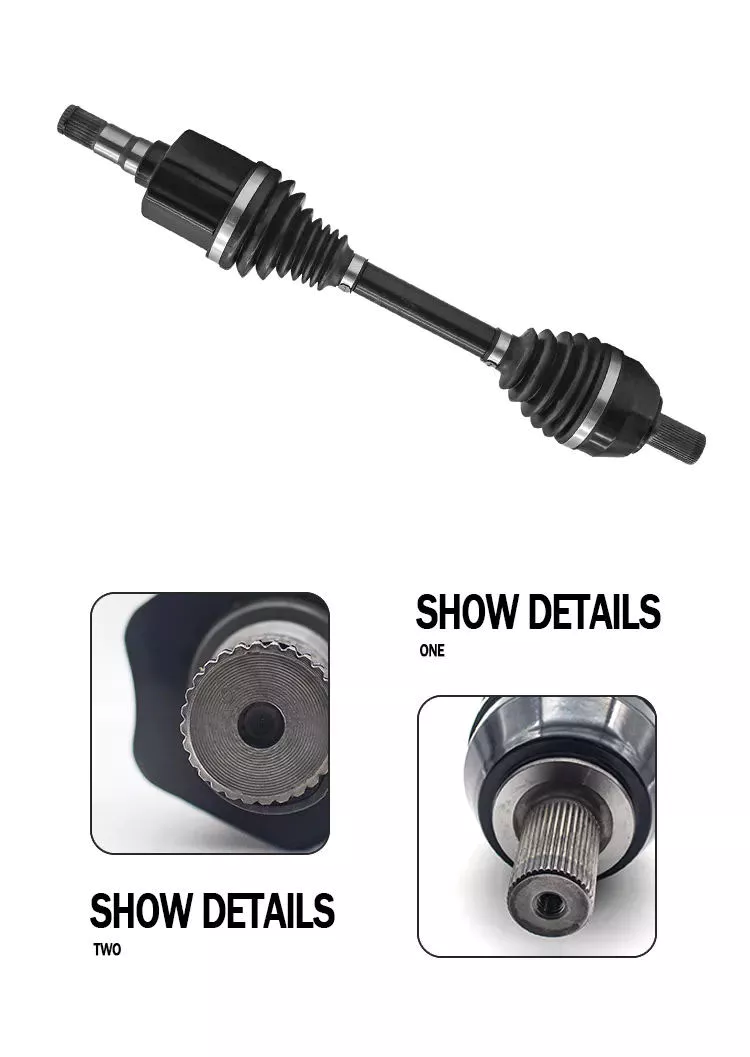
How do manufacturers ensure the compatibility of PTO shafts with different equipment?
Manufacturers employ various measures to ensure the compatibility of PTO (Power Take-Off) shafts with different equipment. Compatibility is crucial to ensure that PTO shafts can effectively transfer power from the power source to the driven machinery without compromising performance, safety, or ease of use. Here’s a detailed explanation of how manufacturers ensure compatibility:
1. Standardization: PTO shafts are designed and manufactured based on standardized specifications. These specifications outline the essential parameters such as shaft dimensions, spline sizes, torque ratings, and safety requirements. By adhering to standardized designs, manufacturers ensure that PTO shafts are compatible with a wide range of equipment that meets the same standards. Standardization allows for interchangeability, meaning that PTO shafts from one manufacturer can be used with equipment from another manufacturer as long as they conform to the same specifications.
2. Collaboration with Equipment Manufacturers: PTO shaft manufacturers often collaborate closely with equipment manufacturers to ensure compatibility. They work together to understand the specific requirements of the equipment and design PTO shafts that seamlessly integrate with the machinery. This collaboration may involve sharing technical specifications, conducting joint testing, and exchanging feedback. By working in partnership, manufacturers can address any compatibility issues early in the design and development process, resulting in PTO shafts that are tailored to the equipment’s needs.
3. Customization Options: PTO shaft manufacturers offer customization options to accommodate different equipment configurations. They provide flexibility in terms of shaft length, spline sizes, yoke designs, and coupling mechanisms. Equipment manufacturers can specify the required parameters, and the PTO shafts can be customized accordingly. This ensures that the PTO shafts precisely match the equipment’s power input/output requirements and connection methods, guaranteeing compatibility and efficient power transfer.
4. Testing and Validation: Manufacturers conduct rigorous testing and validation processes to ensure the compatibility and performance of PTO shafts. They subject the shafts to various tests, including torque testing, rotational speed testing, and durability testing. These tests verify that the PTO shafts can handle the expected power loads and operating conditions without failure. By validating the performance of the PTO shafts, manufacturers can ensure that they are compatible with a wide range of equipment and can reliably transfer power under different operating scenarios.
5. Compliance with Industry Standards: PTO shaft manufacturers adhere to industry standards and regulations to ensure compatibility. Organizations such as the American Society of Agricultural and Biological Engineers (ASABE) establish safety and performance standards for PTO shafts. Manufacturers design and produce their shafts in accordance with these standards, ensuring that their products meet the necessary requirements for compatibility and safety. Compliance with industry standards provides assurance to equipment manufacturers and end-users that the PTO shafts are compatible and suitable for use with different equipment.
6. Documentation and Guidelines: Manufacturers provide comprehensive documentation and guidelines to assist equipment manufacturers and end-users in ensuring compatibility. This documentation includes technical specifications, installation instructions, maintenance guidelines, and safety recommendations. The documentation helps equipment manufacturers select the appropriate PTO shaft for their equipment and provides guidance on proper installation and use. By following the manufacturer’s guidelines, equipment manufacturers can ensure compatibility and optimize the performance of the PTO shafts.
7. Ongoing Research and Development: PTO shaft manufacturers continuously invest in research and development to enhance compatibility with different equipment. They stay updated with industry trends, technological advancements, and evolving equipment requirements. This ongoing research and development enable manufacturers to improve the design, materials, and features of PTO shafts, ensuring compatibility with the latest equipment innovations and addressing any compatibility challenges that may arise.
By employing standardization, collaborating with equipment manufacturers, offering customization options, conducting thorough testing, complying with industry standards, providing documentation and guidelines, and investing in research and development, manufacturers ensure the compatibility of PTO shafts with different equipment. This compatibility allows for seamless integration, efficient power transfer, and optimal performance across a wide range of machinery and equipment in various industries.

How do PTO shafts contribute to the efficiency of agricultural operations?
Power Take-Off (PTO) shafts play a crucial role in improving the efficiency of agricultural operations by providing a versatile and reliable power source for various farming equipment. PTO shafts allow agricultural machinery to access power from tractors or other prime movers, enabling the efficient transfer of energy to perform a wide range of tasks. Here’s a detailed explanation of how PTO shafts contribute to the efficiency of agricultural operations:
1. Versatility: PTO shafts offer versatility by allowing the connection of different types of implements and machinery to tractors or other power sources. This versatility enables farmers to use a single power unit, such as a tractor, to operate multiple agricultural implements, including mowers, balers, tillers, seeders, sprayers, and more. The ability to quickly switch between various implements using a PTO shaft minimizes downtime and maximizes efficiency in agricultural operations.
2. Power Transfer: PTO shafts efficiently transfer power from the tractor’s engine to the agricultural implements. The rotating power generated by the engine is transmitted through the PTO shaft to drive the machinery connected to it. This direct power transfer eliminates the need for separate engines or motors on each implement, reducing equipment costs and maintenance requirements. PTO shafts ensure a reliable power supply, allowing agricultural operations to be carried out efficiently and effectively.
3. Increased Productivity: By utilizing PTO shafts, agricultural operations can be performed more quickly and efficiently than manual or alternative power methods. PTO-driven machinery typically operates at higher speeds and with greater power compared to human-operated or manual tools. This increased productivity allows farmers to complete tasks such as tilling, seeding, harvesting, and material handling more efficiently, reducing labor requirements and increasing overall farm productivity.
4. Time Savings: PTO shafts contribute to time savings in agricultural operations. The ability to connect and disconnect implements quickly using standardized PTO shafts allows farmers to switch between tasks rapidly. This saves time during equipment setup, as well as when transitioning between different operations in the field. Time efficiency is particularly valuable during critical farming periods, such as planting or harvesting, where timely execution is essential for optimal crop yield and quality.
5. Reduced Manual Labor: PTO shafts minimize the need for manual labor in strenuous or repetitive tasks. By harnessing the power of tractors or other prime movers, farmers can mechanize various operations that would otherwise require significant physical effort. Agricultural implements driven by PTO shafts can perform tasks such as plowing, mowing, and baling with minimal human intervention, reducing labor costs and improving overall efficiency.
6. Precision and Consistency: PTO shafts contribute to precision and consistency in agricultural operations. The consistent power supply from the PTO ensures uniform operation and performance of the connected machinery. This helps in achieving consistent seed placement, even spreading of fertilizers or chemicals, and precise cutting or harvesting of crops. Precision and consistency lead to improved crop quality, enhanced yield, and reduced waste, ultimately contributing to the overall efficiency of agricultural operations.
7. Adaptability to Various Terrain: PTO-driven machinery is highly adaptable to various types of terrain encountered in agricultural operations. Tractors equipped with PTO shafts can traverse uneven or challenging terrain, allowing implements to operate effectively on slopes, rough fields, or hilly landscapes. This adaptability ensures that farmers can efficiently manage their land, regardless of topographical challenges, enhancing operational efficiency and productivity.
8. Integration with Automation and Technology: PTO shafts can be integrated with automation and technology advancements in modern agricultural practices. Automation systems, such as precision guidance and control, can be synchronized with PTO-driven machinery to optimize operations and minimize waste. Additionally, advancements in data collection and analysis allow farmers to monitor and optimize machine performance, fuel efficiency, and productivity, further enhancing the efficiency of agricultural operations.
By providing versatility, efficient power transfer, increased productivity, time savings, reduced manual labor, precision, adaptability to terrain, and integration with automation and technology, PTO shafts significantly contribute to enhancing the efficiency of agricultural operations. They enable farmers to perform a wide range of tasks with ease, ultimately improving productivity, reducing costs, and supporting sustainable farming practices.
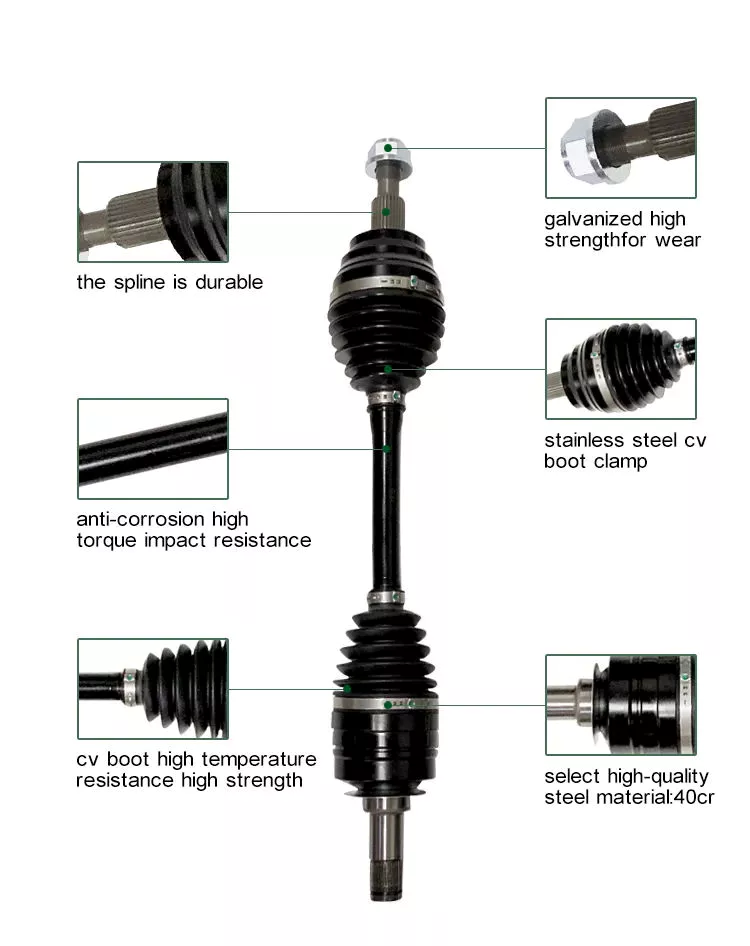
Можете объяснить, какие бывают типы валов отбора мощности и для каких областей их применения?
Валы отбора мощности (ВОМ) бывают разных типов, каждый из которых предназначен для конкретных задач и требований. Различные типы валов ВОМ обеспечивают универсальность и совместимость с широким спектром техники и навесного оборудования. Ниже приведено описание наиболее распространенных типов валов ВОМ и областей их применения:
1. Стандартный вал отбора мощности: Стандартный вал отбора мощности, также известный как шлицевой вал, является наиболее распространенным типом, используемым в сельскохозяйственной и промышленной технике. Он представляет собой цельный стальной вал со шлицами или канавками по всей его длине. Стандартный вал отбора мощности обычно имеет шесть шлицов, хотя встречаются и варианты с четырьмя или восемью шлицами. Этот тип вала отбора мощности широко используется в тракторах и различном навесном оборудовании, включая косилки, пресс-подборщики, культиваторы и роторные косилки. Шлицы обеспечивают надежное соединение между источником энергии и приводимым в движение механизмом, гарантируя эффективную передачу мощности.
2. Вал отбора мощности с предохранительным болтом: Валы отбора мощности с предохранительными болтами имеют защитную конструкцию, позволяющую валу разъединяться в случае перегрузки или внезапного удара для защиты компонентов трансмиссии. Эти валы отбора мощности оснащены механизмом с предохранительными болтами, соединяющим вал отбора мощности трактора с приводным оборудованием. В случае чрезмерной нагрузки или внезапного сопротивления предохранительный болт размыкается, отсоединяя вал отбора мощности и предотвращая повреждение трансмиссии. Валы отбора мощности с предохранительными болтами обычно используются в оборудовании, которое может сталкиваться с внезапными препятствиями или ситуациями с высокой нагрузкой, например, в измельчителях древесины, дробилках для пней и мощных роторных косилках.
3. Вал отбора мощности с фрикционной муфтой: Валы отбора мощности с фрикционной муфтой оснащены механизмом сцепления, обеспечивающим плавное включение и выключение передачи мощности. Эти валы отбора мощности обычно включают в себя фрикционный диск и нажимную пластину, аналогично традиционной системе сцепления транспортных средств. Фрикционная муфта позволяет операторам постепенно включать или выключать передачу мощности, снижая ударные нагрузки и минимизируя износ компонентов трансмиссии. Валы отбора мощности с фрикционной муфтой широко используются в тех областях, где требуется точное управление включением мощности, например, в гидравлических насосах, генераторах и промышленных миксерах.
4. Вал отбора мощности с постоянной скоростью (CV): Валы отбора мощности с постоянной скоростью (CV), также известные как гомокинетические валы, предназначены для компенсации больших углов смещения без влияния на передачу мощности. В них используется универсальный шарнирный механизм, обеспечивающий плавную передачу мощности даже при наклоне приводимого в движение механизма относительно источника питания. Валы отбора мощности с постоянной скоростью часто используются в тех областях применения, где механизму требуется значительный диапазон перемещения или сочленения, например, в шарнирно-сочлененных погрузчиках, телескопических погрузчиках и самоходных опрыскивателях.
5. Телескопический вал отбора мощности: Телескопические валы отбора мощности регулируются по длине, что обеспечивает гибкость в конфигурации оборудования и позволяет изменять расстояние между источником мощности и приводимым в движение механизмом. Они состоят из двух или более концентрических валов, скользящих друг относительно друга, что позволяет выдвигать или убирать вал отбора мощности по мере необходимости. Телескопические валы отбора мощности обычно используются в тех случаях, когда расстояние между валом отбора мощности трактора и навесным оборудованием изменяется, например, в передненавесном оборудовании, снегоуборочных машинах и самозагружающихся прицепах. Телескопическая конструкция обеспечивает легкую адаптацию к различным конфигурациям оборудования и минимизирует риск задевания валом отбора мощности земли.
6. Вал отбора мощности редуктора: Валы отбора мощности с редуктором предназначены для адаптации передачи мощности между различными скоростями или направлениями вращения. Они включают в себя редукторный механизм, позволяющий снижать или увеличивать скорость, а также изменять направление вращения. Валы отбора мощности с редуктором обычно используются в тех областях применения, где приводимая в движение техника требует иной скорости или направления вращения, чем вал отбора мощности трактора. Примерами являются зерновые шнеки, кормосмесители и промышленное оборудование, требующее определенных передаточных чисел или возможности реверсирования.
Важно отметить, что доступность и конкретные области применения валов отбора мощности могут различаться в зависимости от региональных и отраслевых факторов. Кроме того, для некоторых машин или навесного оборудования могут потребоваться специализированные или изготовленные на заказ валы отбора мощности, отвечающие определенным требованиям.
В целом, различные типы валов отбора мощности (ВОМ), такие как стандартные, с болтовым креплением, с фрикционной муфтой, валы постоянной скорости (ШСС), телескопические и редукторные валы, обеспечивают универсальность и совместимость с различной техникой и навесным оборудованием. Каждый тип вала ВОМ разработан для удовлетворения конкретных потребностей, таких как эффективность передачи мощности, безопасность, плавное зацепление, допуск на несоосность, адаптивность и регулировка скорости/направления. Понимание различных типов валов ВОМ и их применения имеет решающее значение для выбора подходящего вала для предполагаемой техники и обеспечения оптимальной производительности и надежности.

editor by CX 2024-02-11