Ürün Açıklaması
Agricultural Machinery Parts Tractor Pto Transmission Shaft
Ürün Açıklaması
A Power Take-Off shaft (PTO shaft) is a mechanical device utilized to transmit power from a tractor or other power source to an attached implement, such as a mower, tiller, or baler. Typically situated at the rear of the tractor, the PTO shaft is driven by the tractor’s engine through the transmission.
The primary purpose of the PTO shaft is to supply a rotating power source to the implement, enabling it to carry out its intended function. To connect the implement to the PTO shaft, a universal joint is employed, allowing for movement between the tractor and the implement while maintaining a consistent power transfer.
Here is our advantages when compare to similar products from China:
1.Forged yokes make PTO shafts strong enough for usage and working;
2.Internal sizes standard to confirm installation smooth;
3.CE and ISO certificates to guarantee to quality of our goods;
4.Strong and professional package to confirm the good situation when you receive the goods.
Product Specifications
Packaging & Shipping
Company Profile
HangZhou Hanon Technology Co.,ltd is a modern enterprise specilizing in the development,production,sales and services of Agricultural Parts like PTO shaft and Gearboxes and Hydraulic parts like Cylinder , Valve ,Gearpump and motor etc..
We adhere to the principle of ” High Quality, Customers’Satisfaction”, using advanced technology and equipments to ensure all the technical standards of transmission .We follow the principle of people first , trying our best to set up a pleasant surroundings and platform of performance for each employee. So everyone can be self-consciously active to join Hanon Machinery.
SSS
1.WHAT’S THE PAYMENT TERM?
When we quote for you,we will confirm with you the way of transaction,FOB,CIFetc.<br> For mass production goods, you need to pay 30% deposit before producing and70% balance against copy of documents.The most common way is by T/T.
2.HOW TO DELIVER THE GOODS TO US?
Usually we will ship the goods to you by sea.
3.HOW LONG IS YOUR DELIVERY TIME AND SHIPMENT?
30-45days.
/* 22 Ocak 2571 19:08:37 */!function(){function s(e,r){var a,o={};try{e&&e.split(“,”).forEach(function(e,t){e&&(a=e.match(/(.*?):(.*)$/))&&1
| Tip: | Pto Shaft |
|---|---|
| Usage: | Agricultural Products Processing, Farmland Infrastructure, Tillage, Harvester, Planting and Fertilization, Grain Threshing, Cleaning and Drying, Tillage, Harvester, Planting and Fertilization |
| Malzeme: | 45cr Steel |
| Örnekler: |
US$ 20/Piece
1 Adet (Minimum Sipariş) | Order Sample |
|---|
| Özelleştirme: |
Mevcut
| Özelleştirilmiş Talep |
|---|
.shipping-cost-tm .tm-status-off{background: none;padding:0;color: #1470cc}
|
Shipping Cost:
Estimated freight per unit. |
about shipping cost and estimated delivery time. |
|---|
| Payment Method: |
|
|---|---|
|
Initial Payment Full Payment |
| Currency: | US$ |
|---|
| Return&refunds: | You can apply for a refund up to 30 days after receipt of the products. |
|---|
Bir uygulama için doğru PTO şaftını seçerken hangi faktörler göz önünde bulundurulmalıdır?
Bir uygulama için doğru güç çıkış mili (PTO) şaftını seçerken, optimum performans, güvenlik ve uyumluluk sağlamak için çeşitli faktörler göz önünde bulundurulmalıdır. PTO şaftları, bir güç kaynağından tahrik edilen makine veya ekipmana güç ileten kritik bileşenlerdir. Bir uygulama için uygun PTO şaftını seçerken dikkate alınması gereken temel faktörler şunlardır:
1. Güç Gereksinimleri: Tahrik edilen makinenin güç gereksinimleri, uygun PTO şaftının belirlenmesinde hayati bir rol oynar. Güç kaynağının beygir gücü (HP) veya kilovat (kW) değerini göz önünde bulundurun ve PTO şaftının gerekli güç iletimini sağlayabildiğinden emin olun. Verimli ve güvenilir bir çalışma sağlamak için PTO şaftının güç kapasitesinin güç kaynağının güç çıkışıyla eşleştirilmesi şarttır.
2. Hız ve Tork Gereksinimleri: Tahrik edilen makinenin hız ve tork gereksinimlerini göz önünde bulundurun. Ekipmanın etkili bir şekilde çalışması için gerekli olan istenen dönüş hızı ve tork seviyelerini belirleyin. Bazı uygulamalar belirli hız veya tork oranları gerektirirken, diğerleri değişken hızlar gerektirebilir. Seçilen PTO şaftının, gerekli güç aktarımını sağlamak için gereken hız ve tork aralığını karşılayabildiğinden emin olun.
3. Mil Tipi ve Tasarımı: PTO şaftının tipini ve tasarımını, uygulama ile uyumluluğu sağlamak için değerlendirin. Güç kaynağı ile tahrik edilen makine arasındaki mesafe, açısal hizalama ihtiyacı ve gereken hareket esnekliği gibi faktörleri göz önünde bulundurun. Standart, teleskopik veya Sabit Hız (CV) şaftları gibi farklı şaft tipleri, farklı uygulama gereksinimlerini karşılamak için çeşitli yetenekler sunar.
4. Güvenlik Hususları: PTO şaftı seçerken güvenlik kritik bir faktördür. Koruyucu kapaklar, emniyet cıvatası mekanizmaları veya diğer güvenlik cihazları gibi PTO şaftının sağladığı güvenlik özelliklerini değerlendirin. Koruyucu kapaklar, dönen şaftla kazara teması önlemek için yerleştirilmelidir. Emniyet cıvatası mekanizmaları, aşırı tork veya ani direnç durumunda tahrik hattı bileşenlerini hasardan koruyabilir. Uygulamayla ilişkili özel tehlikeler ve risklerle uyumlu güvenlik özelliklerine öncelik verin.
5. Uygulamaya Özgü Detaylar: Uygulamanın kendine özgü gereksinimlerini göz önünde bulundurun. Makine tipi, sektör, çevresel koşullar ve çalışma koşulları gibi faktörler dikkate alınmalıdır. Örneğin, tarımsal uygulamalar, döküntü ve kir birikimini kaldırabilen PTO şaftları gerektirebilirken, endüstriyel uygulamalar, kirleticilere karşı koruma sağlamak için yüksek korozyon direncine veya özel sızdırmazlığa sahip PTO şaftları gerektirebilir.
6. Uyumluluk ve Değiştirilebilirlik: Seçilen PTO şaftının güç kaynağı ve tahrik edilen makineyle uyumlu olduğundan emin olun. Şaft çapı, kama boyutu ve bağlantı tipi gibi faktörleri göz önünde bulundurun. PTO şaftının endüstri standartlarına uygun olup olmadığını ve değiştirme veya yükseltme ihtiyaçları durumunda diğer uyumlu bileşenlerle kolayca değiştirilip değiştirilemeyeceğini kontrol edin. Uyumluluk ve değiştirilebilirlik, bakımı basitleştirebilir ve arıza süresini azaltabilir.
7. Üretici ve Kalite: PTO şaftının kalitesini ve güvenilirliğini sağlamak için saygın bir üretici veya tedarikçi seçin. Endüstri standartlarına ve düzenlemelerine uygun, yüksek kaliteli PTO şaftları üretme konusunda başarılı bir geçmişe sahip üreticileri arayın. Seçim yaparken garanti, satış sonrası destek ve yedek parça bulunabilirliği gibi faktörleri göz önünde bulundurun.
Bu faktörleri göz önünde bulundurarak, güç, hız, tork, güvenlik ve uygulama gereksinimlerini karşılayan doğru PTO şaftını seçebilirsiniz. PTO şaftı ile uygulama arasında en uygun eşleşmeyi sağlamak için ekipman üreticileri veya PTO şaftı uzmanları gibi uzmanlara danışmanız önerilir.

Are there any limitations or disadvantages associated with PTO shafts?
While PTO (Power Take-Off) shafts offer numerous advantages in terms of power transfer and versatility, they also have certain limitations and disadvantages. It’s important to consider these factors when using PTO shafts to ensure safe and efficient operation. Here’s a detailed explanation of some limitations and disadvantages associated with PTO shafts:
1. Safety Hazards: One of the primary concerns with PTO shafts is the potential for safety hazards. PTO shafts rotate at high speeds and can pose a significant risk if not properly guarded or handled. Accidental contact with an exposed or inadequately shielded PTO shaft can result in severe injuries, including entanglement, amputation, or even fatalities. It is crucial to follow safety guidelines, implement proper guarding, and ensure that operators are well-trained on safe handling practices to mitigate these risks.
2. Maintenance and Lubrication: PTO shafts require regular maintenance and lubrication to ensure optimal performance and longevity. The moving parts, such as universal joints and splines, need to be inspected, cleaned, and lubricated at recommended intervals. Neglecting maintenance can lead to premature wear, decreased efficiency, and potential failures. Proper maintenance practices, including regular inspections and timely lubrication, are essential to mitigate these issues.
3. Alignment and Angles: PTO shafts rely on proper alignment and angles to ensure efficient power transfer. Misalignment or excessive angles between the power source and driven machinery can cause increased wear and strain on the components, leading to premature failure. Ensuring proper alignment and angle adjustment, using adjustable sliding yokes or other means, is important to prevent excessive stress on the PTO shaft and associated equipment.
4. Length Limitations: PTO shafts have limitations on their maximum and minimum length due to engineering constraints. The telescoping design allows for some adjustment, but there is a practical limit to how much the shaft can extend or retract. If the distance between the power source and driven machinery exceeds the maximum or falls below the minimum length of the PTO shaft, alternative solutions or modifications may be required. In some cases, additional components such as drive shaft extensions or gearboxes may be necessary to bridge the distance.
5. Compatibility: While manufacturers strive to ensure compatibility, there can still be challenges in finding the right PTO shaft for specific equipment configurations. Equipment may have unique requirements in terms of spline sizes, torque ratings, or connection methods that may not be readily available or compatible with off-the-shelf PTO shafts. Customization may be required to address these compatibility issues, which can result in increased costs or lead times.
6. Noise and Vibrations: PTO shafts in operation can generate significant noise and vibrations, especially at higher speeds. This can be a nuisance for operators and may require additional measures to reduce noise levels or dampen vibrations. Excessive vibrations can also affect the overall performance and lifespan of the PTO shaft and connected equipment. Implementing vibration dampeners or using flexible couplings can help mitigate these issues.
7. Power Limits: PTO shafts have specific power limits based on their design, materials, and components. Exceeding these power limits can lead to premature wear, component failures, or even shaft breakage. It is crucial to understand and adhere to the recommended power ratings for PTO shafts to ensure safe and reliable operation. In some cases, upgrading to a higher-capacity PTO shaft or implementing additional power transmission components may be necessary to accommodate higher power requirements.
8. Complex Installation and Removal: Installing and removing PTO shafts can be a complex process, especially in confined spaces or when dealing with heavy equipment. It may require aligning splines, engaging couplings, and securing locking mechanisms. Improper installation or removal techniques can lead to damage to the shaft or associated equipment. Proper training, handling equipment, and following manufacturer guidelines are essential to simplify and ensure the safe installation and removal of PTO shafts.
Despite these limitations and disadvantages, PTO shafts remain widely used and valuable components for power transfer in various industries. By addressing these considerations and implementing proper safety measures, maintenance practices, and alignment procedures, the potential drawbacks of PTO shafts can be effectively mitigated, allowing for safe and efficient operation.
How do PTO shafts handle variations in speed and torque requirements?
PTO shafts (Power Take-Off shafts) are designed to handle variations in speed and torque requirements between the power source (such as a tractor or engine) and the driven machinery or equipment. They incorporate various mechanisms and components to ensure efficient power transmission while accommodating the different speed and torque demands. Here’s a detailed explanation of how PTO shafts handle variations in speed and torque requirements:
1. Gearbox Systems: PTO shafts often incorporate gearbox systems to match the speed and torque requirements between the power source and the driven machinery. Gearboxes allow for speed reduction or increase and can also change the rotational direction if necessary. By using different gear ratios, PTO shafts can adapt the rotational speed and torque output to suit the specific requirements of the driven equipment. Gearbox systems enable PTO shafts to provide the necessary power and speed compatibility between the power source and the machinery they drive.
2. Shear Bolt Mechanisms: Some PTO shafts, particularly in applications where sudden overloads or shock loads are expected, use shear bolt mechanisms. These mechanisms are designed to protect the driveline components from damage by disconnecting the PTO shaft in case of excessive torque or sudden resistance. Shear bolts are designed to break at a specific torque threshold, ensuring that the PTO shaft separates before the driveline components suffer damage. By incorporating shear bolt mechanisms, PTO shafts can handle variations in torque requirements and provide a safety feature to protect the equipment.
3. Friction Clutches: PTO shafts may incorporate friction clutch systems to enable smooth engagement and disengagement of power transfer. Friction clutches use a disc and pressure plate mechanism to control the transmission of power. Operators can gradually engage or disengage the power transfer by adjusting the pressure on the friction disc. This feature allows for precise control over torque transmission, accommodating variations in torque requirements while minimizing shock loads on the driveline components. Friction clutches are commonly used in applications where smooth power engagement is essential, such as in hydraulic pumps, generators, and industrial mixers.
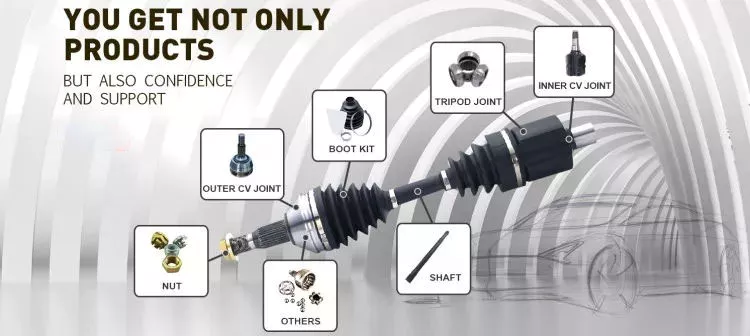
4. Constant Velocity (CV) Joints: In cases where the driven machinery requires a significant range of movement or articulation, PTO shafts may incorporate Constant Velocity (CV) joints. CV joints allow the PTO shaft to accommodate misalignment and angular variations without affecting power transmission. These joints provide a smooth and constant power transfer even when the driven machinery is at an angle relative to the power source. CV joints are commonly used in applications such as articulated loaders, telescopic handlers, and self-propelled sprayers, where the machinery requires flexibility and a wide range of movement.
5. Telescopic Designs: Some PTO shafts feature telescopic designs that allow for length adjustment. These shafts consist of two or more concentric shafts that slide within each other, providing the ability to extend or retract the PTO shaft as needed. Telescopic designs accommodate variations in the distance between the power source and the driven machinery. By adjusting the length of the PTO shaft, operators can ensure proper power transmission without the risk of the shaft dragging on the ground or being too short to reach the equipment. Telescopic PTO shafts are commonly used in applications where the distance between the power source and the implement varies, such as in front-mounted implements, snow blowers, and self-loading wagons.
By incorporating these mechanisms and designs, PTO shafts can handle variations in speed and torque requirements effectively. They provide the necessary flexibility, safety, and control to ensure efficient power transmission between the power source and the driven machinery. PTO shafts play a critical role in adapting power to meet the specific needs of various equipment and applications.


editor by CX 2024-04-26